

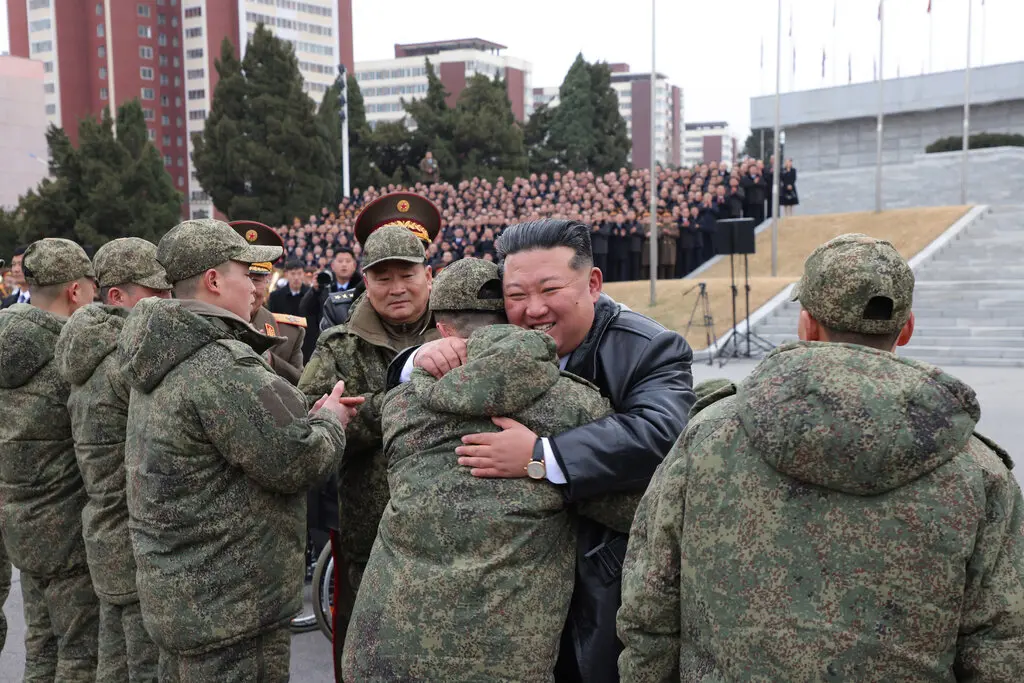
North Korean state media on Wednesday showcased triumphant scenes as soldiers returned home after what it described as “overseas service” alongside Russian forces in the war in Ukraine, marking the clearest public acknowledgment yet of Pyongyang’s direct military involvement in the conflict.
Footage broadcast nationwide showed uniformed troops marching through decorated squares, greeted by cheering crowds, flowers, and banners praising loyalty to the leadership and solidarity with Russia. Senior military officials were seen awarding medals, while commentators hailed the soldiers for “defending justice beyond the homeland,” a phrase widely interpreted as confirmation of their deployment to the front lines.
While North Korea did not release details about troop numbers or combat roles, analysts believe the soldiers were likely assigned to logistical support, engineering units, and artillery operations in Russian-controlled areas. Western intelligence agencies have previously reported the presence of North Korean personnel in Russia, but Pyongyang had until now avoided public recognition.
The public celebration appears aimed at reinforcing the growing strategic partnership between North Korea and Russia, which has deepened amid Moscow’s isolation from the West. In recent months, the two countries have expanded cooperation in military training, weapons development, and manpower exchanges, defying international sanctions and drawing sharp criticism from the United States and its allies.
Human rights groups expressed concern that the returning soldiers were being used as propaganda tools, with little transparency about casualties, conditions on the battlefield, or whether participation was voluntary. Some defectors and analysts warn that deployments abroad may expose North Korean troops to unprecedented combat risks while limiting their ability to communicate with families back home.
The fanfare surrounding the soldiers’ return also served a domestic purpose, reinforcing narratives of strength, sacrifice, and global relevance at a time of ongoing economic hardship inside the country. By framing the war as a shared struggle against Western influence, state media sought to justify Pyongyang’s involvement while bolstering public loyalty.
As fighting continues in Ukraine, the celebrations in Pyongyang signal that North Korea is no longer content to remain a silent partner. Instead, it is presenting its role as a source of pride—an assertion likely to further complicate diplomatic efforts and deepen tensions on the global stage.








Leave a Reply