

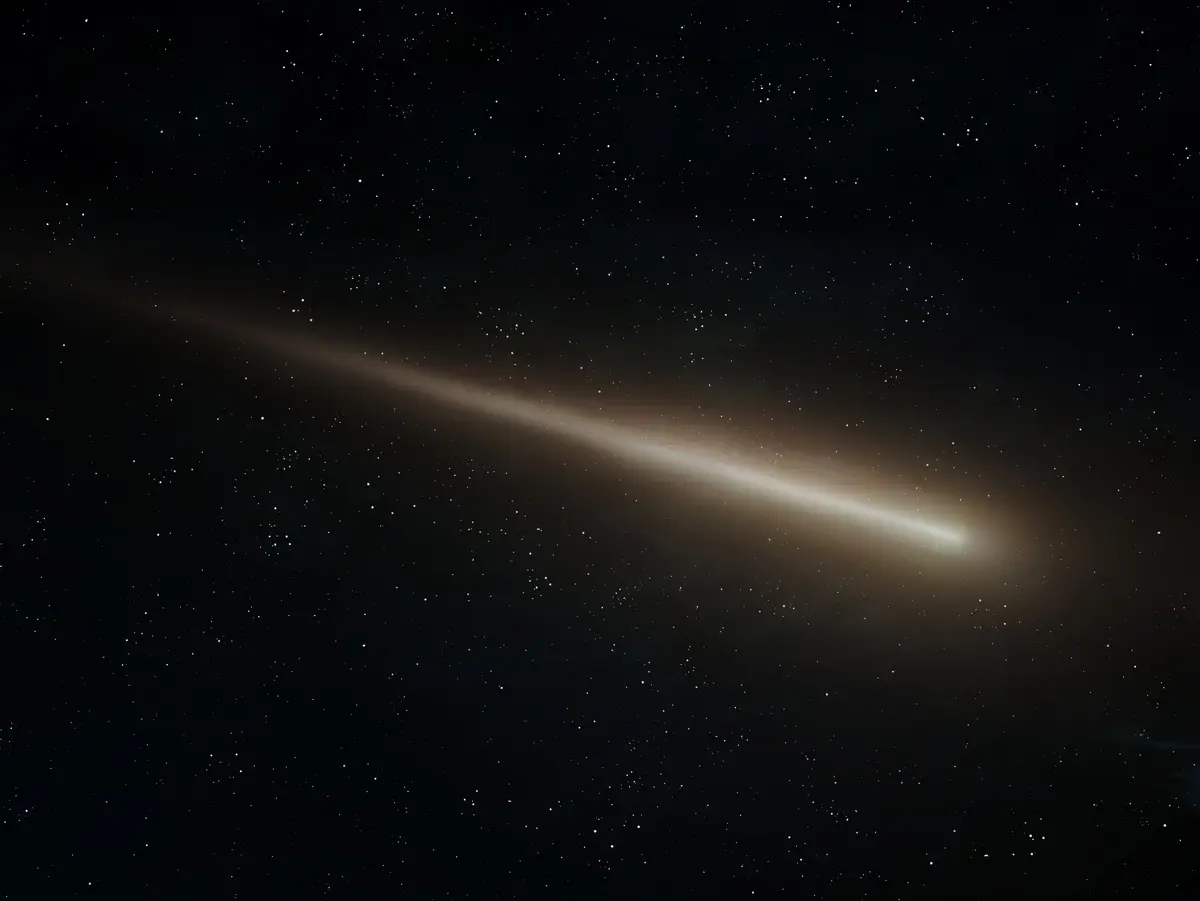
On a crisp autumn evening, just after sunset, the skies over Connecticut erupted in brilliance as a spectacular fireball streaked across the horizon. The dazzling celestial display left thousands of people awestruck, with reports flooding in from communities across the state. For a brief few seconds, the ordinary night sky became a stage for one of nature’s most remarkable shows.
A Night to Remember
The event occurred around 7:15 p.m., when the glowing object was seen cutting through the northwestern sky. Residents in Hartford, New Haven, Cheshire, Derby, West Hartford, East Hartford, Windsor, Branford, and several other towns all reported witnessing the fireball.
Witnesses described the fireball as brighter and more intense than any shooting star they had seen before. Some said it appeared greenish or bluish, while others noted sparks or flares trailing behind it. A few even claimed to see the fiery ball breaking into fragments as it moved, a clear indication that the object was disintegrating under immense heat and pressure.
For many, the experience was both thrilling and humbling. One observer said it felt like “a once-in-a-lifetime moment where the universe reminded us of its power.”
What Exactly Is a Fireball?
A fireball is essentially a very bright meteor — a chunk of space rock or metal entering Earth’s atmosphere at incredible speeds. Unlike ordinary shooting stars that vanish in the blink of an eye, fireballs are larger and brighter, often rivaling the brightness of the Moon for a few fleeting moments.
When a meteoroid collides with Earth’s atmosphere, friction causes it to heat up dramatically, creating the luminous glow. Most burn up entirely before reaching the ground, but in some rare cases, fragments survive and fall as meteorites.
Experts estimate that meteoroids generating fireballs may range in size from a small pebble to something as large as a basketball. While they sound dangerous, most are harmless and provide scientists with valuable opportunities to study cosmic material.
The Science Behind the Spectacle
Astronomers explain that meteors travel at speeds of 25,000 to 160,000 miles per hour. This immense velocity is what makes them flare so brightly when entering the atmosphere. Connecticut’s fireball was visible for several seconds — unusually long compared to the split-second flashes of typical meteors.
Some witnesses reported fragmentation, which occurs when internal stresses and atmospheric drag cause the object to break apart. Each fragment burns individually, creating a spectacular fireworks-like effect across the sky.
It is not yet clear whether any pieces of the fireball survived the journey to Earth’s surface. If fragments did reach the ground, they would likely be small meteorites scattered across a wide area. Local researchers and enthusiasts may investigate further, though pinpointing an exact fall site is notoriously difficult.
Public Fascination and Social Buzz
Within minutes of the sighting, social media platforms lit up with videos, photos, and firsthand accounts. Posts poured in from across Connecticut, with people sharing their amazement and even comparing what they saw to scenes from science fiction movies.
For many, the fireball offered a welcome moment of wonder. Parents described showing the event to their children, while amateur astronomers eagerly began analyzing potential trajectories and brightness. The event served as a reminder of how celestial phenomena continue to unite people in awe and curiosity.
How Rare Are Fireballs?
While shooting stars can be seen almost nightly during clear conditions, true fireballs are rare. The American Meteor Society receives thousands of meteor reports annually, but only a fraction qualify as fireballs. Seeing one is considered a lucky occurrence, especially when it is bright enough to be noticed over a populated region.
Connecticut’s fireball may have coincided with the seasonal activity of upcoming meteor showers, such as the Draconids or Orionids, both of which peak in October. These showers occasionally produce fireballs, though isolated meteors not linked to showers are also common.
What Comes Next
Astronomers and meteor organizations are expected to gather reports, videos, and radar data to better understand the path and origins of the Connecticut fireball. By analyzing eyewitness accounts and triangulating data, scientists can estimate the altitude, speed, and potential fall zone of any surviving fragments.
Meanwhile, skywatchers are encouraged to keep their eyes on the heavens this month, as October is typically one of the most active periods for meteor activity. With two major showers approaching, there is a chance for more dazzling displays.
A Celestial Reminder
The brilliant fireball over Connecticut was more than just a fleeting moment in the sky. It was a cosmic reminder of our planet’s ongoing relationship with space — a relationship defined by wonder, curiosity, and the occasional flash of brilliance.
For those lucky enough to have seen it, the fireball was not just a meteor, but a memory that will last a lifetime.













Leave a Reply