

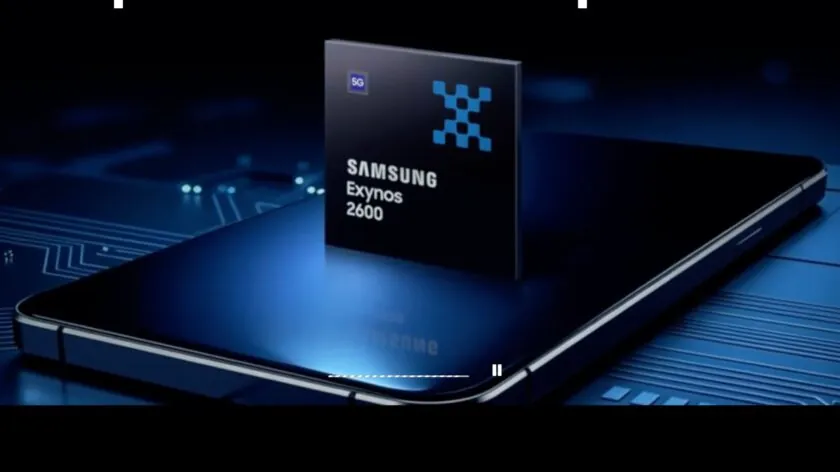
Samsung has officially unveiled its latest semiconductor breakthrough, the Exynos 2600, claiming the title of the world’s first 2-nanometer (2nm) smartphone processor. The chip is expected to power the upcoming Galaxy S26 series, signaling a new era of performance and efficiency in mobile technology.
The Exynos 2600 represents a significant leap forward in semiconductor engineering. By adopting a 2nm process node, Samsung has achieved greater transistor density, improved energy efficiency, and higher computational power compared to previous 3nm and 4nm chips. Early benchmarks suggest substantial improvements in processing speed, AI capabilities, and graphics performance, potentially enabling smoother gaming, faster app execution, and enhanced AI-driven features.
One of the most notable advantages of the Exynos 2600 is its energy efficiency. Samsung claims the chip consumes significantly less power than its predecessors, which could translate to longer battery life in devices like the Galaxy S26. The chip’s advanced design also allows for better thermal management, meaning devices can maintain peak performance without overheating.
Connectivity is another highlight. The Exynos 2600 integrates cutting-edge 5G capabilities, supporting ultra-fast download speeds and more stable network connections. This is expected to enhance streaming, gaming, and real-time communication applications, while providing a competitive edge in markets where high-speed connectivity is critical.
The chip also boasts advanced AI and machine learning processing, enabling smarter camera functions, voice assistants, and other on-device intelligence. Samsung has emphasized that AI performance is a key focus, aligning with the growing demand for devices capable of handling complex tasks locally without relying on cloud processing.
Samsung’s announcement positions the company as a leader in the global semiconductor race, particularly as competition with rivals like Qualcomm, MediaTek, and Apple intensifies. The 2nm milestone marks a symbolic and technical achievement, underscoring Samsung’s capability to push the boundaries of chip manufacturing.
The Exynos 2600 is expected to debut in the Galaxy S26 series, likely launching in early 2026. Analysts suggest that the chip’s introduction will not only enhance Samsung’s flagship smartphones but could also influence adoption across tablets, foldable devices, and other high-performance electronics in the coming years.
As the mobile industry braces for faster, smarter, and more energy-efficient devices, Samsung’s Exynos 2600 may set a new benchmark for what consumers expect from next-generation smartphones.
















Leave a Reply