

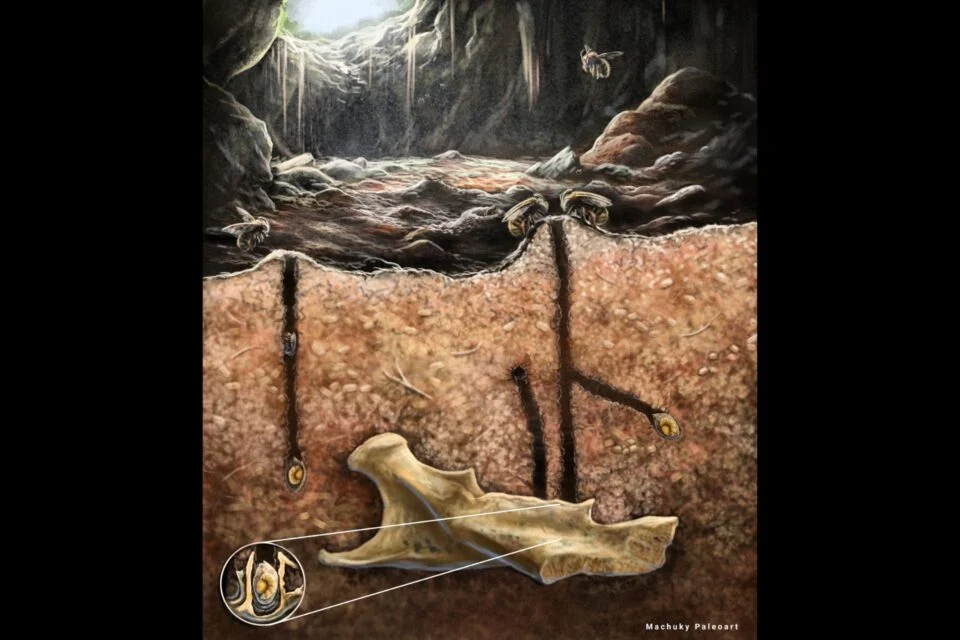
Paleontologists have uncovered a remarkable fossil discovery: bee nests preserved inside the cavities of ancient skeletons, a phenomenon described as “unlike anything we’ve seen before.” The find is reshaping scientists’ understanding of prehistoric ecosystems, insect behavior, and the interplay between species millions of years ago.
A Rare and Puzzling Find
The fossils, excavated from a sediment-rich site known for exceptional preservation, reveal small, intricate bee nests formed inside the hollow spaces of large vertebrate skeletons. Researchers were initially puzzled by the placement, as bee nests are typically found in soil, tree cavities, or rock crevices—not inside animal remains.
Dr. Eleanor McKenzie, lead paleobiologist on the study, remarked, “It’s astonishing. These fossils suggest that bees were already highly adaptable and resourceful millions of years ago, exploiting unusual environments that we wouldn’t normally consider.”
Insights Into Ancient Behavior
Analysis of the nests indicates that bees meticulously built structures using wax and plant materials, mirroring behaviors seen in modern species. The positioning within skeletal cavities may have offered protection from predators, temperature fluctuations, and environmental hazards.
This discovery provides direct evidence of ecological interactions previously unknown: ancient bees may have used animal remains as secure nesting sites, demonstrating an early example of behavioral innovation.
Implications for Fossil Research
The find challenges traditional assumptions about where and how insects lived in prehistoric ecosystems. Fossilized nests inside bones are exceptionally rare, giving researchers a new type of specimen to study insect evolution and survival strategies.
“This changes how we interpret fossilized remains,” said Dr. McKenzie. “It’s not just about the skeletons themselves, but the hidden ecosystems that formed around and even inside them. It’s a snapshot of life and adaptation from millions of years ago.”
What We Learn About Prehistoric Ecosystems
The discovery highlights the complexity and interconnectedness of ancient habitats. Bees were not merely pollinators; they interacted with larger fauna in unexpected ways, contributing to the stability and diversity of their ecosystems.
Studying these fossils could also provide clues about ancient climate conditions, plant-animal interactions, and evolutionary pressures that shaped species survival over time.
A Window Into the Past
Fossilized bee nests inside skeletons are rare treasures, offering a glimpse into behaviors that have persisted for millions of years. They remind scientists that even small creatures like bees played critical roles in shaping prehistoric life and that fossil sites can still yield surprises that defy expectations.













Leave a Reply