

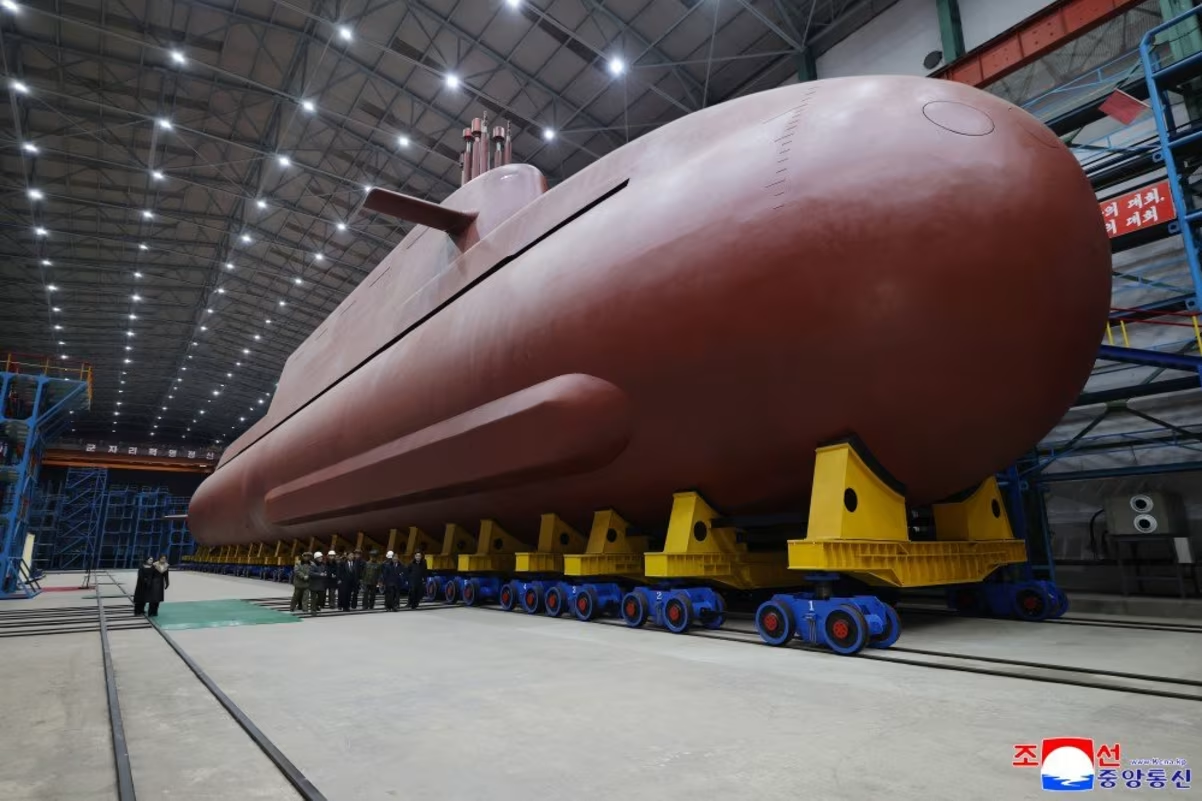
North Korea has reportedly made significant progress toward developing its first nuclear-powered submarine, a move that could dramatically reshape the military balance on the Korean Peninsula and beyond. While details remain tightly controlled, recent assessments by regional observers suggest that construction activity linked to an advanced submarine program is accelerating, signaling Pyongyang’s determination to expand its strategic capabilities at sea.
Unlike conventional diesel-electric submarines, a nuclear-powered vessel can remain submerged for months, travel longer distances, and operate with far greater stealth. For North Korea, achieving such capability would represent a major technological leap and a symbolic milestone in leader Kim Jong Un’s long-standing goal of modernizing the country’s armed forces. Kim has repeatedly emphasized the importance of strengthening naval power, particularly as a counter to the military presence of the United States and its allies in the region.
Analysts believe the submarine under development is intended to serve as a platform for nuclear weapons, potentially capable of launching ballistic missiles from underwater. If realized, this would give North Korea a more survivable second-strike capability, making its nuclear deterrent harder to detect and neutralize. Such a development would complicate regional defense planning for South Korea, Japan, and the United States, all of which rely heavily on early detection and missile defense systems.
Satellite imagery and industrial activity near key shipbuilding facilities point to expanded infrastructure consistent with larger and more complex submarine construction. Experts caution, however, that building a nuclear-powered submarine requires advanced reactor technology, specialized materials, and extensive testing. Even with visible progress, it could take years before the vessel becomes fully operational, if at all.
Still, the mere pursuit of a nuclear-powered submarine carries strategic weight. It signals North Korea’s intent to move beyond land-based missiles and aircraft toward a more diversified nuclear force. This approach mirrors the strategies of established nuclear powers, which rely on submarines as a cornerstone of deterrence due to their stealth and survivability.
The development also raises questions about how North Korea is overcoming technological and economic barriers amid international sanctions. Some experts speculate that Pyongyang may be adapting existing reactor designs or pursuing incremental innovation rather than building a fully modern system from scratch. Others suggest the project may prioritize political messaging as much as military readiness, demonstrating resolve and technological ambition to both domestic and international audiences.
Regional reactions have been cautious but concerned. Defense officials in neighboring countries are closely monitoring developments, warning that an operational nuclear-powered submarine would increase the risk of miscalculation and escalation in already tense waters. Calls for renewed diplomatic engagement have accompanied these concerns, with some arguing that arms control discussions must adapt to the evolving nature of North Korea’s capabilities.
As North Korea continues to test boundaries with advanced weapons programs, its submarine ambitions underscore a broader trend toward military self-reliance and strategic signaling. Whether the project ultimately results in a fully functional nuclear-powered submarine or remains a prolonged work in progress, it highlights Pyongyang’s determination to project power beneath the waves and secure its place among nations with sophisticated naval deterrents.















Leave a Reply