

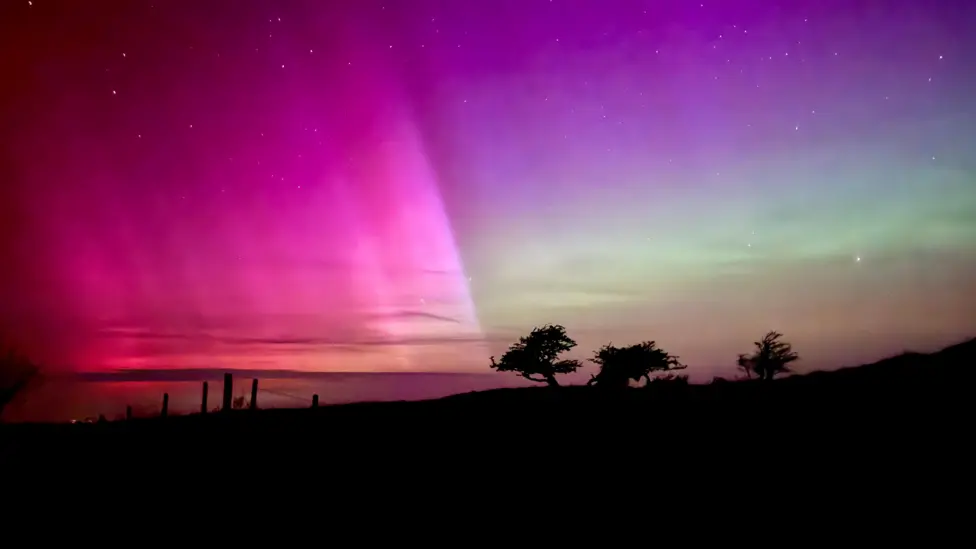
Scientists are monitoring a recent solar flare that could unleash a strong geomagnetic storm on Earth later this week, potentially producing spectacular northern lights visible at unusually low latitudes. The flare, classified as moderately strong, was detected by solar observatories earlier this week and is expected to interact with Earth’s magnetic field in the coming days.
What Is Happening on the Sun?
Solar flares are intense bursts of radiation caused by the release of magnetic energy on the Sun’s surface. This particular flare is associated with a coronal mass ejection (CME)—a massive cloud of charged particles traveling through space. When CMEs collide with Earth’s magnetosphere, they can cause geomagnetic storms, which may affect satellites, power grids, and communication systems.
Northern Lights Opportunity
Aurora enthusiasts may have a rare chance to see the northern lights (aurora borealis) farther south than usual. Regions in the northern United States, parts of Europe, and higher-latitude countries could witness vivid displays of green, red, and purple lights in the night sky, depending on the storm’s intensity. Scientists caution that exact visibility depends on local weather conditions and geomagnetic activity levels.
Potential Impacts
While most geomagnetic storms are harmless to humans, stronger storms can affect technology:
- Satellites and GPS may experience temporary disruptions.
- Radio communications could be intermittently affected in high-latitude regions.
- Power grids may need to adjust to fluctuations caused by induced currents.
Space weather agencies are closely monitoring the situation and will issue updates as the CME approaches Earth. This event offers both a scientific opportunity to study solar activity and a spectacular natural show for those lucky enough to catch the aurora.











Leave a Reply