

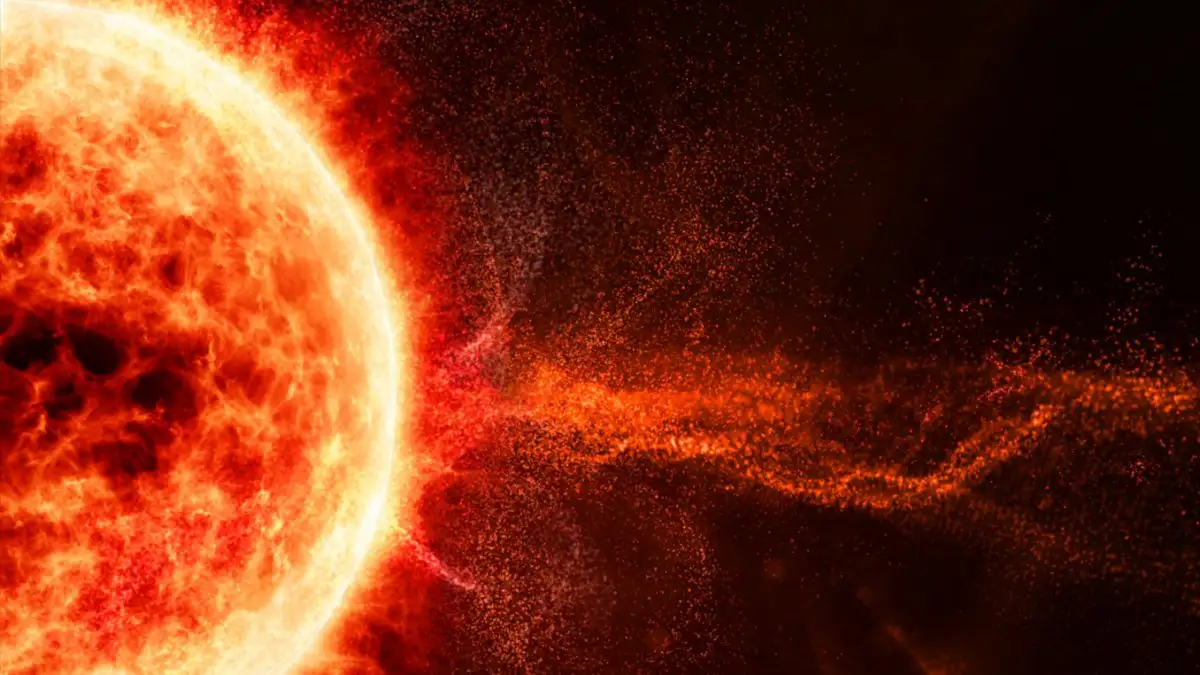
In a dramatic surge of solar activity, the Sun has erupted with a powerful X‑class flare, launching a massive coronal mass ejection (CME) hurtling toward Earth. Space weather experts warn that this storm could reach our planet within 24 hours, potentially triggering geomagnetic disturbances and spectacular auroral displays visible far beyond the polar regions.
The Solar Blast Explained
Solar flares are categorized by intensity, ranging from minor A‑class bursts to the most powerful X‑class eruptions. The recent flare, classified as X1.9, released immense amounts of X‑ray and extreme ultraviolet radiation. This radiation travels at the speed of light and can affect Earth’s upper atmosphere almost immediately, disrupting high-frequency radio communications over large regions.
The flare originated from a highly active magnetic region on the Sun’s surface. Magnetic fields in this area twisted and snapped, releasing vast energy accumulated over days or weeks. The accompanying CME — a colossal cloud of charged plasma and magnetic fields — now moves through space toward Earth, carrying billions of tons of solar material.
Implications for Earth
When the CME interacts with Earth’s magnetic field, it can produce a geomagnetic storm. These storms are rated on a scale from G1 (minor) to G5 (extreme). Current forecasts suggest this event could reach G3 or G4, strong enough to impact technology and natural phenomena.
Potential effects include:
- Radio signal disruptions, particularly at high frequencies.
- Satellite and GPS interference, potentially affecting communications and navigation systems.
- Power grid stress, as geomagnetic currents can induce voltage fluctuations in transformers and infrastructure.
A Celestial Show in the Sky
One of the most visible effects of geomagnetic storms is the aurora borealis and aurora australis — the Northern and Southern Lights. Charged particles from the CME excite atoms in Earth’s upper atmosphere, producing shimmering curtains of colorful light.
Thanks to the intensity of this solar event, auroras may be visible far from the poles, even reaching mid-latitude regions. Skywatchers could witness a rare and vivid light display over the coming nights.
What’s Next
Scientists will continue to monitor the incoming CME to refine predictions of its arrival time and geomagnetic impact. The strength of the storm largely depends on how the CME’s magnetic field aligns with Earth’s own. As the Sun approaches the peak of its 11-year activity cycle, such powerful eruptions are becoming increasingly common, reminding us of the Sun’s dynamic influence on our planet.
This event highlights the importance of space weather forecasting for modern technology and offers a thrilling opportunity for skywatchers to witness nature’s own light show.












Leave a Reply