

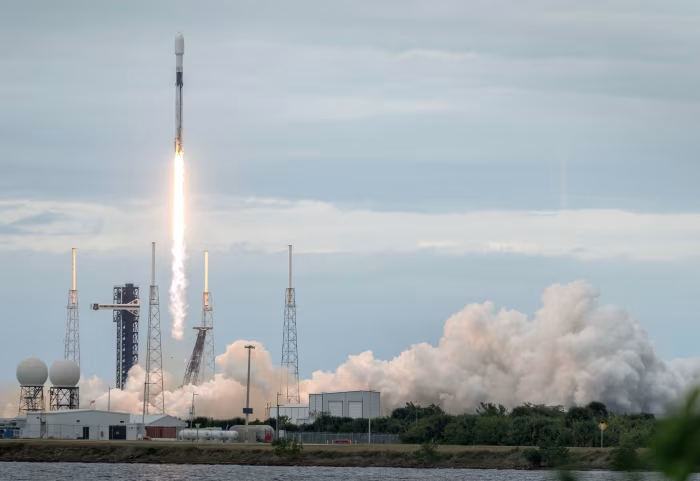
Elon Musk’s space company SpaceX is being valued by investors at an eye-catching $800 billion, a figure that would place it among the most valuable companies in the world as preparations intensify for an eventual public listing. The surge reflects growing confidence in SpaceX’s dominance of the global launch market and the long-term potential of its satellite internet business.
Private share transactions and internal valuations have steadily climbed over the past year, driven largely by the company’s near-monopoly on reliable, reusable rocket launches. SpaceX now conducts the majority of orbital missions worldwide, serving government agencies, commercial satellite operators, and defense clients, while driving down launch costs in a way competitors have struggled to match.
A major factor behind the soaring valuation is Starlink, SpaceX’s satellite broadband network. With millions of users across dozens of countries, Starlink has evolved from an experimental project into a significant revenue engine. Investors see it as a rare blend of infrastructure, telecommunications, and national security relevance—one that could eventually be spun off or play a central role in a public offering.
The company’s next-generation Starship rocket has also fueled optimism. Although still undergoing testing, Starship is designed to carry heavier payloads at a fraction of current costs, opening the door to large-scale satellite deployment, lunar missions, and eventually Mars exploration. Supporters argue that if the system reaches full operational capacity, it could dramatically expand SpaceX’s addressable market.
An IPO would mark a major shift for a company that has long relied on private funding to avoid short-term market pressure. While no official timeline has been announced, Musk has previously suggested that SpaceX or Starlink could go public once revenue becomes more predictable. Any listing at or near current valuations would rank among the largest technology offerings in history.
Skeptics caution that the $800 billion figure assumes flawless execution, continued government support, and sustained global demand. Regulatory hurdles, launch failures, or geopolitical tensions affecting satellite services could all impact future growth.
Even so, SpaceX’s rise from startup to potential public-market titan underscores how space has moved from a government-led endeavor to a high-stakes commercial industry. If the company does go public at its current valuation, it would not only redefine the aerospace sector—but also reset expectations for what a private technology firm can become before ever ringing the opening bell.
















Leave a Reply