

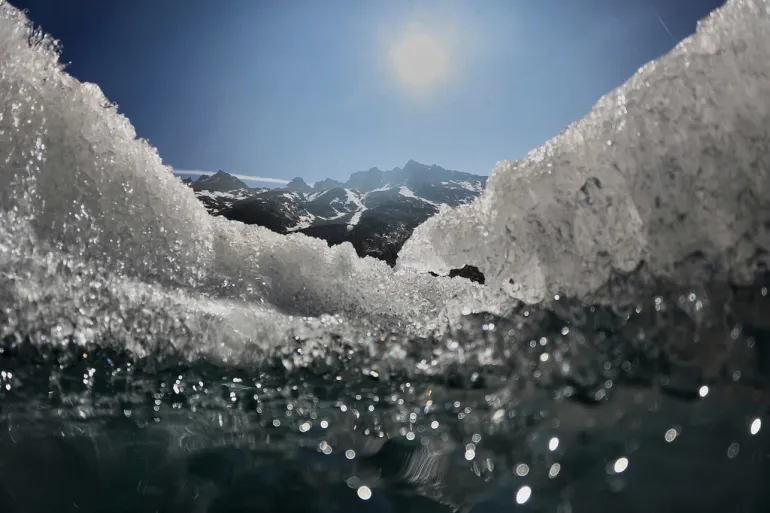
A new comprehensive study has revealed that thousands of the world’s glaciers may melt each year by 2050 if current climate trends continue, highlighting the accelerating impacts of global warming on the planet’s cryosphere. The findings sound an urgent alarm for the communities, ecosystems, and industries that depend on these frozen reservoirs of freshwater.
Alarming Projections
Researchers examined glacier data across multiple continents, including the Himalayas, the Alps, the Andes, and the polar regions. Their models suggest that:
- By mid-century, glaciers could vanish at a rate of several thousand per year.
- Certain regions, such as South America’s Andes and the European Alps, may see their major ice reserves shrink by more than 50%.
- Polar glaciers are also under threat, particularly in Greenland and Antarctica, where accelerated ice loss contributes to rising sea levels.
The study emphasizes that glacier melt is not just a slow environmental change—it is a rapidly escalating crisis with cascading consequences for global ecosystems and human societies.
Impacts on Water Supply and Communities
Glaciers act as natural reservoirs, releasing freshwater gradually during warmer months. Rapid glacier loss could:
- Disrupt freshwater availability for millions of people in glacier-fed river basins.
- Threaten hydroelectric power generation, which relies on consistent water flow.
- Increase risk of glacial lake outburst floods, which can devastate downstream communities.
Dr. Elena Ramirez, a glaciologist involved in the study, explained, “These glaciers are essential to water security in many regions. Their disappearance will have profound effects on agriculture, energy, and daily life for millions of people.”
Environmental and Ecosystem Consequences
The melting of glaciers has far-reaching consequences beyond human water use:
- Rising sea levels from glacial runoff threaten coastal cities and habitats worldwide.
- Loss of cold-water ecosystems, affecting species dependent on glacial meltwater.
- Changes in regional climate patterns, as glaciers influence local weather and temperature regulation.
Glaciers are also key indicators of climate change. Accelerating melt rates signal more severe warming trends and underline the urgent need for climate action.
Drivers of Accelerated Glacier Melt
The study identifies the primary factors driving glacier retreat:
- Rising global temperatures, with the past decade being the warmest on record.
- Black carbon and air pollution, which darken ice surfaces and increase melting.
- Altered precipitation patterns, reducing snowfall that replenishes glacier mass.
These findings align with broader climate science, highlighting the urgent need to reduce greenhouse gas emissions and adopt global strategies to limit warming.
What Can Be Done
While some glacier loss is already inevitable, scientists emphasize that mitigation and adaptation strategies can reduce future impacts:
- Global emissions reductions to limit further warming.
- Sustainable water management in regions dependent on glacial melt.
- Monitoring and early-warning systems for glacier-related hazards.
The study underscores that proactive action today can help preserve remaining glaciers and minimize disruption to human and natural systems.
Looking Ahead
By 2050, the world may witness a dramatic transformation of mountain landscapes and polar regions. Glaciers, once enduring symbols of Earth’s natural heritage, could become rare sights. The study calls for immediate global cooperation to address climate change and protect these crucial elements of our planet’s freshwater and environmental systems.








Leave a Reply