

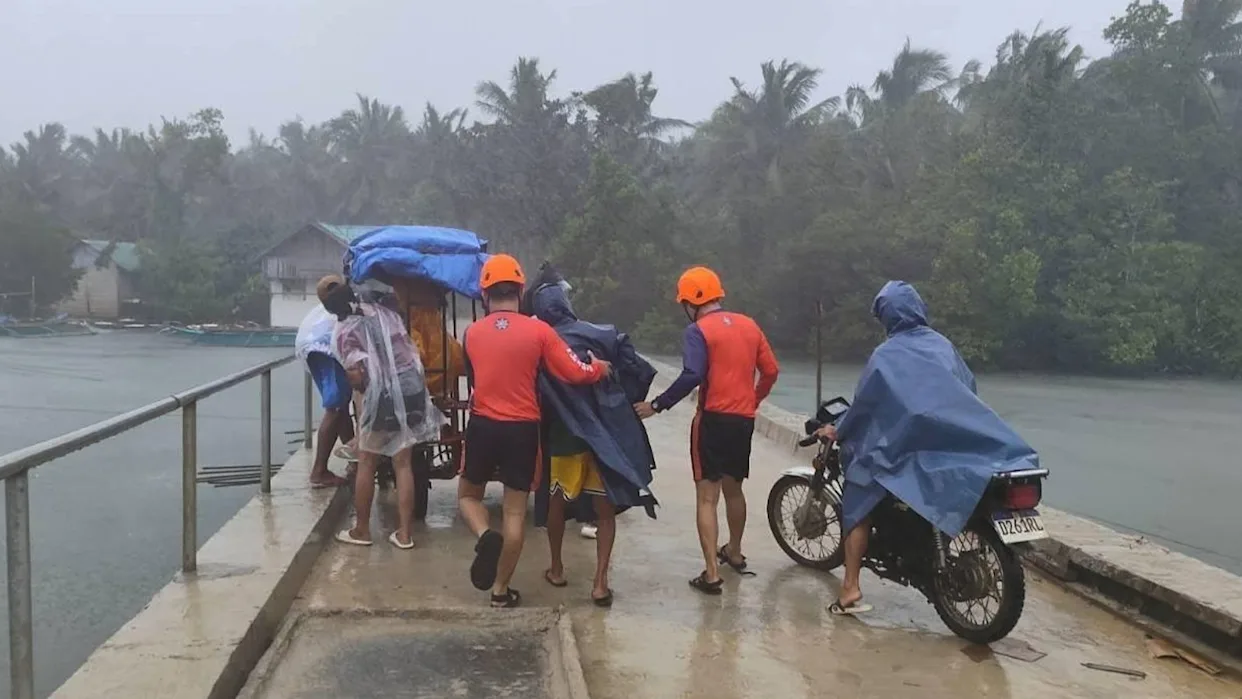
A powerful storm, Super Typhoon Fungwong, has battered the Philippines with torrential rain, destructive winds, and massive waves, prompting large-scale evacuations and leaving millions without electricity. The storm, one of the strongest of the year, made landfall over the eastern provinces late Friday, carving a path of devastation across several regions before moving toward the South China Sea.
Authorities reported wind speeds exceeding 150 miles per hour (240 kilometers per hour), uprooting trees, toppling power lines, and damaging thousands of homes. Coastal communities bore the brunt of the typhoon’s initial impact, where intense storm surges submerged low-lying villages and rendered major roads impassable.
More than 500,000 residents were forced to evacuate from high-risk areas as local governments scrambled to provide emergency shelters, food, and medical assistance. The National Disaster Risk Reduction and Management Council confirmed at least a dozen fatalities, though officials warned that the number could rise as rescue operations continue in isolated areas.
Airports across Luzon and Visayas canceled flights, and ferry operations were suspended as a precaution. Power companies reported widespread outages affecting nearly half of the island of Luzon, including parts of Metro Manila, where gusty winds and heavy rain persisted for hours.
In some provinces, landslides triggered by continuous rainfall buried sections of highways, cutting off access to remote communities. Local responders and the military were deployed to clear debris and assist in rescue missions, while emergency teams worked through the night to restore communication lines.
President Ferdinand Marcos Jr. has ordered a full-scale national response, mobilizing government agencies to deliver aid and conduct damage assessments. In a televised address, he urged the public to remain vigilant and to heed safety advisories as the storm continues to pose risks of flooding and landslides even after moving offshore.
Meteorologists warn that Fungwong could regain strength as it moves over warm ocean waters toward southern China, raising concerns for neighboring countries. The Philippine Atmospheric, Geophysical and Astronomical Services Administration (PAGASA) stated that while the worst of the storm has passed for the Philippines, the lingering monsoon rains will likely cause further flooding in central and northern regions.
This latest typhoon underscores the country’s ongoing struggle with increasingly severe weather patterns fueled by climate change. The Philippines, situated along the Pacific “Ring of Fire,” faces an average of 20 tropical cyclones each year, many of which cause catastrophic losses.
As communities begin the long process of recovery, local leaders emphasize the need for stronger infrastructure, improved evacuation systems, and greater international cooperation to tackle the growing threat of extreme weather. For millions affected by Fungwong, the coming weeks will be defined by rebuilding—and resilience.

















Leave a Reply