

In a striking move of soft-power diplomacy, Taiwan’s President Lai Ching-te publicly displayed his support for Japan by sharing a carefully staged sushi lunch. The event, though seemingly casual, carried a layered message — one that resonates deeply in the ongoing geopolitical tension between Taiwan, Japan, and China.
A Symbolic Meal: More Than Just Sushi
President Lai chose his lunch with intention: he posted photos enjoying sushi made from yellowtail from Kagoshima and scallops from Hokkaido, paired with a bowl of miso soup. He captioned the images on social media with the phrase “Today’s lunch is sushi and miso soup,” even writing it in Japanese, underscoring his respect for Japanese culture and signaling a deeper alignment between Taipei and Tokyo.
The choice of ingredients matters. By highlighting regional Japanese seafood, Lai did more than show culinary appreciation — he spotlighted Japan’s specific cultural and economic regions, reinforcing the message that Taiwan values its shared traditions and economic ties with Japan.
Context: A Worsening China–Japan Dispute
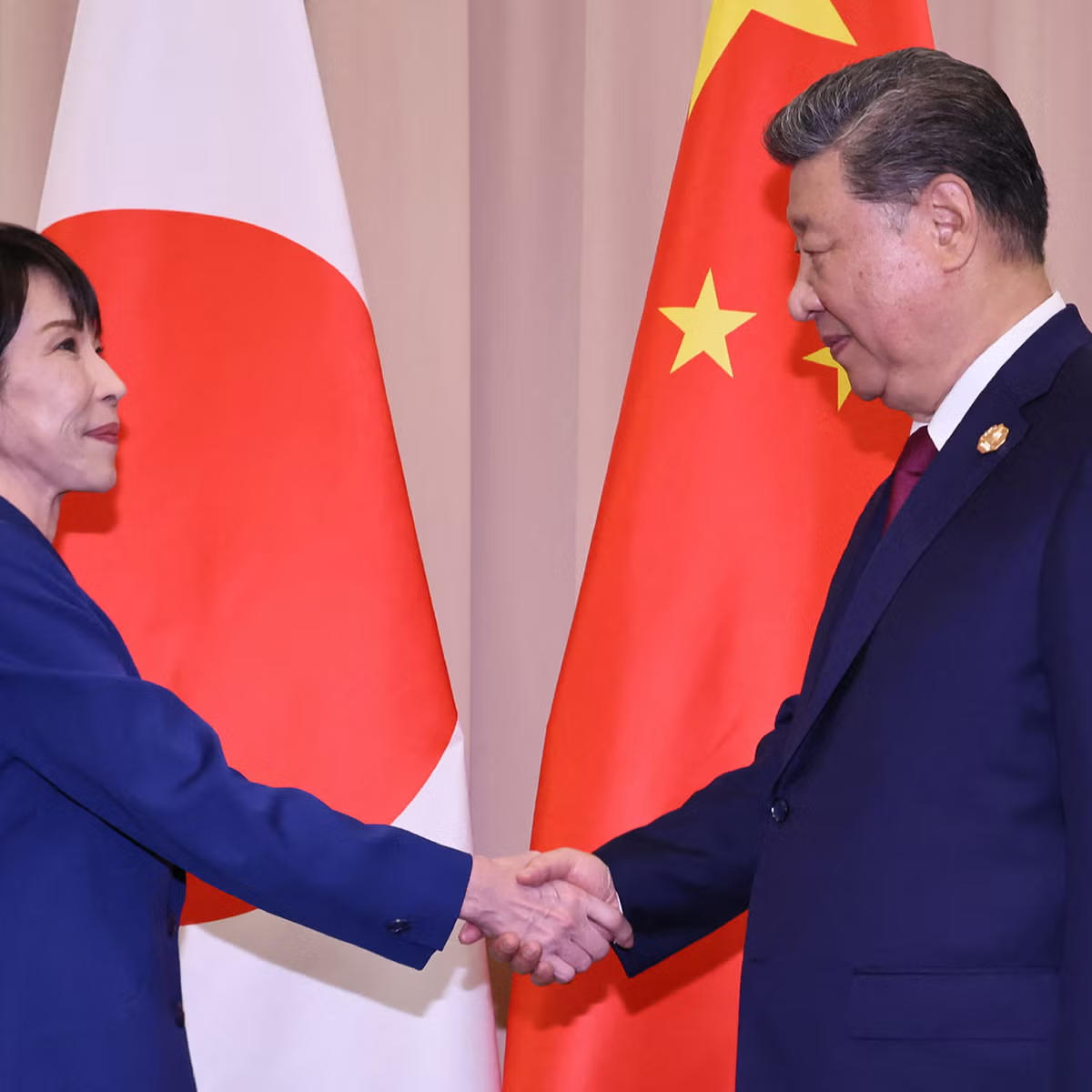
The sushi lunch comes amid a deteriorating exchange between China and Japan. Recently, China imposed a suspension on Japanese seafood imports, responding sharply to remarks by Japan’s new prime minister. She had suggested that a Chinese military strike on Taiwan could threaten Japan’s very survival, a provocative statement in Beijing’s view.
This has escalated diplomatic strain, and for Taiwan, China’s economic retaliation is seen as part of a broader strategy of coercion — using trade levers to punish or pressure nations that do not follow Beijing’s preferred line.
Taiwan’s Strategic Counter-Move
Taiwan’s government did not treat the meal as a simple personal indulgence. Its foreign minister publicly criticized China’s tactics, labeling them as both economically aggressive and militarily intimidating. The minister went further, calling on Taiwanese citizens to demonstrate their support for Japan — not just in words, but through action: travel to Japan and buy Japanese products.
For President Lai, the sushi lunch is a form of resistance: a peaceful, public assertion that Taiwan stands by its friends.
Multipurpose Messaging
This diplomatic lunch serves several audiences:
- To China: It’s a signal that Taiwan refuses to be coerced; it will continue to engage openly and visibly with Japan.
- To Japan: It’s a declaration of solidarity, reinforcing that Taiwan values and supports Japan in a time of tension.
- To the Taiwanese public: It’s a call to action, urging ordinary citizens to support Japan in their own way and defend international cooperation.
In this sense, Lai’s act of “gastronomic diplomacy” is a clever tool: a non-violent, culturally resonant way to make a political stand.
China Pushes Back
Unsurprisingly, Beijing rejected the symbolism of the meal. It framed the act as a mere public performance, insisting that no culinary display could alter what it asserts as the unassailable truth of Taiwan’s status — that Taiwan is part of China.
Such dismissals are part of a consistent pattern: Beijing often uses strong rhetoric while responding to Taiwan’s symbolic acts with its own mix of diplomatic pressure and economic levers.
The Weight Behind the Lunch
Although this was a light moment on social media, the broader implications are serious. For Taiwan, every public gesture — especially from the president — is scrutinized by both allies and adversaries. Lai’s sushi lunch is more than a meal: it is a statement of defiance.
It embodies a form of soft power that is deliberate and strategic. Instead of issuing threats or deploying military hardware, Taiwan is choosing to speak softly — but carry a resonant message via culture and shared culinary heritage.
Moreover, the lunch invites ordinary Taiwanese to engage in foreign policy. By encouraging people to support Japanese goods and travel, the Taiwanese leadership is mobilizing public sentiment in a tangible way.
Historical Resonance
Taiwan and Japan share a complex history, marked by colonial rule, modernization, and deep cultural influence. For many in Taiwan, Japan represents not just a neighbor, but a partner with shared democratic values and significant mutual history.
Lai’s choice taps into that shared past — not as nostalgia, but as a forward-looking alliance rooted in admiration and cooperation. The sushi, in this way, becomes a bridge: linking tradition with present-day geopolitical strategy.
Risks and Challenges
That said, the move is not without risks. Beijing could respond not only with further economic sanctions, but potentially stronger diplomatic measures. There is also the chance of domestic backlash: while many Taiwanese may approve of the act, some may see it as symbolic rather than substantive, questioning whether such gestures truly shift power dynamics.
On the international stage, too, there could be mixed reactions. Some observers may applaud the bold gesture, while others may dismiss it as theatrical or too soft to be meaningful in the hard-edged world of geopolitics.
Why This Moment Matters
This episode is a clear demonstration of how soft power can be a powerful tool in high-stakes diplomacy. In a region fraught with tension and uncertainty, Taiwan has opted for a message that is as peaceful as it is pointed.
President Lai’s sushi lunch shows that diplomacy doesn’t always have to come in the form of summits or official statements. Sometimes, a meal can speak louder than words — signaling alliance, resisting coercion, and reaffirming values. In a world where conflict looms large, such gestures carry more weight than might first meet the eye.










Leave a Reply