

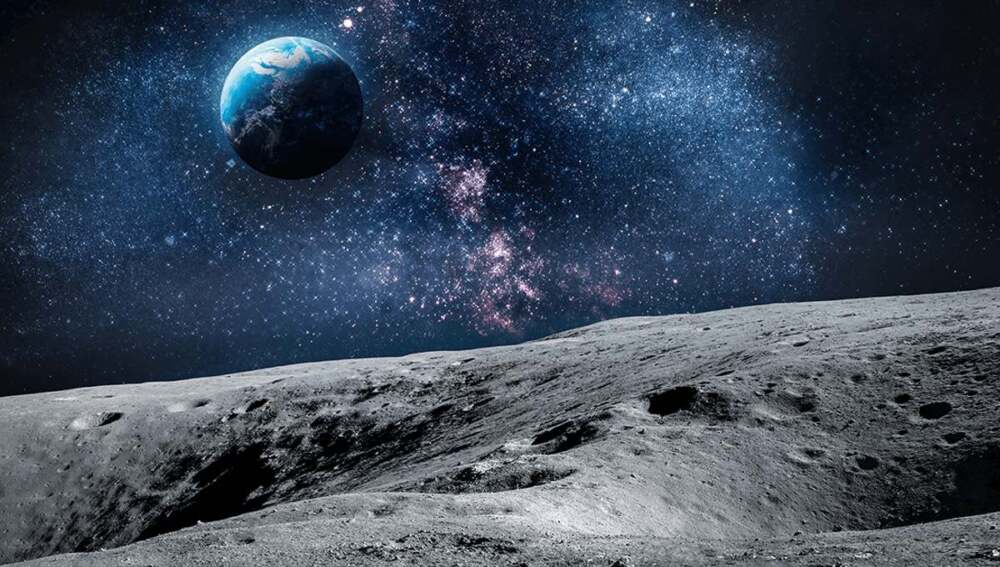
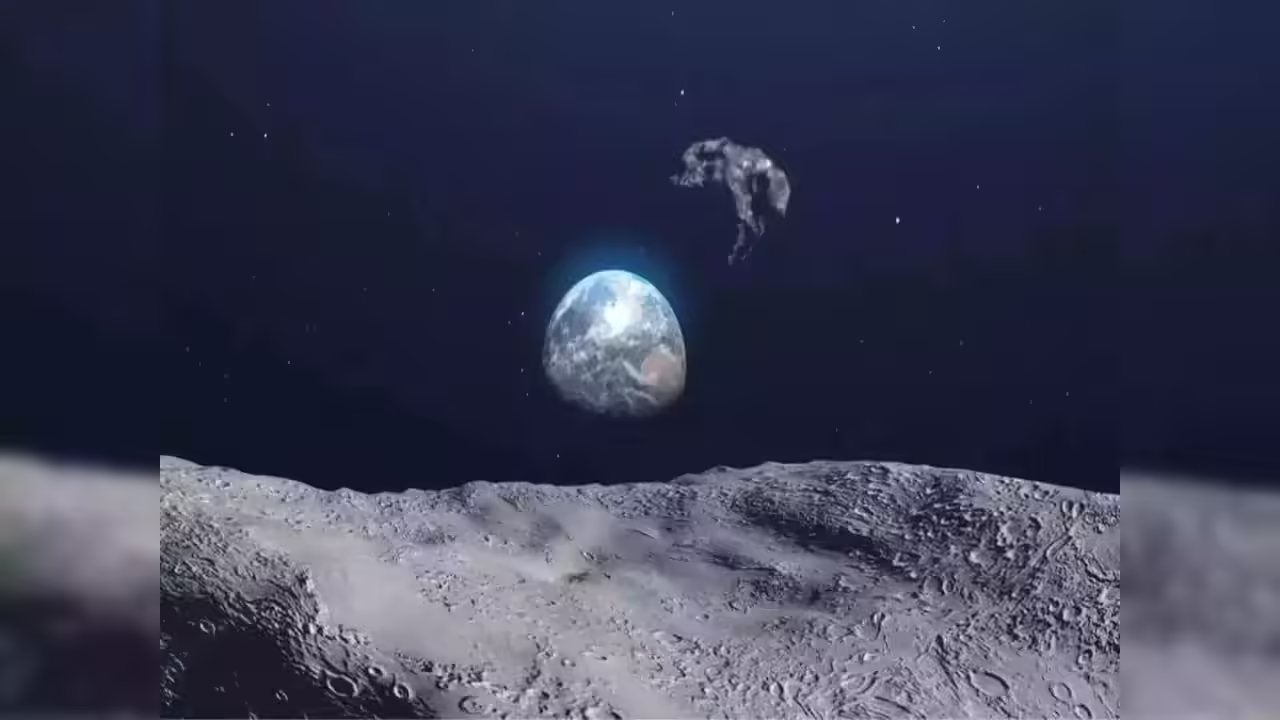
The Moon, Earth’s only natural satellite, is gradually moving away from our planet—a phenomenon that has been occurring for billions of years. Currently, it’s receding at a rate of approximately 1.5 inches (3.8 centimeters) per year. While this may seem insignificant on a human timescale, over millions of years, it has profound implications for both the Moon and Earth.
Understanding the Mechanism: Tidal Interactions
The primary driver behind the Moon’s gradual recession is the tidal interaction between Earth and the Moon. The Moon’s gravitational pull on Earth’s oceans creates tidal bulges—areas of water that are slightly raised due to the Moon’s attraction. As Earth rotates, these tidal bulges are carried slightly ahead of the Moon in its orbit. The gravitational attraction between these bulges and the Moon exerts a forward pull on the Moon, causing it to gain energy and move to a higher orbit.
Simultaneously, the Earth’s rotation is slowed down due to the frictional forces exerted by the tidal bulges. This transfer of Earth’s rotational energy to the Moon is what causes the Moon to slowly drift away.
The Role of Angular Momentum
This process is governed by the law of conservation of angular momentum, which states that the total angular momentum of a closed system remains constant unless acted upon by an external force. In the Earth-Moon system, as Earth’s rotation slows down, the Moon must move outward to conserve the total angular momentum of the system.
This interplay between the Earth and the Moon ensures that as one slows down, the other moves outward, maintaining the balance of angular momentum.
Implications for Earth and the Moon
Over time, this gradual drift has several significant effects:
- Lengthening of Earth’s Day: As Earth’s rotation slows due to tidal friction, the length of a day increases. Currently, Earth’s day lengthens by about 24 microseconds per year.
- Stabilization of Earth’s Axis: The Moon plays a crucial role in stabilizing Earth’s axial tilt. Without the Moon, Earth’s axis could wobble more erratically, leading to extreme variations in climate over time.
- Changes in Tidal Patterns: As the Moon moves farther away, tidal patterns on Earth will change. Tides will become less pronounced, affecting marine life and ecosystems that depend on tidal rhythms.
Will the Moon Ever Escape Earth’s Gravitational Pull?
Despite the Moon’s gradual drift, it is not expected to escape Earth’s gravitational influence anytime soon. Current models suggest that the Moon will continue to move away at its current rate for billions of years. However, as the Moon moves farther from Earth, the rate of recession will decrease, and the process will slow down.
Eventually, the Earth and the Moon will reach a point where Earth’s rotation period matches the Moon’s orbital period—a state known as tidal locking. At this point, the same side of the Moon will always face Earth, and the Moon’s distance from Earth will stabilize.
Conclusion
The Moon’s gradual drift away from Earth is a testament to the dynamic and interconnected nature of our solar system. While the effects of this drift are not immediately noticeable, they underscore the importance of understanding the long-term interactions between celestial bodies. As we continue to study these processes, we gain deeper insights into the history and future of our planet and its natural satellite.







Leave a Reply