

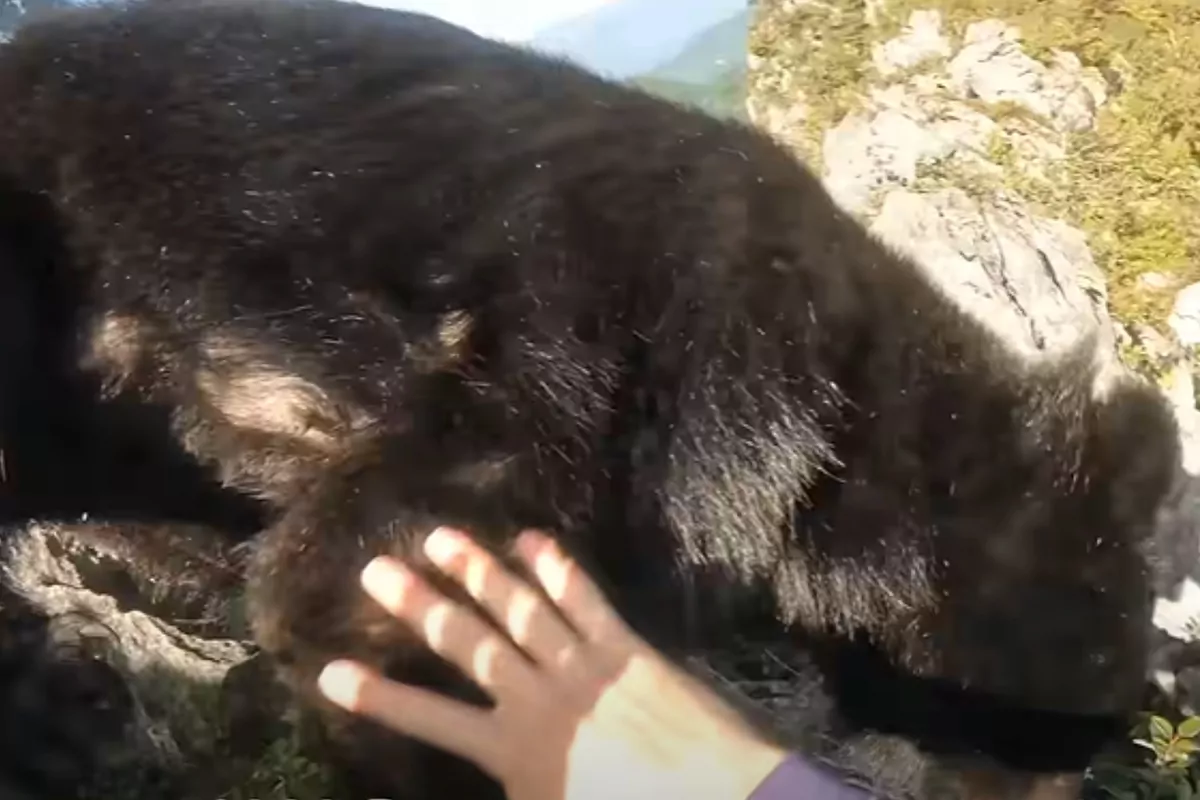
In a quiet town in northern Japan, a confectioner named Keiji Minatoya experienced a moment that changed his life forever. As he lifted the shutter of his garage early one morning, he came face to face with a large black bear — an encounter that turned into a brutal fight for survival.
The bear lunged without warning, knocking Minatoya to the ground and mauling him across his face, arms, and body. The attack was so severe that he nearly lost part of his scalp. Only after a desperate struggle did the animal retreat, leaving him bleeding and in shock. He was later airlifted to a hospital about 60 kilometers away.
“The roar was right by my ear,” he recalled. “That sound is burned into my head. I still hear it when I close my eyes.”
A Growing Crisis in Rural Japan
Minatoya’s ordeal is part of a wider and increasingly alarming trend. Japan has seen a sharp rise in bear encounters and attacks this year — more than a hundred incidents and at least thirteen deaths since spring, the highest number on record. The majority of these have occurred in Akita Prefecture and nearby Iwate, both regions where bears and people share shrinking space.
Experts warn that a combination of factors has brought the bears closer to human settlements than ever before. Food shortages in the wild, especially a poor crop of acorns and beech nuts, have driven the animals to search for food in towns and villages. Meanwhile, as Japan’s rural population ages and declines, more homes are left abandoned and vegetation grows unchecked — creating perfect hiding spots and foraging grounds for bears.
From Conservation Success to Human Danger
Ironically, the rising bear population is partly the result of successful conservation policies. Over the past decade, stricter hunting regulations allowed Japan’s Asiatic black bears to rebound in number. But as their natural habitats shrink and human settlements expand, encounters have become more frequent — and often deadly.
Residents in rural areas now live with constant anxiety. Some carry bells or air horns to ward off bears; others avoid going outdoors at dawn or dusk. Yet, the animals continue to appear on roads, in backyards, and even near schools.
A Survivor’s Message
For Minatoya, the answer is clear: Japan must act more decisively. He has called for what he describes as a “ruthless” response to bears that lose their fear of humans. “Bears that attack people have learned that we are weak,” he said. “If they come into our towns, we can’t hesitate.”
He says he does not hate all bears — only the one that nearly took his life. “If I could find that bear,” he said, “I would eat it.” His words reflect a frustration shared by many residents who feel abandoned as attacks rise.
Authorities Struggle to Respond
The government has stepped up measures to control the situation. In some areas, local officials have called in the military to help track, trap, and, if necessary, kill bears that pose immediate danger. Communities have been urged to clear vegetation, remove fruit trees, and secure trash to reduce attractants.
However, practical challenges remain. Many properties are abandoned, making it difficult to obtain permission to clear overgrown land or set traps. Some conservationists also warn against indiscriminate culling, arguing that it could disrupt the bears’ natural behavior and create more aggressive encounters.
A Conflict Between Humans and Nature
The crisis highlights a deeper problem facing rural Japan: the delicate balance between protecting wildlife and ensuring public safety. As depopulation empties the countryside and climate changes alter food availability, animals are being pushed into human spaces with increasing frequency.
The question now is whether Japan can find a sustainable solution before more lives are lost. For survivors like Minatoya, the time for debate is over. He believes that hesitation will only lead to more tragedy.
“I still hear that roar,” he says softly. “It’s a sound I can’t forget — and I don’t want anyone else to hear it the way I did.”















Leave a Reply