

Science enthusiasts have a lot to digest today, with breakthroughs ranging from deep-space observations to studies of human behavior. Here’s a roundup of three of the most compelling science stories making headlines.
1. James Webb Telescope Observes Earliest Known Supernova
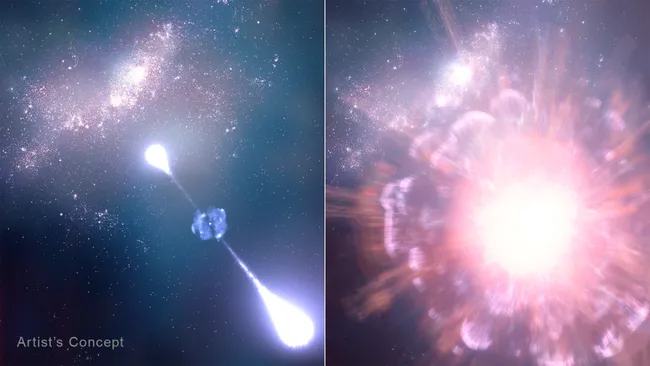
Astronomers using the James Webb Space Telescope (JWST) have captured light from the earliest supernova ever observed. This stellar explosion, occurring billions of years ago, provides researchers with unprecedented insight into the early universe, star formation, and cosmic evolution.
The discovery helps scientists understand how heavy elements, such as carbon and iron, were distributed across the cosmos shortly after the Big Bang. The supernova’s light has traveled across vast stretches of space and time, offering a window into conditions that prevailed in the universe’s infancy. This observation also demonstrates JWST’s extraordinary capability to detect faint and distant objects, pushing the boundaries of astrophysics and cosmology.
2. Monogamy ‘League Table’ Reveals Surprising Global Patterns
A recent sociological study has created a “monogamy league table,” ranking countries based on marriage practices, fidelity rates, and cultural norms surrounding monogamous relationships. Researchers analyzed data from thousands of participants worldwide, revealing surprising trends about human relationships.
The study highlights variations influenced by cultural, religious, and economic factors, showing that monogamy is far from uniform globally. Some nations with high reported fidelity challenge stereotypes, while others exhibit more fluid relationship patterns. Researchers hope the findings will stimulate discussions on societal norms, relationship psychology, and the evolution of human mating strategies.
3. Comet 3I/ATLAS Detected in X-Rays
Astronomers have detected X-ray emissions from Comet 3I/ATLAS, an interstellar object passing through the solar system. This detection provides valuable clues about the comet’s composition, surface activity, and interaction with solar wind.
X-ray observations of comets are rare and reveal the physical and chemical processes at work in the solar system’s small bodies. The findings may help scientists understand how material from other star systems behaves when entering our solar system, offering a unique perspective on the diversity of objects traveling through interstellar space.
Why It Matters
Today’s discoveries span vastly different scales — from the cosmic to the human — yet each adds to our understanding of the universe and ourselves. JWST’s supernova observation pushes the boundaries of cosmology, the monogamy study informs social science, and X-ray detection of Comet 3I/ATLAS expands our knowledge of interstellar visitors. Together, they demonstrate the breadth and excitement of modern science.












Leave a Reply