

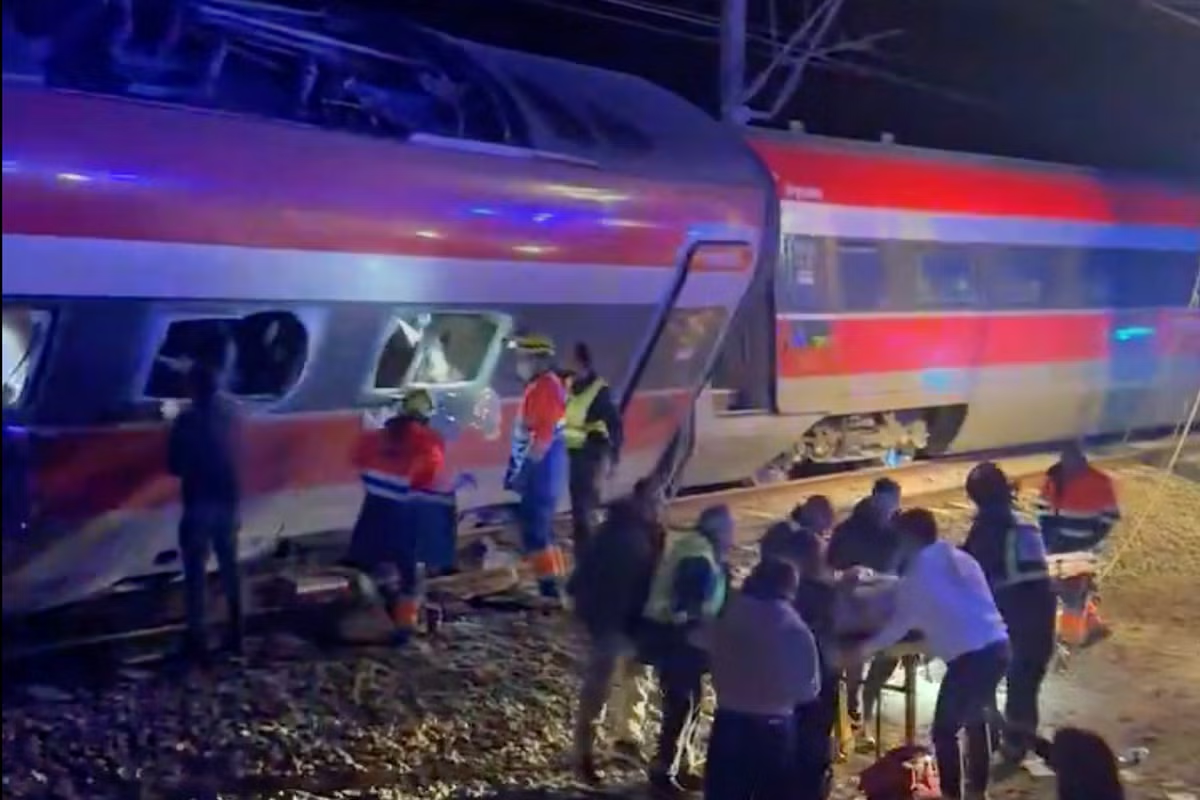
Spanish investigators are focusing on potential infrastructure failures as they continue to examine one of the country’s deadliest rail disasters in years, a high-speed train crash that has left dozens dead and many more injured. The tragedy has shocked the nation and raised urgent questions about rail safety on one of Europe’s most advanced train networks.
The crash occurred on a major high-speed line in southern Spain when a passenger train derailed and collided with another train traveling in the opposite direction. The impact caused multiple carriages to leave the tracks, scattering wreckage across a wide area and trapping passengers inside twisted metal. Emergency crews worked through the night, using heavy machinery to reach victims and recover bodies from difficult terrain near the crash site.
Early findings from investigators suggest that a defect in the railway track may have played a critical role in the accident. Technical teams examining the scene identified damage to a joint connecting two sections of rail, an essential component designed to keep tracks aligned under high speeds and heavy loads. Officials stress that it remains unclear whether the damaged joint caused the derailment or broke apart as a result of the crash, but it has become a central focus of the inquiry.
Authorities have indicated that speed and driver error are unlikely to be primary factors, as both trains were reportedly operating within permitted limits on a straight stretch of track. This has shifted attention toward infrastructure maintenance, inspection routines, and the overall condition of the rail line. Investigators are now reviewing maintenance records, recent inspection reports, and sensor data to determine whether warning signs were missed or equipment failed unexpectedly.
The Spanish government has pledged a full and transparent investigation, promising that all findings will be made public once the inquiry is complete. Prime Minister Pedro Sánchez expressed condolences to the victims’ families and declared a period of national mourning, describing the crash as a profound national tragedy. Senior government officials have emphasized that accountability will follow if negligence or systemic failures are identified.
Rail unions have urged caution against speculation, warning that premature conclusions could undermine public trust and distract from a careful, evidence-based investigation. Union representatives argue that Spain’s rail network is generally safe but acknowledge that any weaknesses uncovered must be addressed swiftly to prevent future disasters.
The crash has also reignited broader debate about rail infrastructure aging, even on modern high-speed lines. Transport experts note that while trains and signaling systems often receive the most attention, tracks themselves endure constant stress and require rigorous inspection. A single fault, they warn, can have catastrophic consequences when trains are traveling at high speed.
Hospitals across the region continue to treat survivors, some of whom remain in critical condition. Passengers who escaped with minor injuries have described scenes of chaos and fear, with carriages violently shaking before derailing and lights going out moments after impact. Counseling services have been made available to victims and families as communities across Spain mourn the loss of life.
As investigators work to piece together the final moments before the crash, pressure is mounting on transport authorities to reassure the public and demonstrate that lessons will be learned. The outcome of the investigation is expected to influence future rail safety policies, inspection standards, and infrastructure investment decisions across Spain’s rail network.
















Leave a Reply