

A fresh diplomatic dispute has emerged between Washington and Brussels after the United States imposed visa bans on several foreign officials and individuals, prompting sharp condemnation from French President Emmanuel Macron and senior European Union leaders. The row, centered on accusations of censorship and free speech restrictions, is now threatening to widen existing cracks in transatlantic relations.
The US administration announced the visa restrictions as part of a broader effort to push back against what it describes as growing censorship abroad, particularly measures that allegedly limit free expression on digital platforms, academic institutions, and political discourse. US officials argue that such policies undermine democratic values and harm American citizens and companies operating overseas.
European leaders, however, have rejected those claims, accusing Washington of mischaracterizing EU regulations and interfering in sovereign policymaking.
Macron: Free Speech Cannot Be Weaponized
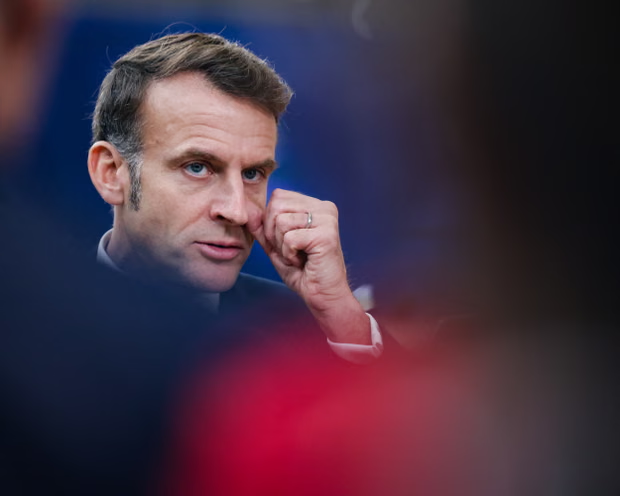
French President Emmanuel Macron was among the most vocal critics, warning that freedom of expression should not be used as a political tool to pressure allies. Speaking on the sidelines of a European summit, Macron said Europe’s approach to regulating online content is rooted in protecting citizens from hate speech, disinformation, and foreign interference—not silencing dissent.
“Freedom of speech is a shared value, but it cannot be distorted to justify unilateral sanctions against partners who are acting within their democratic frameworks,” Macron said. He added that Europe would not accept being “lectured” on democratic principles by its closest allies.
EU Officials Call Visa Bans “Unjustified”
The European Commission echoed Macron’s stance, describing the US visa bans as unjustified and counterproductive. Senior EU officials stressed that recent European laws governing digital platforms and online speech were adopted transparently through democratic processes and are consistent with international human rights standards.
According to EU sources, Brussels is concerned that the US action sets a troubling precedent, where visa policies are used as leverage in ideological or regulatory disputes. Several officials warned that such measures could provoke retaliation and complicate cooperation on shared priorities such as security, trade, and technology.
Roots of the Dispute
At the heart of the conflict is a growing philosophical divide over how democracies should balance free expression with regulation. The US has increasingly framed itself as a global defender of unrestricted speech, particularly in the digital space. European governments, by contrast, emphasize safeguards against harmful content, misinformation, and abuse, especially on large technology platforms.
US lawmakers and officials have accused some foreign governments of pressuring social media companies to remove content or silence viewpoints, arguing that these practices amount to censorship. Europe counters that its rules are aimed at accountability and public safety, not political control.
Diplomatic Fallout and Next Steps
Diplomats on both sides are attempting to prevent the dispute from spiraling further. Behind closed doors, EU and US officials are reportedly discussing ways to de-escalate tensions and clarify misunderstandings about regulatory intentions.
However, analysts say the episode reflects deeper structural disagreements that are unlikely to disappear quickly. As global debates over digital governance, artificial intelligence, and online speech intensify, clashes between the US and EU may become more frequent.
For now, Macron and EU leaders have made clear that while they value the transatlantic alliance, they will firmly defend Europe’s regulatory autonomy and reject what they see as politically motivated pressure from Washington.











Leave a Reply