

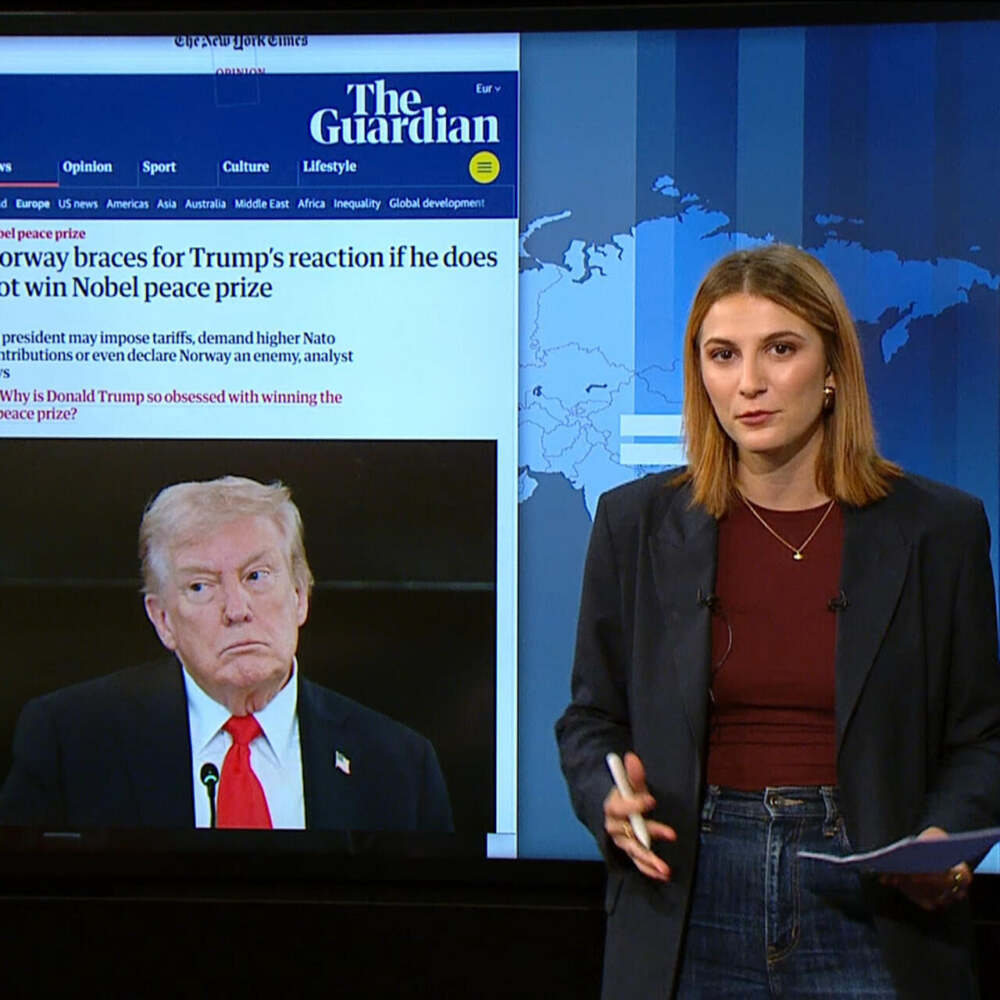
U.S. President Donald Trump has sparked fresh diplomatic unease across Europe after telling Norway’s prime minister that he no longer feels obligated to focus exclusively on peace in his international decision-making. The remarks, delivered in a formal letter, have raised concerns among European leaders about Washington’s future approach to diplomacy, security, and alliance relations.
According to officials familiar with the exchange, Trump expressed frustration over not receiving the Nobel Peace Prize, an award he has publicly said he deserved for his foreign policy efforts. In the letter, the U.S. president reportedly stated that while peace would remain important, he no longer felt compelled to “think only of peace” when determining what he believes is best for the United States. Instead, he emphasized prioritising American interests more assertively.
The message was addressed to Norwegian Prime Minister Jonas Gahr Støre, whose country hosts the Nobel Peace Prize committee. Norwegian officials responded by reiterating that the prize is decided by an independent body and that the government has no influence over the selection process. Despite this clarification, Trump’s remarks were viewed in European capitals as unusually blunt and politically charged.
The letter comes amid a broader dispute between Washington and several European countries over Greenland, a strategically significant Arctic territory that is part of the Kingdom of Denmark. Trump has repeatedly argued that the United States needs greater control or influence over Greenland for national and global security reasons, citing concerns about growing Russian and Chinese activity in the Arctic. European leaders have firmly rejected these claims, insisting that Greenland’s sovereignty is not negotiable.
Trump’s comments have added fuel to an already tense situation, especially as the U.S. administration has also threatened economic measures, including tariffs, against European nations perceived as obstructing American strategic goals. Analysts say the combination of economic pressure and confrontational rhetoric has unsettled markets and strained diplomatic relationships that have long formed the backbone of transatlantic cooperation.
Within NATO, Trump’s statements have reignited debate about the alliance’s unity and purpose. The U.S. president has repeatedly claimed that he has done more than any predecessor to strengthen NATO, while simultaneously criticising allies for not contributing enough to collective defence. European officials, however, worry that aggressive language and unilateral actions could weaken trust within the alliance at a time of heightened global instability.
Political leaders across Europe have urged restraint, emphasizing the importance of dialogue, mutual respect, and adherence to international norms. Several diplomats privately described Trump’s message as deeply concerning, noting that framing peace as conditional could have far-reaching implications for conflict resolution and global security.
Despite the controversy, some analysts caution against interpreting the letter as an immediate policy shift. They argue that Trump’s communication style often blends personal grievances with strategic messaging, and that concrete actions will matter more than rhetoric. Still, the episode has underscored how personal motivations and political symbolism can intersect with high-stakes geopolitics.
As tensions continue to simmer, European governments are watching closely for signs of escalation or reconciliation. For now, Trump’s declaration has cast a shadow over U.S.–Europe relations and raised fresh questions about the future direction of American foreign policy.









Leave a Reply