

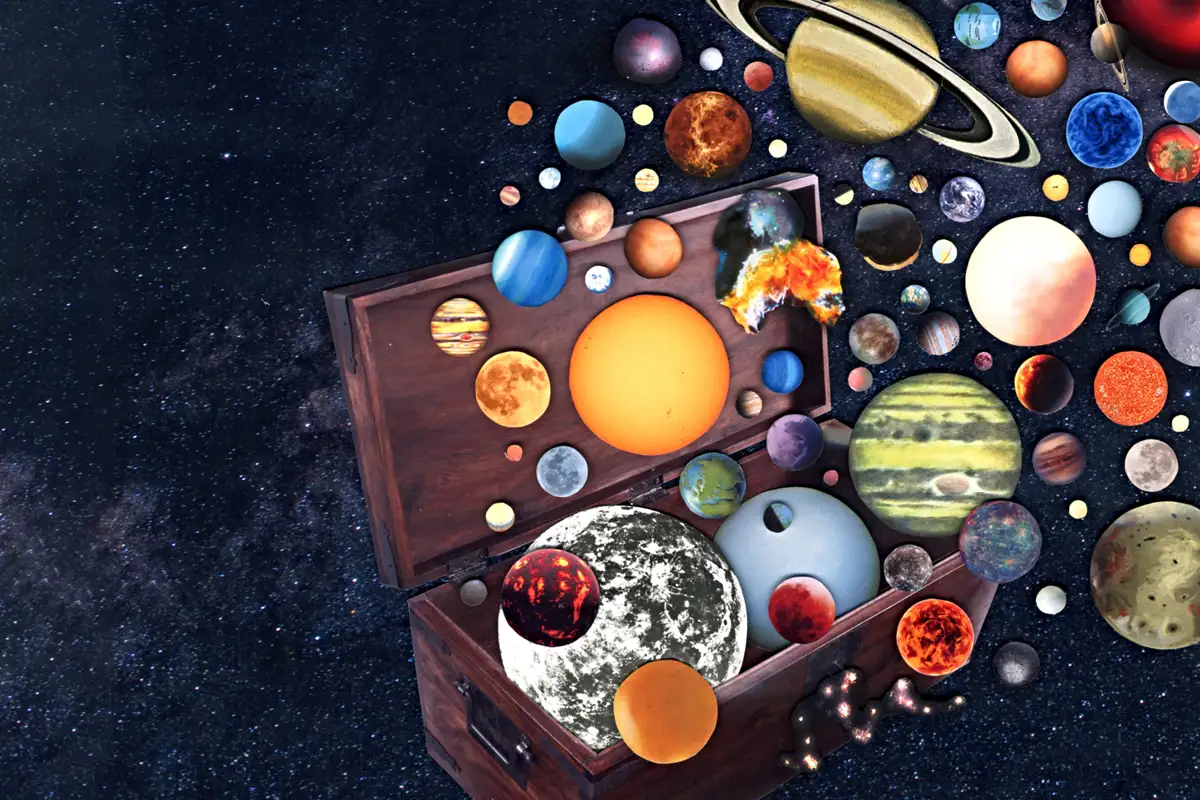
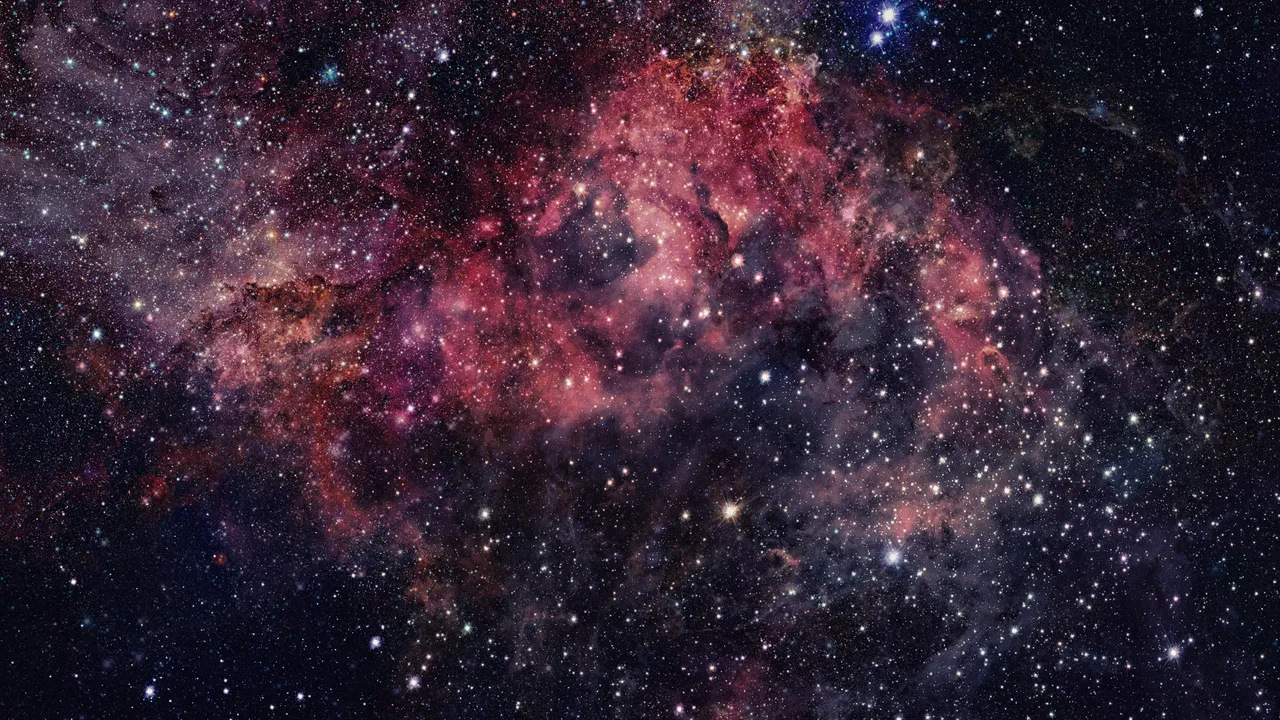
For centuries, humans believed the visible cosmos — stars, planets, and galaxies — held the bulk of the universe’s ordinary matter. Yet modern astronomy is revealing a very different picture. Despite the brilliance of stars and galactic splendor, most of the universe’s “normal” matter is hidden from sight and spread across vast regions of space in forms that are incredibly difficult to observe.
This ordinary matter — made of protons, neutrons, and electrons — is known as baryonic matter. It forms everything we are familiar with here on Earth, yet it accounts for only a fraction of the matter that exists in the cosmos. Scientists have long faced a major puzzle: theoretical models of the early universe predicted more ordinary matter than what telescopes actually saw in galaxies, stars, and gas clouds. This apparent shortfall became one of cosmology’s most persistent mysteries, known as the “missing baryon problem.”
Illuminating the Dark Spaces Between Galaxies
Over the past decade, astronomers developed innovative techniques to solve this cosmic conundrum — and the answer lies not within galaxies, but largely between them. The vast majority of ordinary matter exists in an almost invisible form, occupying the intergalactic medium — the diffuse gas that stretches across the immense cosmic web connecting clusters of galaxies.
This intergalactic matter does not emit bright light like stars, making it extremely hard to detect with traditional optical telescopes. Instead, it reveals itself through subtle signatures, such as its influence on passing energetic signals from deep space. By tracking these signals, scientists can measure the amount of matter the signals pass through, effectively “weighing” the invisible gas that threads the cosmos.
Through these advanced methods, researchers now estimate that roughly three‑quarters of all ordinary matter resides in intergalactic space. A significant portion also exists as tenuous gas forming halos around galaxies. In contrast, only a small fraction — less than ten percent — is bound up in the luminous structures we are familiar with: stars, planets, and dense clouds within galaxies.
How Astronomers Found the Missing Matter
The breakthrough in locating this elusive matter came from observing fast radio bursts (FRBs) — extremely brief but powerful flashes of radio waves originating from distant galaxies. As these bursts travel through space, they interact with electrons in diffuse gas. This interaction causes measurable changes, known as dispersion, in the radio signal.
By analyzing the degree of dispersion across many such bursts from different directions, astronomers have effectively mapped how much ordinary matter lies along those paths. The data revealed that this matter is not randomly distributed but is woven into a vast cosmic tapestry — the elusive gas threads of the cosmic web.
The Cosmic Web: A Hidden Superstructure
The universe on its largest scales resembles a colossal three‑dimensional network, where massive galaxy clusters sit at the intersections of long filaments. These filaments are composed of extremely hot, diffuse plasma. Although invisible to ordinary telescopes, this plasma holds enormous quantities of baryonic matter.
In effect, the universe’s ordinary matter isn’t clustered primarily in bright objects like galaxies but is spread across an intricate filigree of gas and plasma, linking galaxies and permeating deep space. This revelation confirms long‑standing theoretical predictions from cosmology and fills a crucial gap in our inventory of cosmic matter.
Why This Matters
Understanding where ordinary matter resides has significant implications for astrophysics and cosmology. These discoveries:
- Validate cosmological models: The predicted amount of baryonic matter from the early universe now matches what astronomers observe when the hidden matter is included.
- Inform galaxy formation theories: The intergalactic medium plays a key role in fueling galaxies. Gas flowing along cosmic web filaments feeds star formation and influences galactic evolution.
- Refine cosmic simulations: Accurate models of the universe’s structure — including how matter clumps under gravity — require knowing how both visible and hidden matter are distributed.
This understanding also sharpens our grasp of the universe’s evolution since the Big Bang and provides insight into how matter transitions from diffuse state to dense formations like stars and planets.
Beyond Ordinary Matter
It’s important to note that ordinary matter represents only a small portion of the universe’s total composition. The rest consists of dark matter and dark energy — mysterious components that do not interact with light in the ways familiar matter does. While dark matter outweighs normal matter by several times, its presence is inferred only through gravitational effects.
Still, comprehending where baryonic matter resides is essential. By fully mapping it, astronomers can better understand how gravity, dark matter, and ordinary matter interact to shape the cosmos we inhabit.
A New Cosmic Perspective
This deeper glimpse into the universe reveals a remarkable truth: what looks empty is truly rich with substance. The breathtaking galaxies and glowing nebulae we see are just the tip of a vast iceberg of ordinary matter. Much of the universe’s substance is hidden in plain sight — spread across near‑empty space, woven into an enormous cosmic web that defies intuition yet defines the structure of everything we observe.
As observational techniques continue to improve, astronomers will refine their understanding even further, unraveling more secrets of the cosmos and deepening humanity’s connection to the vast universe beyond our everyday view.









Leave a Reply