

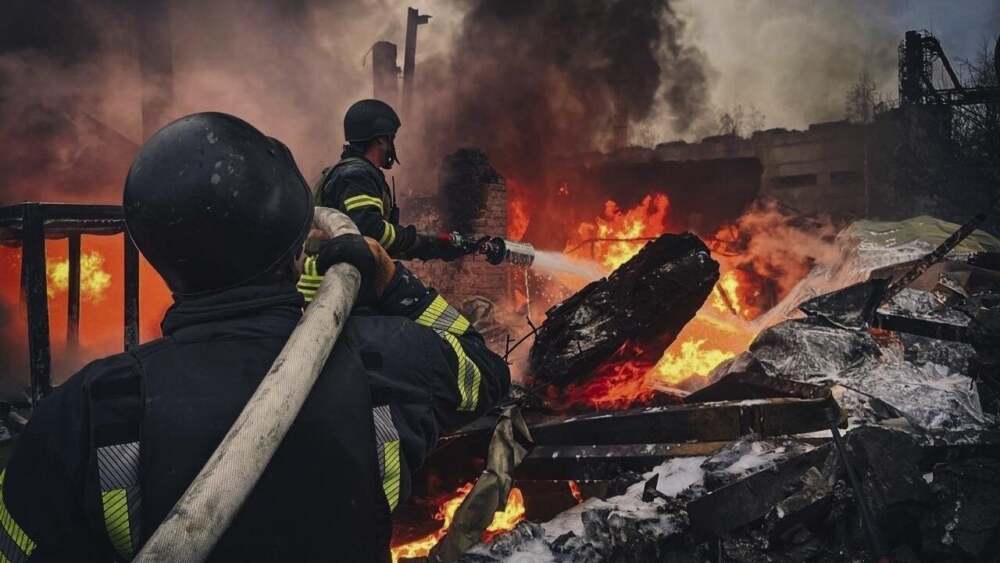
In one of the most intense aerial bombardments in recent months, Ukrainian authorities reported a massive overnight assault on Kyiv and surrounding regions involving hundreds of drones and dozens of missiles, marking a stark escalation in the long-running conflict between Russia and Ukraine. The onslaught caused civilian casualties, significant damage to critical infrastructure and heightened fears across Europe of an expanding humanitarian crisis.
Early in the morning, air raid sirens echoed throughout Ukraine’s capital as waves of unmanned aerial vehicles and missile strikes cut through the night sky. Officials confirmed that multiple districts in Kyiv were struck, resulting in at least four confirmed deaths and numerous injuries. Residential buildings, energy facilities, and public infrastructure sustained extensive damage, leaving thousands without electricity, heat, and water amid frigid winter conditions.
Local authorities described scenes of chaos as emergency crews worked through debris-filled streets to rescue those trapped in collapsed structures. The city’s mayor urged residents to seek shelter and stay vigilant, while health services treated a growing number of injured civilians transported from the impact zones.
According to Ukrainian military sources, the barrage included a combination of combat drones and high-speed missiles — some launched deep into Ukrainian territory — overwhelming parts of the capital’s air defense capabilities. Interception systems managed to shoot down many of the incoming threats, but the sheer volume meant that a significant number still reached their targets.
Among the arsenal used by Russian forces was a newly deployed hypersonic missile, capable of travelling at extremely high speeds and evading many traditional air defense systems. Although the exact targets of the missile remain unclear, its use represents one of the rare confirmed deployments of this advanced weaponry against Ukrainian territory, signalling a possible shift in Moscow’s tactical approach.
The Russian government described the strikes as a retaliatory response to what it called “aggressive actions by Ukrainian forces,” claims Kyiv and its international partners have consistently rejected as unfounded. Ukrainian leaders characterised the offensive as a deliberate attempt to terrorise civilians and undermine Ukraine’s capacity to sustain essential services during the harsh winter months.
In addition to the missile and drone strikes on Ukrainian territory, Ukrainian forces reportedly carried out counter-operations targeting Russian infrastructure, including an oil depot in the southern region of Volgograd. This action resulted in significant fires at the facility, underscoring Kyiv’s strategy to disrupt the logistical and economic networks sustaining the Russian war effort.
International reaction to the latest escalation has been swift. European capitals condemned the attacks, calling for increased support for Ukraine’s defenses and stronger sanctions against Russia. NATO officials expressed concern over the intensification of hostilities, particularly given that some of the strikes occurred closer than usual to European Union and NATO member borders.
The ongoing bombardment has further complicated diplomatic efforts to negotiate a ceasefire or peace settlement. While representatives from various countries have been engaged in talks aimed at reducing violence, the surge in attacks has cast doubt on the immediacy of any breakthrough.
As Kyiv struggles to restore power and essential services under the strain of repeated assaults, residents have responded with remarkable resilience. Many have taken shelter in underground stations, improvised facilities, and community centres, supporting one another to endure the worst of the strikes and sustained winter temperatures.
This episode represents a troubling reminder that the conflict remains unresolved, with both sides capable of inflicting significant damage. Analysts warn that unless international diplomatic momentum can be revived, such large-scale attacks may become more frequent, with devastating consequences for civilians caught in the crossfire.











Leave a Reply