

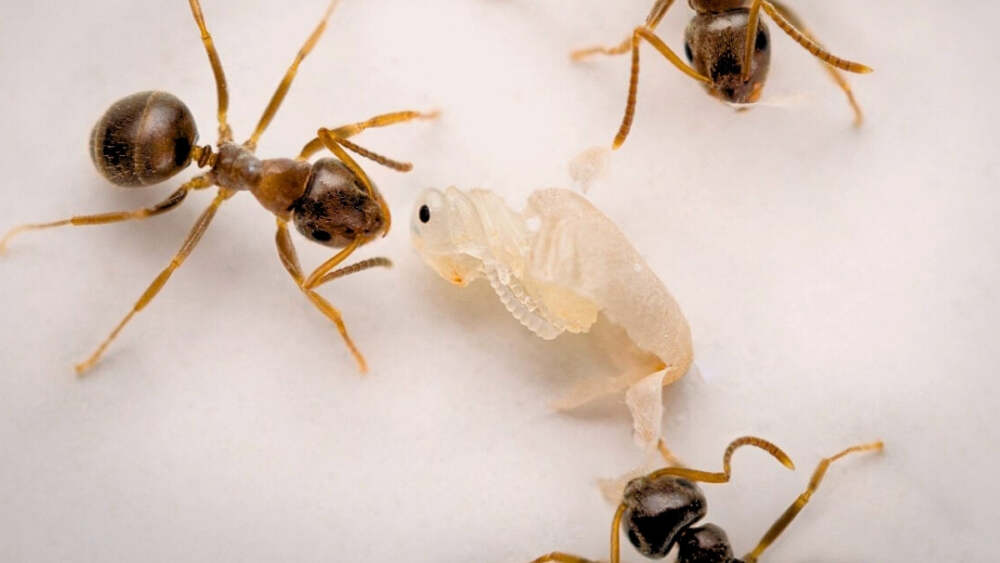
A groundbreaking study has revealed a surprising and macabre behavior in young ants: when infected or gravely ill, they appear to actively remove themselves from the colony, effectively “begging for death” to protect their nestmates. The research, conducted by entomologists studying social insect behavior, sheds new light on the extreme strategies some species employ to safeguard their communities.
The study observed ant larvae and young worker ants infected with pathogens or parasites. Rather than remaining with the colony and risking the spread of disease, the ants voluntarily isolated themselves in remote areas or exposed themselves to conditions likely to lead to their death. Scientists describe this behavior as a form of “altruistic self-sacrifice,” ensuring the survival of the larger group at the cost of individual life.
“This discovery highlights the remarkable social sophistication of ants,” said one of the lead researchers. “Even at a young age, these insects seem to recognize their own decline and act in a way that protects their colony, which is vital for the overall fitness and survival of the species.”
Such behaviors are part of what scientists call social immunity, where individuals within a colony take active measures to reduce the spread of disease. Previously, studies focused on adult worker ants who remove infected brood or clean contaminated areas, but this is among the first evidence that even young ants participate in these life-or-death protective strategies.
The research team used controlled laboratory experiments and careful observation of ant colonies to track the movements and actions of sick ants. The results consistently showed that infected individuals would remove themselves from the nest or enter environments with a high likelihood of fatality, rather than remain in close contact with healthy colony members.
Beyond ants, this study contributes to the broader understanding of self-sacrificial behavior in social animals. It raises fascinating questions about the evolutionary pressures that drive such extreme forms of altruism and how communal survival can sometimes outweigh individual life.
Researchers hope that further investigation will uncover the biological signals prompting this behavior, such as chemical cues, immune responses, or neural mechanisms that enable young ants to make such fatal decisions.
The findings underscore the complex and sometimes chilling strategies that social insects employ to maintain colony health, providing fresh insights into the delicate balance between individual and collective survival in the animal kingdom.














Leave a Reply