

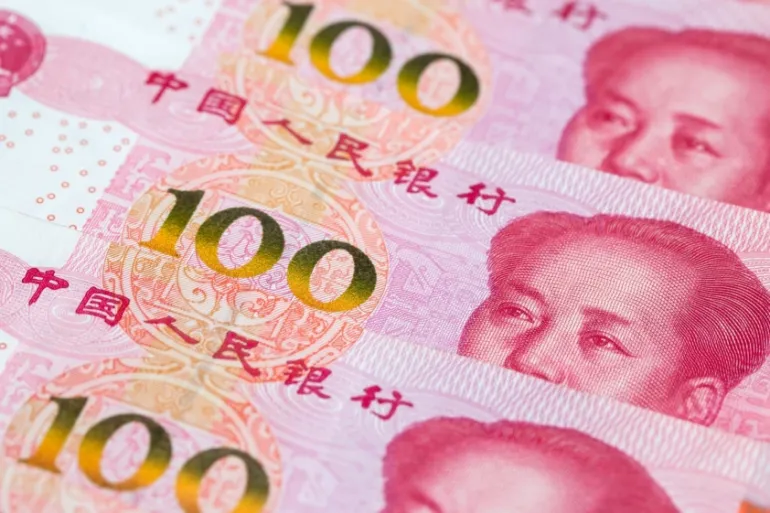
China’s yuan strengthened past the psychologically important level of 7 per US dollar, marking a notable shift in currency momentum after months of tight management by the country’s central bank. The move signaled that the People’s Bank of China (PBOC) is allowing greater appreciation, responding to growing pressure from market bulls who have been betting on a stronger Chinese currency.
The yuan’s climb reflects a combination of improving sentiment toward China’s economy, easing pressure from capital outflows, and a recalibration of policy priorities. For much of the past year, the PBOC had leaned against rapid yuan gains, setting daily reference rates that restrained appreciation in order to support exports and maintain financial stability. The recent breakthrough suggests officials are now more comfortable with currency strength.
Market participants interpreted the shift as a sign that authorities see fewer downside risks from a firmer yuan. Improved trade performance, relative stability in foreign exchange reserves, and signs of recovery in parts of the domestic economy have reduced fears of sharp depreciation. At the same time, a softer US dollar globally has given emerging-market currencies, including the yuan, additional room to rise.
Currency strategists noted that the 7-per-dollar level carries symbolic weight. When the yuan weakens beyond that mark, it often fuels concerns about capital flight and economic stress. Moving in the opposite direction sends a message of confidence, both to domestic investors and international markets. The yuan’s advance was accompanied by increased trading activity, suggesting that speculative and hedging flows reinforced the move.
The PBOC’s apparent willingness to “cave in to bulls,” as some traders describe it, does not mean a full retreat from currency management. China still operates a tightly guided exchange-rate system, and officials are likely to step in if moves become disorderly. However, the recent tolerance for appreciation indicates a tactical adjustment rather than a rigid defense of past levels.
A stronger yuan carries mixed implications for China’s economy. On one hand, it helps reduce the cost of imports, particularly commodities and energy, easing inflationary pressures. It can also improve confidence among foreign investors, who have been cautious amid regulatory uncertainty and slowing growth. On the other hand, exporters may feel pressure as their goods become more expensive abroad, especially in industries operating on thin margins.
Global markets are watching closely. A stable or appreciating yuan can have ripple effects across Asia, supporting regional currencies and reducing volatility in emerging markets. It also eases concerns that China might engage in competitive devaluation during periods of economic stress, a fear that has periodically unsettled global investors in the past.
Looking ahead, analysts expect the PBOC to balance market forces with policy goals. While further yuan gains are possible if the dollar remains weak and domestic data improves, authorities are unlikely to endorse a one-way bet. Instead, they appear focused on promoting two-way flexibility while preventing sharp swings that could disrupt trade or financial stability.
For now, the yuan’s move past 7 per dollar stands as a clear signal: China’s central bank is prepared to accommodate strength when conditions allow, even if it means yielding ground to bullish market sentiment.
















Leave a Reply