

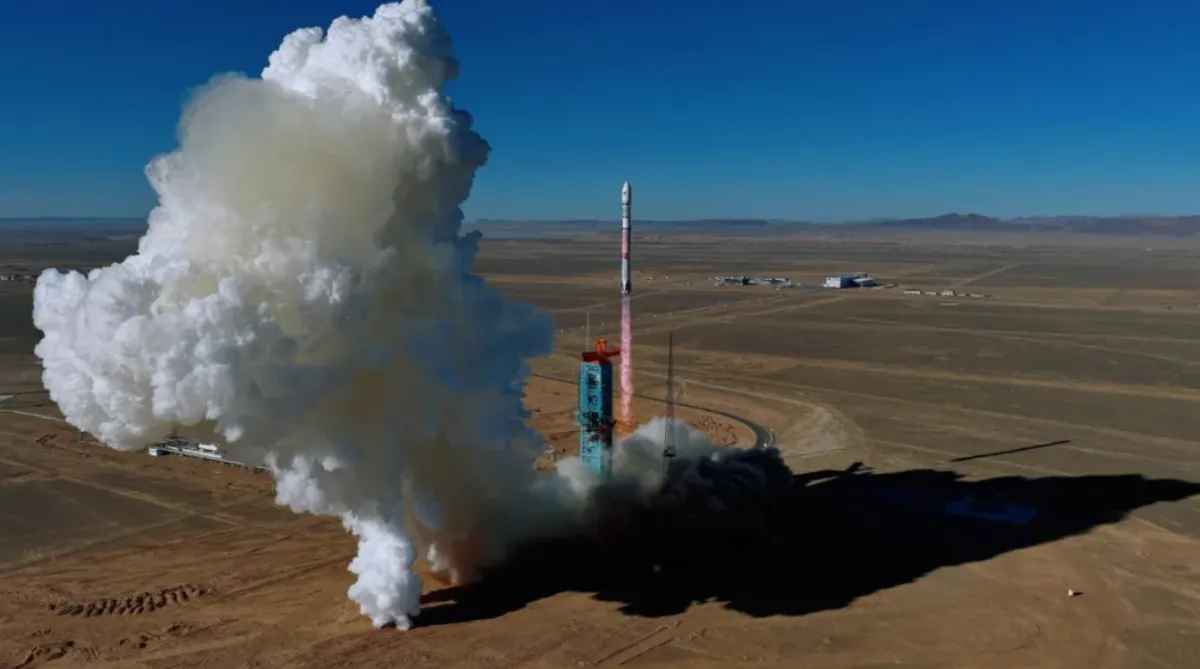
China’s privately developed rocket, Zhuque-3, successfully reached orbit during its latest test flight, marking a significant milestone for the country’s burgeoning commercial space sector. However, the mission experienced a setback as the rocket’s first stage was lost during a landing attempt, highlighting the ongoing challenges of reusable rocket technology.
The orbital launch demonstrates Zhuque-3’s capability to deploy satellites into low Earth orbit, a key goal for China’s expanding private space industry. Engineers reported that the rocket’s upper stage performed as expected, delivering its payload with precision. This success signals growing confidence in China’s commercial launch providers, which are aiming to compete with global players such as SpaceX and Rocket Lab.
The failed landing attempt of the first stage, however, underscores the difficulty of mastering reusable rocket technology. Despite the loss, officials described the flight as a valuable learning experience, providing critical data on booster recovery, engine performance, and trajectory optimization. The team is expected to use these insights to refine future launch attempts.
Zhuque-3, developed by LandSpace, is part of a wave of Chinese private rockets designed to reduce the cost of space access and expand domestic satellite deployment capabilities. The rocket features a kerosene-liquid oxygen engine and is designed with reusability in mind, although full operational reliability is still under development.
Industry analysts note that achieving orbit on a test flight is a major accomplishment for any private space company, even when recovery efforts fall short. The data gathered from this mission will inform future design improvements and potentially accelerate China’s position in the commercial space launch market.
The Zhuque-3 mission comes amid global competition in satellite deployment, with private companies increasingly driving innovation in reusable technology and cost-efficient access to space. China’s private space sector is poised for rapid growth, and missions like this provide both proof of concept and vital experience for overcoming technical hurdles.
Despite the partial setback, the successful orbital insertion represents a step forward for Chinese private aerospace ambitions, showcasing both the potential and the challenges of developing reusable rocket systems in a competitive international market.















Leave a Reply