

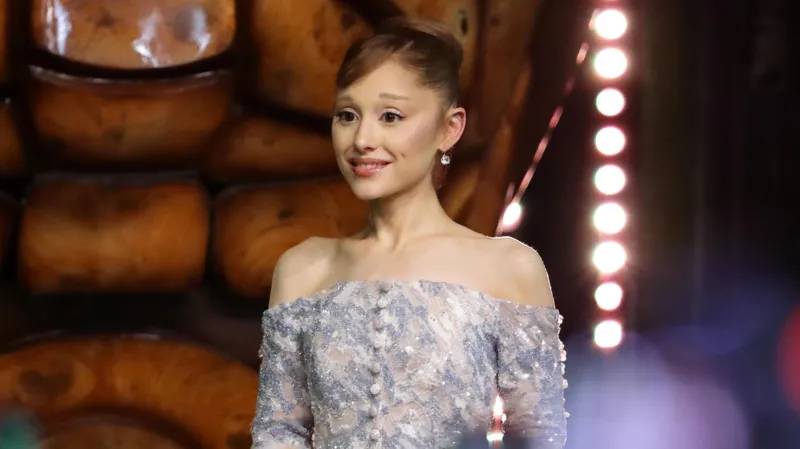
During the Singapore premiere of Wicked: For Good, a frightening incident unfolded on the red carpet when a man broke through security and ran toward Ariana Grande, wrapping his arm around her. The man, widely identified online as “Pyjama Man,” has a history of similar disruptive stunts.
A Costar Speaks Up
Marissa Bode, who plays Nessarose Thropp in the Wicked films, strongly condemned the attacker in a series of heartfelt videos. She rejected the idea that his actions could be defended in the name of “fandom,” calling out people who defended him online. According to Bode, his behavior made Grande feel “incredibly unsafe.”
Bode criticized the way social media can glorify such intrusions, accusing some of defending the man’s actions simply because he claimed to be a fan. “If you think this is okay, you’re not a fan — you’re someone who’s entitled,” she said, pushing back on the notion that public figures owe anything more than their performances.
On Boundaries and Respect
In her remarks, Bode emphasized that celebrities are real people — not products to be consumed. She argued that expecting them to maintain composure and kindness when their personal space is violated sends a harmful message. According to her, the pressure on women in the public eye to be infinitely patient and polite is unfair and rooted in a much larger issue.
She also pointed out that Grande’s experience isn’t isolated. While discussing the incident, Bode drew attention to a broader trend of fan behavior that disregards consent and personal boundaries. She named other public figures, like Olivia Rodrigo and Rachel Zegler, as examples of individuals who face similar expectations to always respond “nicely” when their own boundaries are crossed.
Security & Support
The man was reportedly taken into custody following the incident, but Bode’s message focused more on accountability and cultural change than on legal consequences. She urged fans and the public to reflect on what real support means — and to recognize that celebrity doesn’t erase someone’s right to safety.
Why This Resonates
This moment is resonating broadly because it calls into question how far “fandom” can go before it becomes harmful. Bode’s strong response is not just about protecting Grande — it’s about demanding a shift in how society treats the privacy and personhood of public figures.
Bottom Line
In speaking out, Marissa Bode used her platform to highlight a serious issue: the dangerous overlap between admiration and entitlement. Her words serve as a powerful reminder that crossing boundaries isn’t a harmless stunt — it’s a violation. And when public figures speak out against it, it challenges everyone to rethink what we accept as “just fandom.”







Leave a Reply