

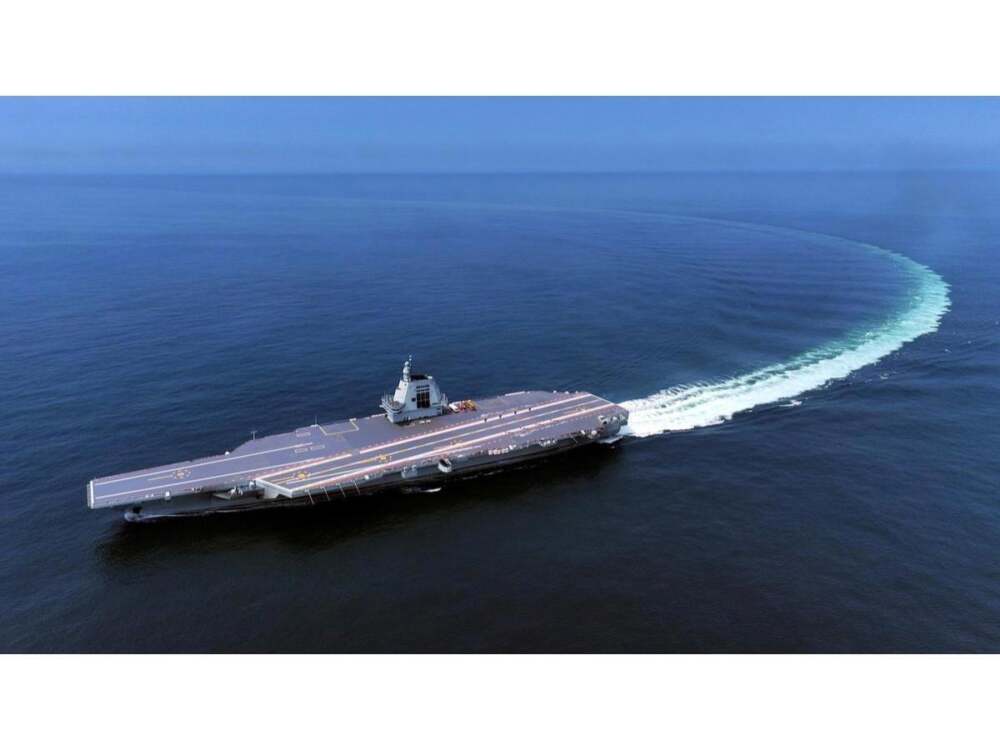
In a landmark step toward expanding its maritime power, China has officially commissioned its third aircraft carrier, Fujian. The event marks a major milestone in the nation’s naval modernization efforts and underscores Beijing’s ambitions to establish a world-class “blue-water” navy capable of global reach.
A Technological Breakthrough
Unlike China’s previous carriers, which were modeled after older Soviet designs, Fujian is the country’s first fully domestically designed and built aircraft carrier. It features cutting-edge technology, including an electromagnetic catapult launch system (EMALS) — a significant upgrade from the ski-jump ramps used on its earlier carriers. This advanced system allows heavier aircraft, such as next-generation stealth fighters and airborne early-warning planes, to take off with greater efficiency and range.
The Fujian boasts a larger flight deck, improved radar systems, and enhanced command and control capabilities. Analysts say these improvements position it as a strategic asset comparable to modern U.S. Navy carriers, though China still faces a long path before reaching the same level of operational experience.
Strategic Implications
The commissioning of Fujian sends a clear message to regional and global rivals. It highlights China’s growing ability to project power far beyond its coastline, supporting operations across the Pacific and Indian Oceans. With this move, Beijing signals its determination to secure maritime interests, protect trade routes, and strengthen its presence in contested areas such as the South China Sea and Taiwan Strait.
Military experts note that the new carrier gives the People’s Liberation Army Navy (PLAN) greater flexibility to conduct both defensive and offensive missions. It can carry a more diverse air wing, coordinate with destroyers and submarines, and provide air cover for Chinese naval task forces operating far from home waters.
A Long Road to Full Deployment
While the Fujian has been officially commissioned, it will take time before it becomes fully operational. The carrier will undergo months — possibly years — of testing and training to ensure the reliability of its advanced systems and flight operations. The process includes integrating a new generation of carrier-based aircraft and refining tactics for carrier strike group missions.
Moreover, unlike the nuclear-powered U.S. carriers, Fujian uses conventional propulsion, limiting its endurance during extended deployments. Sustaining long missions will require a well-coordinated network of supply and escort vessels — an area where China is still developing expertise.
Regional Reactions
The commissioning has drawn close attention from neighboring countries. Nations across the Asia-Pacific are expected to reassess their maritime strategies, particularly as China’s naval power continues to expand at an unprecedented pace. For some, the Fujian symbolizes a shift in the regional balance of power; for others, it reinforces the urgency of strengthening alliances and defense cooperation.
The Bigger Picture
The Fujian represents more than just a military milestone — it’s a symbol of China’s growing confidence in its technological and industrial capabilities. The ship’s successful design and construction reflect the country’s transformation into one of the world’s leading naval powers.
However, the true test lies ahead. Turning the Fujian into a fully combat-ready carrier will depend on how effectively China trains its pilots, coordinates carrier operations, and develops the logistical support needed for sustained missions across the globe.
Final Thoughts
The commissioning of the Fujian is both a technological triumph and a geopolitical statement. It demonstrates China’s determination to reshape the global maritime landscape and challenges existing naval hierarchies. While the ship is not yet battle-ready, its presence alone signals a new era for the People’s Liberation Army Navy — one that could redefine power dynamics across the Indo-Pacific region.















Leave a Reply