

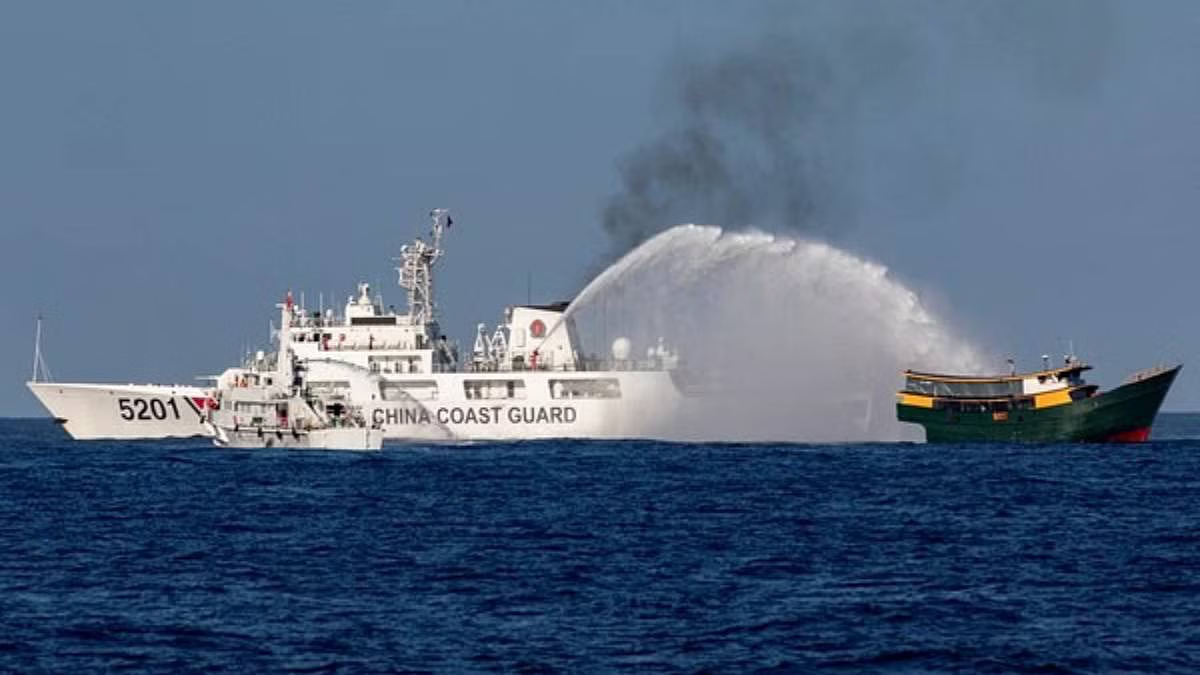
Scarborough Shoal — A maritime incident has escalated tensions between China and the Philippines as Chinese coast guard vessels used water cannons on Philippine government ships following a collision near the disputed Scarborough Shoal. The confrontation underscores the rising friction over territorial claims in the South China Sea.
What happened
- More than ten Philippine government vessels were navigating near Scarborough Shoal, a contested maritime feature claimed by both nations.
- Chinese coast guard authorities say that one of the Philippine ships rammed a Chinese vessel after repeatedly entering what Beijing describes as its waters without authorization. In response, Chinese vessels deployed water cannons and “control measures” to force the Filipino ships to retreat.
- The Philippine side reports that its vessels were providing assistance—delivering supplies like water, ice, and fuel—to over thirty fishing boats operating in the area. The Philippine coast guard also says that one of its vessels was damaged, a crew member injured, and there was use of high-pressure water cannon that impacted fire control and electrical systems aboard the ship.
Strategic significance of Scarborough Shoal
- Scarborough Shoal lies within what the Philippines claims as its Exclusive Economic Zone, though China has de facto administered and controlled parts of it.
- The shoal is rich in marine resources, particularly fishing grounds, but its value also stems from its location along key shipping and navigation routes in the South China Sea.
- Recently, Chinese authorities moved to designate part of the shoal area as a national nature reserve, arguing conservation concerns; the Philippines has strongly protested, viewing the move as a covert way to further assert control.
Fallout and reactions
- Philippine government officials lodged diplomatic protests, condemning the aggressive actions. Manila insists on its sovereign rights under international law, including treaties and rulings that recognize Philippine claims in parts of the South China Sea.
- China maintains that its actions were lawful enforcement in response to what it says were illegal intrusions. Beijing argues the person responsible aboard the Philippine boat acted provocatively by ramming their ship.
- The encounter has drawn international attention. Observers and neighbouring states warn that such sea incidents carry risk of further escalation, especially because the region is already sensitive due to overlapping maritime claims and frequent face-offs at sea.
What to watch next
- Whether the diplomatic protests from the Philippines result in any formal response or pressure from international bodies.
- How China enforces or implements its nature reserve designation near the shoal, and whether it limits Philippine fishing or navigation rights substantially.
- Possible future confrontations: whether naval or coast guard vessels from both sides increase patrols, or whether either side seeks to bolster its presence in the area.
- International reactions, especially from countries concerned with freedom of navigation and maritime law, and how these might play into broader regional security dynamics.
Conclusion
The recent clash near Scarborough Shoal highlights the sharp tension between sovereignty claims, environmental conservation rhetoric, and geopolitical maneuvering. With fishing rights, maritime passage, and national pride all at stake, the incident may be a prelude to further friction unless there are strong diplomatic efforts to diffuse the situation.
















Leave a Reply