

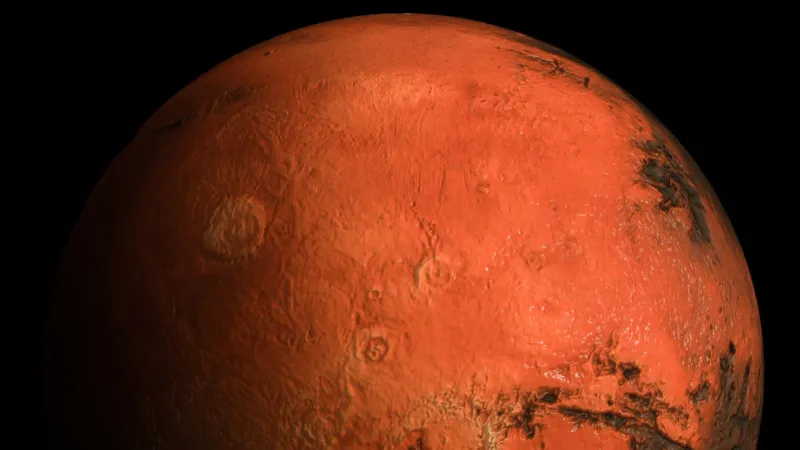
For the first time, scientists may have detected the sounds of lightning on Mars, offering a tantalizing glimpse into the planet’s atmospheric activity. The discovery could help researchers better understand Martian weather and the dynamics of its thin, dusty atmosphere.
The Discovery
Using data collected by instruments aboard Mars rovers and orbiters, researchers have identified audio signals consistent with lightning strikes. These “crackling” sounds appear to originate from electrostatic discharges in Martian dust storms, suggesting that the red planet experiences more complex weather phenomena than previously thought.
Why It Matters
Lightning on Mars is not just a curiosity—it could have major scientific implications. Electrostatic activity might play a role in shaping the Martian atmosphere and influencing chemical reactions on the surface, including the formation of key compounds like hydrogen peroxide. Understanding lightning could also help scientists assess potential hazards for future human missions.
Challenges of Detection
Detecting lightning on Mars is no small feat. Unlike Earth, Mars has a much thinner atmosphere, and its storms generate weaker electrical discharges. Researchers relied on highly sensitive instruments capable of picking up subtle electromagnetic and acoustic signals, which were then analyzed to confirm their likely origin.
Implications for Martian Weather
If confirmed, lightning would provide new insights into the nature of Martian dust storms and their role in weather systems. It may also influence the planet’s climate models and improve predictions of storm activity, which is crucial for planning robotic and human missions.
Next Steps
Scientists plan to continue monitoring Mars for similar phenomena, using both current missions and future probes. Further analysis of the sounds and electromagnetic data could confirm whether these signals are indeed lightning, and help determine how frequently such events occur on the red planet.
Conclusion
The possible detection of lightning on Mars marks an exciting step forward in understanding our neighboring planet. As research continues, each crackle and spark brings humanity closer to fully grasping the mysteries of the Martian atmosphere—and preparing for eventual exploration by humans.











Leave a Reply