

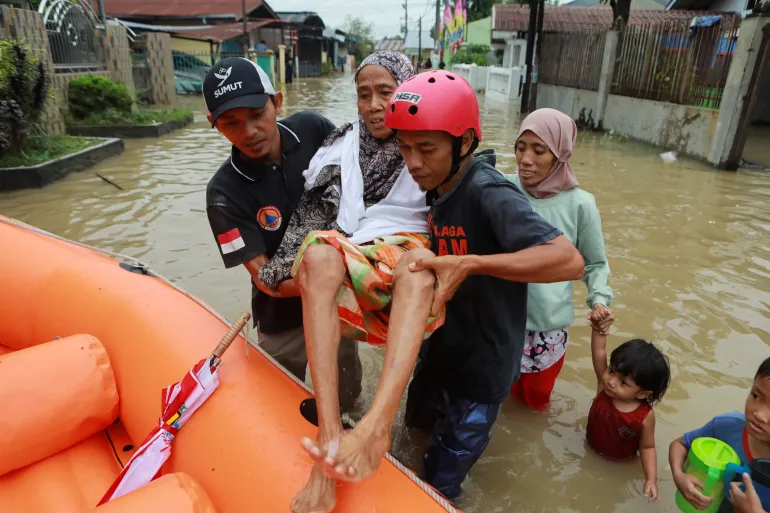
Indonesia is grappling with one of the deadliest natural disasters in recent years as severe floods and landslides ravaged parts of the country. Torrential rains triggered the disasters, destroying homes, sweeping away roads, and displacing thousands of residents. The confirmed death toll has climbed to 174 people, with many more injured and dozens still missing.
A Sudden and Devastating Disaster
The extreme rainfall, which began earlier this month, quickly overwhelmed rivers and soil on steep hillsides. Entire villages were inundated or buried under landslide debris within minutes. Eyewitnesses describe chaotic scenes as families attempted to escape rising waters, with some forced to climb onto rooftops or wade through waist-deep water. Infrastructure damage has compounded the crisis, leaving many communities isolated and cut off from emergency assistance.
Human Toll and Displacement
Beyond the immediate loss of life, the floods and landslides have left thousands homeless. Families who lost their homes now shelter in temporary camps, often lacking basic necessities such as clean water, food, and medical aid. The disaster has disproportionately affected vulnerable groups, including the elderly, children, and low-income residents. Survivors recount harrowing experiences of narrowly escaping the torrents and searching for missing loved ones.
Rescue and Relief Efforts Underway
National and local authorities have mobilized emergency response teams to search for survivors, evacuate stranded residents, and deliver critical supplies. Military personnel and volunteers have been deployed to help clear debris, restore access to isolated villages, and provide temporary shelters. However, rescue efforts face ongoing challenges as heavy rains continue in some regions and damaged infrastructure delays relief operations.
Environmental and Structural Factors
Experts note that Indonesia’s combination of hilly terrain, deforestation, and unplanned urban expansion makes certain areas highly susceptible to flooding and landslides. Saturated soil and blocked drainage systems exacerbate the risk, turning heavy rains into deadly disasters. The recent events highlight the urgent need for improved land-use planning, reforestation programs, and investment in flood-resilient infrastructure.
Long-Term Implications
The disaster has created both immediate and long-term challenges. Families face the daunting task of rebuilding their homes and restoring livelihoods, while communities grapple with disrupted schools, healthcare, and transportation networks. In addition to physical reconstruction, mental health support and social services will be essential to help survivors cope with trauma and loss.
Call for Preparedness and Solidarity
The recent floods and landslides serve as a stark reminder of the destructive power of natural disasters and the importance of preparedness. Strengthening early-warning systems, improving building and infrastructure standards, and fostering community awareness are critical steps to reduce future risks. Meanwhile, solidarity from local, national, and international organizations remains crucial in supporting recovery and rebuilding resilient communities.

















Leave a Reply