

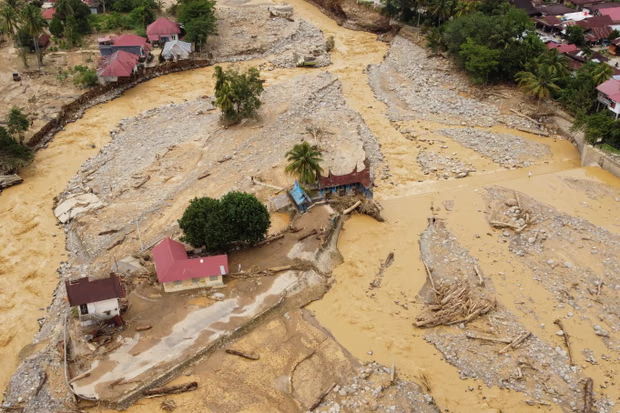
More than 900 people have lost their lives as relentless flooding across Indonesia, Thailand, and Sri Lanka pushes entire communities into crisis. Days of monsoon-triggered downpours, overflowing rivers, and widespread landslides have created one of the region’s deadliest natural disasters in years. Emergency teams are racing against time to reach stranded survivors, while officials warn that the death toll may continue to rise.
A Region Submerged
The floods, driven by unusually intense monsoon systems, have inundated towns and villages across all three countries. Entire districts have been swallowed under torrents of fast-moving water, leaving homes destroyed, crops ruined, and infrastructure paralysed.
In Indonesia, the hardest-hit areas include parts of Sumatra and Java, where heavy rain triggered massive landslides that swept away homes and roads. Rescue teams continue to dig through mud and debris, often by hand, to retrieve victims or search for survivors.
In Thailand, overflowing rivers have submerged wide swaths of the northern and northeastern provinces. Thousands of residents have been forced to evacuate after water levels rose dramatically overnight, catching many off guard.
Sri Lanka, meanwhile, is battling both flash floods and mudslides across its central and southern regions. Officials say dozens of villages are entirely cut off, prompting the deployment of military helicopters and boats to deliver aid.
Humanitarian Crisis Deepens
With more than 900 confirmed deaths and thousands still unaccounted for, concerns are growing about the scale of the humanitarian crisis. Millions are affected by power outages, contaminated water supplies, and the collapse of road networks.
Relief agencies warn of potential outbreaks of waterborne diseases as floodwaters stagnate, while overcrowded shelters strain to support displaced families. Medical teams report shortages of clean water, essential medicines, and emergency equipment.
Climate Experts Sound the Alarm
Meteorologists say the intensity of this monsoon season reflects a worrying trend: the increasing frequency of extreme weather events fueled by climate change.
Warmer ocean temperatures have strengthened regional storm systems, while deforestation and unplanned urban development have heightened flood vulnerability. Climate experts across Asia are urging governments to invest in long-term mitigation strategies, from improved drainage systems to resilient housing and early-warning technologies.
Governments Mobilize Relief Operations
Authorities in all three nations have deployed military forces, emergency responders, and local volunteers to conduct rescue operations. International aid organizations are also stepping in, providing food, medical supplies, and temporary shelters.
Despite the efforts, officials admit that many remote areas remain inaccessible due to washed-out bridges and landslides. Drone and satellite imagery are being used to map damage and identify communities still awaiting assistance.
A Call for Regional Cooperation
As Southeast Asia mourns one of its deadliest flood seasons in recent memory, leaders across the region are calling for stronger cross-border disaster preparedness and climate resilience. The scale of destruction has highlighted the need for shared resources, early-warning systems, and coordinated emergency planning.
For now, the focus remains on saving lives, supporting survivors, and rebuilding communities devastated by the relentless force of nature.
















Leave a Reply