

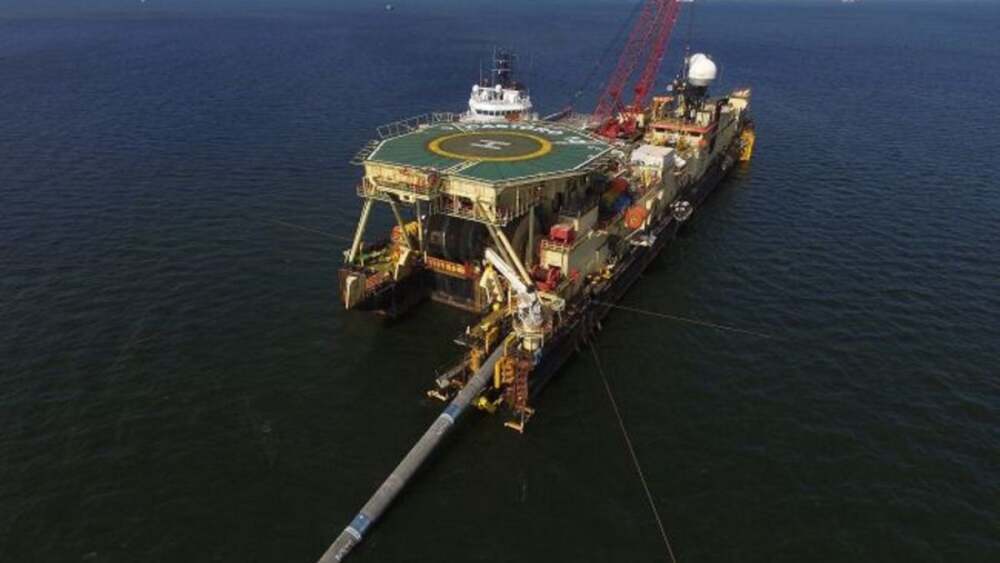
The Case in Focus
Over the past three years, German federal investigators have pieced together what they describe as a robust case linking a covert operation to the damage of the Nord Stream gas pipelines in September 2022. Among the evidence: satellite data, boat rentals, phone records, and facial-recognition matches implicating a small team of divers and a former Ukrainian national-security officer. In recent months, arrest warrants have been issued for several suspects—most notably a Ukrainian national detained in Italy and others linked to the operation.
What makes the investigation more than a criminal matter is the geopolitical upheaval it has triggered across Europe. Allegations that a state-affiliated Ukrainian unit was involved have unsettled alliances, raised questions about energy dependence, and challenged the unity of Western support for Ukraine.
Why Europe Is Splintering
Here are the main fault-lines emerging:
1. Divergent national narratives:
- In Germany, where the damage occurred and the investigation is based, the lead is firmly with federal prosecutors and intelligence services. Yet German officials cautiously insist the probe should not damage broader support for Ukraine in its war against Russia.
- In Poland, however, one suspect was declared a hero rather than an accused, with Polish leadership publicly disagreeing with the logic of the investigation and focusing instead on Germany’s past energy reliance on Russia.
- Other European countries are watching the fallout closely, unsure whether to treat the case purely as law-enforcement or as a diplomatic minefield.
2. Energy security and accountability:
The Nord Stream pipelines represented a massive conduit of Russian gas to Germany and the rest of Europe. Their destruction not only symbolised a blow to Russia’s revenue stream but also exposed Europe’s energy vulnerability. With mounting pressures to diversify energy sources and reduce dependence on Moscow, the sabotage has become a catalytic moment: Was the act a strategic blow against Russia—or a reckless escalation whose wider consequences Europe must still contend with?
3. Support for Ukraine under strain:
The broader context is Europe’s commitment to Ukraine’s defence. The investigation threatens to complicate that support by raising doubts, at least in some quarters, about Ukraine’s conduct in the war. While Germany has said the inquiry will not change its overall backing of Ukraine, the public and political optics may prove more difficult to manage. Opposition groups in Germany are already using the revelations to argue for cutbacks in funding to Kyiv.
Key Players & Positions
- Germany: Leading the criminal investigation, German prosecutors and police have gathered significant evidence and are seeking extradition of key suspects. Desire to maintain the rule of law is balanced against the risk of a diplomatic rupture.
- Ukraine: Kyiv has repeatedly denied any official role in the sabotage. Ukrainian officials also emphasise their focus on defending against Russia, warning that the investigation should not distract from that primary mission.
- Poland: Takes a distinctly different stance—one suspect detained is viewed as a patriotic actor, and Poland questions the wisdom of how Germany accumulated energy dependence on Russia in the first place.
- Russia: Never far from the conversation, Moscow views the investigation as an opportunity to cast blame and sow division within the Western alliance. Whether Russia’s counters or narratives hold weight remains contested.
Possible Outcomes & Risks
Best-case scenario:
The investigation proceeds under rule of law; suspects are tried; Europe manages to compartmentalise the case from Ukraine’s broader defence support; and energy reforms accelerate, making the continent less vulnerable and more unified.
Worst‐case scenario:
The case causes a fracture in Europe’s Ukraine strategy. Some nations scale back their support or use the investigation to justify doing so. Russia exploits divisions. Energy instability returns, and the strategic leverage shifts away from the West.
Broader Implications for Europe
- Energy infrastructure vs geopolitical tools: The sabotage underscores how energy assets can become weapons—or targets—in geopolitical conflict, raising urgent questions about how Europe protects critical infrastructure and diversifies supply.
- Historic memory and responsibility: Some European publics are starting to ask tougher questions about how their governments navigated dependence on Russian gas—and whether that dependence constrained policy options in war time.
- Alliance cohesion under strain: The unity among NATO and EU members around supporting Ukraine is showing signs of stress. High-stakes investigations like this one may test how far allies will tolerate divergent narratives or domestic political pressures.
- Sovereignty and proxy warfare: The possibility that a non-state or quasi-state actor from one country carried out a sabotage operation in another country’s waters raises profound questions about sovereignty, accountability, and the norms of acceptable wartime action.
Final Thoughts
The Nord Stream sabotage investigation is more than about underwater explosions and pipeline fragments. It has become a symbol of the tension between Europe’s past energy choices, the imperatives of wartime alliances, and the fragile architecture of Western unity in the face of Russian aggression.
As Germany seeks to bring suspects to justice, and as Ukraine continues its struggle for survival, Europe finds itself balancing three imperatives that may not align neatly: supporting a war-torn partner, maintaining internal cohesion, and dealing with the fallout of a major strategic breach.
How this investigation is managed—and whether the political ripple effects are contained—will tell us a great deal about Europe’s ability to stay united in an age of conflict and complexity.









Leave a Reply