

September 24, 2025
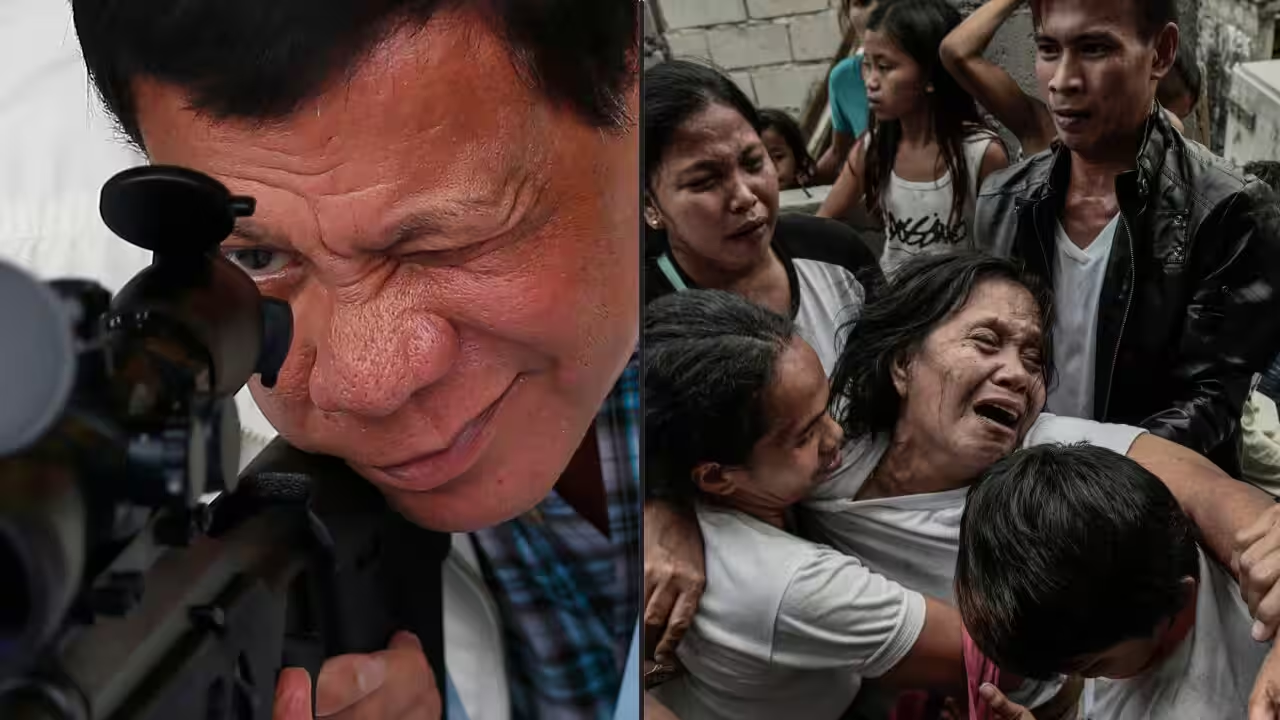
The International Criminal Court (ICC) has formally charged former Philippine President Rodrigo Duterte with crimes against humanity, citing his alleged role in widespread killings carried out during his controversial “war on drugs.” The move marks a historic moment in international justice, as Duterte becomes one of the few modern heads of state to face such charges before the Court.
Allegations of Systematic Killings
According to ICC prosecutors, Duterte is linked to a series of operations between 2011 and 2019 that resulted in at least 76 confirmed deaths, though investigators suggest the true toll may be significantly higher. The charges span his time as mayor of Davao City and later as president of the Philippines.
The accusations describe Duterte as an “indirect co-perpetrator,” alleging he directed or enabled law enforcement agencies and so-called “death squads” to carry out extrajudicial killings. These included targeted operations against high-value suspects, as well as so-called “clearance operations” that killed lower-level drug users and small-scale dealers.
Duterte’s Detention and Defense
Duterte, who was arrested in March and transferred to The Hague under an ICC warrant, remains in custody as the pre-trial process unfolds. His defense team has challenged the charges, arguing that the Philippines is no longer a member of the ICC and therefore outside its jurisdiction. They have also claimed that Duterte suffers from cognitive impairments, raising questions about his ability to stand trial.
Despite these objections, ICC judges ruled that the alleged crimes occurred when the Philippines was still bound by the Rome Statute, giving the Court authority to proceed.
Divided Reactions at Home and Abroad
In the Philippines, the charges have reignited fierce debate. Supporters of Duterte maintain that his policies reduced crime and drug trafficking, while critics see the ICC case as long-overdue justice for thousands of victims of state violence. Human rights groups welcomed the charges as a critical step toward accountability, while some political allies of Duterte denounced the Court as overstepping its mandate.
A Precedent for Accountability
Legal experts say the case could shape how international law addresses anti-drug campaigns and other domestic policies framed as public security measures. The outcome may also influence how future leaders weigh the risks of pursuing hardline tactics that could breach human rights obligations.
As hearings move forward, the world watches closely. The trial of Rodrigo Duterte may not only determine his personal accountability but also test the strength of global mechanisms designed to hold powerful figures responsible for crimes against humanity.










Leave a Reply