

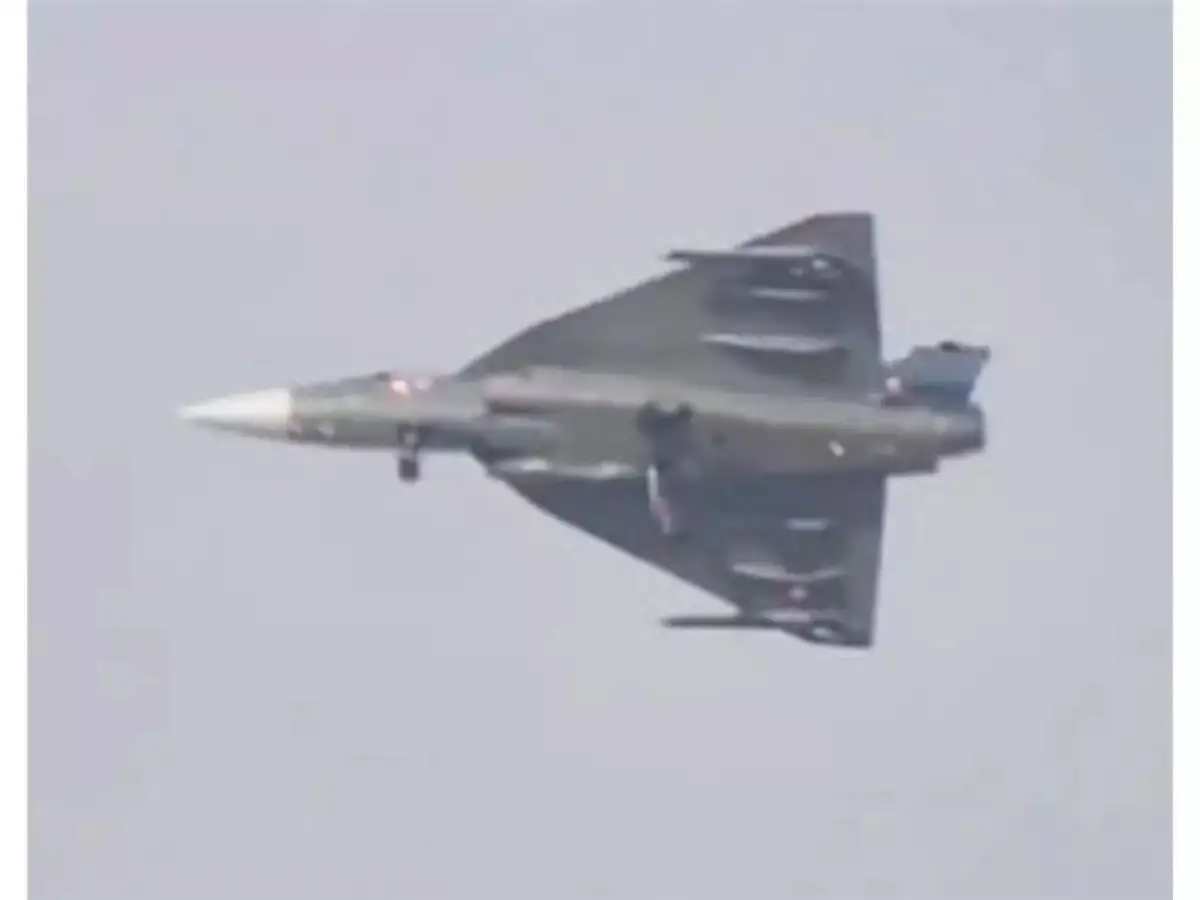
In a deeply shocking incident, an Indian HAL Tejas light combat aircraft crashed during a demonstration flight at the 2025 Dubai Air Show, resulting in the death of the pilot. The accident occurred in the early afternoon, sending a thick column of black smoke into the sky and bringing the air show to a sudden, grim halt.
What Happened
Eyewitnesses say that the Tejas jet, performing a low-altitude aerobatic routine, appeared to execute a steep climb or maneuver and then suddenly lost control. The aircraft plunged sharply toward the ground and erupted into flames on impact. The crash site was near Al Maktoum International Airport, where the air show was being held. Video footage circulating from the event showed the dramatic descent and the moment of the fireball.
According to the Indian Air Force (IAF), the pilot sustained fatal injuries. In its statement, the IAF expressed profound sorrow over the loss, and said a court of inquiry would be set up to investigate the exact cause of the accident.
Local emergency services responded rapidly. Firefighters, police, and medical teams moved in to secure the crash area and control the blaze. Visitors to the air show were directed away from the flying demonstration area, and part of the show was temporarily suspended.
Key Details about the Tejas
- The Tejas is a single-engine, multirole light combat aircraft developed jointly by Hindustan Aeronautics Limited (HAL) and the Aeronautical Development Agency (ADA).
- It features a delta-wing design, which gives it agility and maneuverability.
- The version shown during the air show is closely linked to India’s broader modernization efforts; its upgraded variants include advanced systems such as an AESA radar, electronic warfare capabilities, and even provisions for air-to-air refuelling.
- The Tejas has been a central pillar of India’s “Make in India” defence vision, aimed at reducing dependence on older foreign-sourced platforms.
Why This Crash Matters
- Strategic and Symbolic Loss:
The Tejas is not just any fighter jet — it is a flagship of India’s indigenous aerospace ambitions. A crash of this magnitude, especially during a high-profile international event, is a blow not only to national pride but to the credibility of India’s efforts to manufacture world-class defence hardware. - Safety and Reliability Questions:
This is not the first Tejas to crash. Observers are likely to scrutinize whether maintenance, pilot training, or technical design could have played a role. The formation of a court of inquiry will be critical to unravel these factors and restore confidence. - Export Implications:
Tejas has been pitched for export to other nations. A fatal crash in a public showcase could potentially hamper its appeal, as prospective buyers may question its operational safety. - Public Perception and Morale:
The death of a pilot during a peaceful demonstration deeply affects public sentiment. Military aviation is inherently risky, but such events can stir debates over whether more caution and stricter safety protocols are needed, especially in crowded venues.
What Could Have Gone Wrong
While the exact cause remains under investigation, there are several plausible scenarios:
- Aerobatic Stress: The pilot may have been attempting a high-G maneuver, which can be dangerous at low altitude. If recovery isn’t perfectly timed, it can lead to loss of control.
- Mechanical Failure: A technical malfunction in the engine, flight control system, or other critical component could have triggered the rapid descent.
- Pilot Factors: Fatigue, spatial disorientation, or a sudden incapacitation (for example, due to G-force) cannot be ruled out without the inquiry’s full findings.
Response and Reaction
The Indian Air Force has pledged a thorough investigation. The announcement of a court of inquiry underscores the seriousness with which military leadership is treating the crash. The IAF’s statement also emphasized its support for the pilot’s family, acknowledging the emotional toll of the tragedy.
Organizers and local authorities in Dubai acted decisively. Emergency response teams moved in immediately, and safety measures were reinforced to prevent further risk to show attendees. The atmosphere at the air show, which had until then been celebratory and full of technical marvels, turned somber.
Broader Implications for India’s Defence Ambitions
This accident has broader implications beyond the immediate tragedy. India has invested heavily in its aerospace sector, promoting self-reliance, developing advanced aircraft, and building technical expertise. Tejas is central to that vision. A setback like this could force a reassessment of risk management, quality assurance, and pilot training standards.
Yet, the incident also offers an opportunity. If the inquiry leads to constructive lessons — enhancement of safety systems, improved maintenance protocols, stricter regulatory oversight — it could strengthen the Tejas program in the long run. Aerospace development is never without danger, but how a country learns from such losses often defines its future trajectory.
Tribute and Reflection
Amid the investigation, there is a moment for reflection and tribute. The pilot who lost his life was performing in service of his nation, showcasing a symbol of India’s technological progress on an international stage. His sacrifice underscores the very real human cost behind every ambitious defence project.
As India waits for the inquiry’s findings, the broader defence community and the public will be watching. The crash is a painful reminder: in aviation, the stakes are always high, and progress comes with risk.













Leave a Reply