

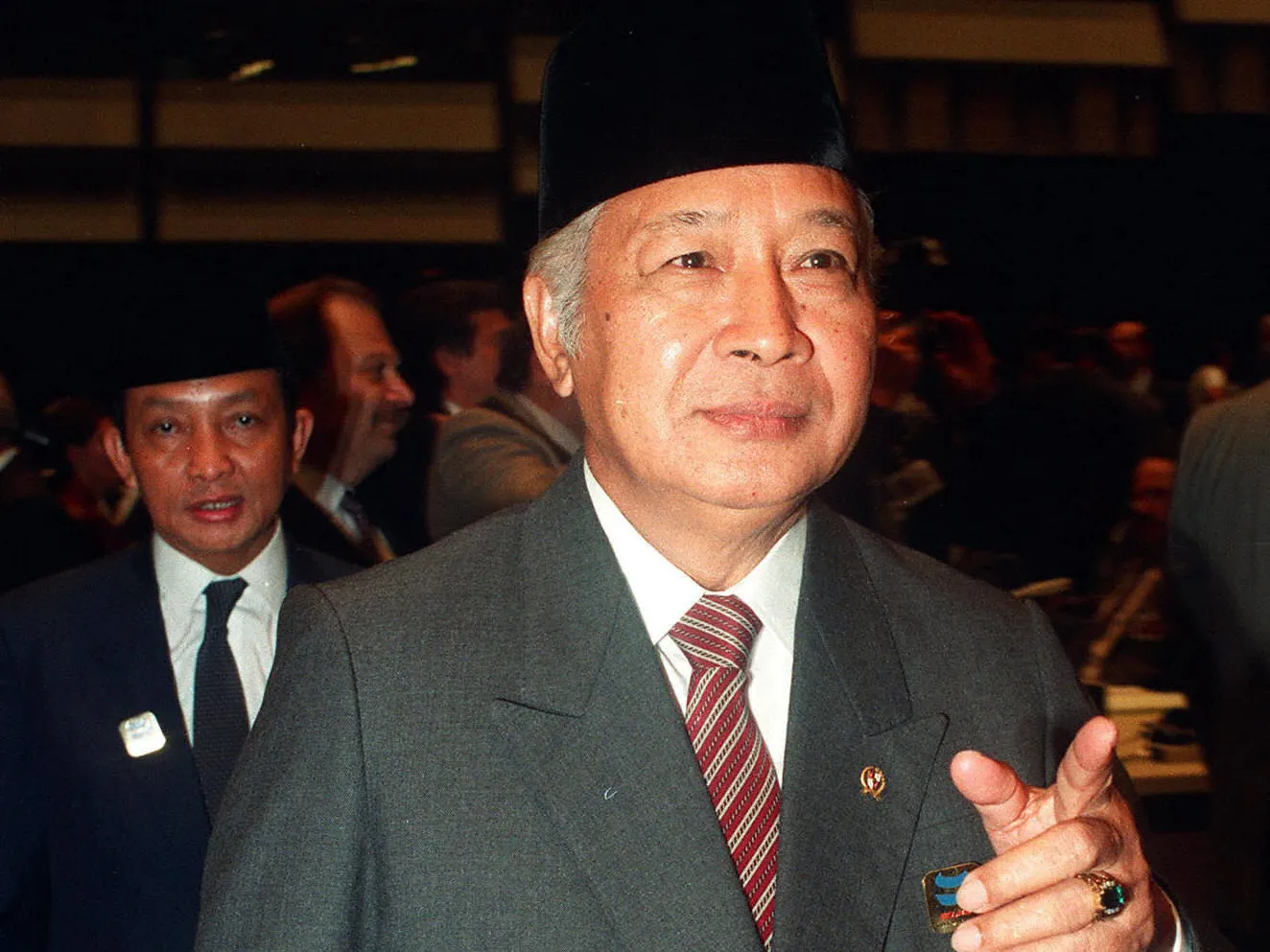
Jakarta — Indonesia’s government has officially granted former president Soeharto the title of National Hero, sparking heated debate across the country. The announcement was made during the nation’s annual Heroes’ Day ceremony in Jakarta, presided over by President Prabowo Subianto.
Soeharto, who ruled Indonesia for over three decades from 1967 to 1998, remains one of the most polarizing figures in the nation’s history. Supporters see him as the leader who brought stability, unity, and economic progress to a young republic emerging from political chaos. Critics, however, remember his government as a period marked by authoritarianism, widespread corruption, and grave human rights abuses.
A Divided Nation Over Soeharto’s Legacy
During Soeharto’s rule, Indonesia experienced rapid industrial growth and massive infrastructure development. His administration fostered economic policies that lifted millions out of poverty and positioned the country as one of Southeast Asia’s major economies. For many Indonesians who lived through the early decades of independence, Soeharto is remembered as a steady hand who brought order to a turbulent era.
However, his ascent to power came in the wake of the 1965–66 anti-communist purges, during which hundreds of thousands were killed. Activists and historians point to these atrocities, along with the suppression of dissent, censorship of media, and the imprisonment of political opponents, as evidence of the dark side of his rule. His administration’s collapse in 1998, amid mass protests and economic crisis, further cemented his controversial reputation.
Supporters Defend the Honor
The decision to name Soeharto a National Hero was supported by those who argue that his contributions to Indonesia’s development and national stability cannot be overlooked. They emphasize his role in strengthening the military, fostering national pride, and building key sectors like agriculture, education, and public health.
Government officials who backed the decision said the award was based on historical and institutional contributions rather than moral perfection. They noted that the “National Hero” title recognizes figures who played significant roles in shaping Indonesia, even if their leadership was complex or controversial.
Critics Condemn Historical Revisionism
Human rights advocates and survivors of the Soeharto era expressed outrage, describing the move as an attempt to whitewash the past. They argue that honoring a leader responsible for mass killings, political repression, and corruption sends a dangerous signal about Indonesia’s commitment to democracy and justice.
Some activists accused the government of undermining decades of progress in truth-seeking and accountability. For them, Soeharto’s elevation is not merely symbolic — it risks reshaping public memory and distorting the lessons of Indonesia’s authoritarian past.
Political and Personal Dimensions
Observers note that the decision carries political undertones. President Prabowo Subianto, a former general and one-time son-in-law of Soeharto, has long been associated with military politics and nationalist sentiment. Analysts suggest that the move may strengthen his support among conservatives and older generations who view the Soeharto era with nostalgia.
Still, the decision also underscores the ongoing struggle in Indonesian politics between those advocating democratic reform and those who view the military’s past dominance as a source of national strength.
The Struggle for National Memory
The controversy surrounding Soeharto’s recognition highlights a broader question: how should Indonesia reconcile its past? While some see the decision as an overdue acknowledgment of a leader’s contributions, others view it as a setback to the pursuit of justice and historical truth.
For many younger Indonesians, who know Soeharto only from textbooks and family stories, this debate may shape how they understand their nation’s journey — and what kind of leadership they value in the future.
A Nation Still Debating Its Heroes
By conferring Soeharto the title of National Hero, Indonesia has reignited one of its deepest national debates — between memory and forgiveness, development and democracy, pride and pain.
Whether this recognition becomes a symbol of national reconciliation or a reminder of unresolved wounds will depend on how Indonesia continues to confront its past — and define what true heroism means in the years ahead.














Leave a Reply