

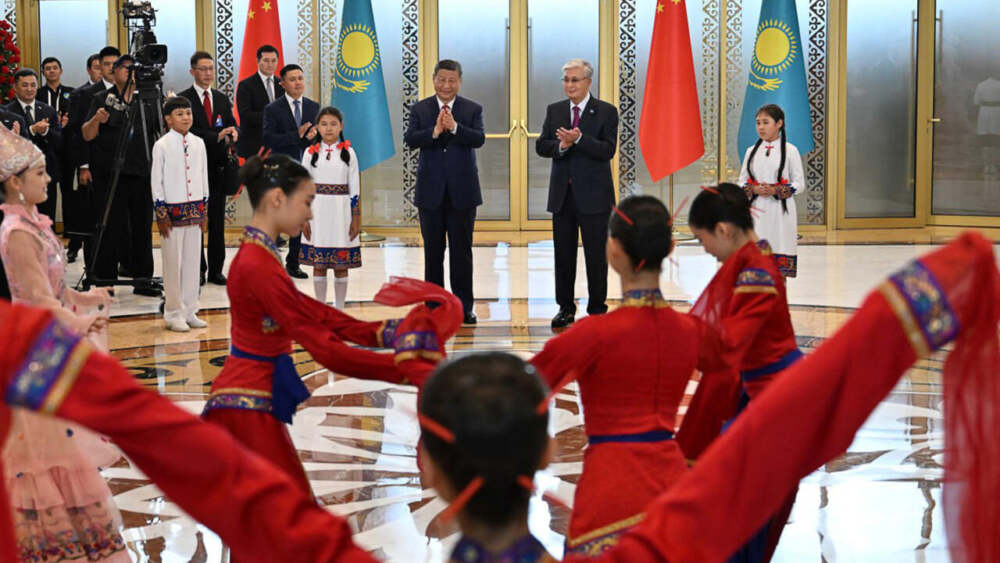
In a historic diplomatic move, Kazakhstan has formally joined the Abraham Accords, becoming the latest nation to align with the U.S.-brokered initiative aimed at normalizing relations between Israel and Muslim-majority countries. The step marks a symbolic expansion of the accords into Central Asia and highlights Washington’s ongoing efforts to sustain regional cooperation despite turbulent global politics.
A Symbolic Yet Strategic Move
Unlike earlier signatories such as the United Arab Emirates, Bahrain, and Morocco, Kazakhstan already had diplomatic ties with Israel since the early 1990s. However, this new development formalizes those relations under the umbrella of the Abraham Accords, reinforcing Kazakhstan’s position as a moderate Muslim nation open to collaboration with both Western and Middle Eastern partners.
For Israel, Kazakhstan’s inclusion enhances its international diplomatic reach, especially into Central Asia, a region rich in natural resources and increasingly significant for trade and energy routes. For the United States, it signals continuity in a foreign policy initiative that transcends partisan divides and continues to draw countries into cooperative frameworks promoting stability and economic growth.
U.S. and Israeli Reactions
American officials have welcomed the decision, calling it a testament to the enduring influence of the accords. They emphasized that Kazakhstan’s participation could strengthen cooperation in areas like renewable energy, cybersecurity, agriculture, and technology. Israeli leaders similarly praised the move, viewing it as a sign that normalization efforts remain alive and capable of expanding beyond the Middle East.
Kazakhstan’s Calculated Diplomacy
Kazakhstan’s government, under President Kassym-Jomart Tokayev, has long sought to balance its relations between global powers, maintaining close ties with Russia, China, and Western nations alike. By joining the Abraham Accords, the country positions itself as a diplomatic bridge between regions — fostering dialogue and economic opportunity without alienating its traditional partners.
Analysts suggest that while the move carries limited immediate practical changes, it sends a clear message: Kazakhstan intends to play a more active role in global diplomacy and contribute to a future framework of peaceful cooperation among nations.
Broader Implications
Kazakhstan’s entry underscores the potential evolution of the Abraham Accords into a wider global network of cooperation that could eventually include more countries from Asia and Africa. The step may also inspire other Muslim-majority nations with existing relations with Israel to formalize their cooperation under the same initiative.
Looking Ahead
A formal signing ceremony is expected soon, marking Kazakhstan’s official inclusion. Observers are watching whether this renewed momentum will encourage other states to follow suit, potentially revitalizing one of the most significant diplomatic initiatives of the past decade.
Final Thoughts
Though primarily symbolic, Kazakhstan’s accession to the Abraham Accords reinforces the notion that diplomatic normalization with Israel remains a viable and appealing path for many nations. It signals that even amid geopolitical uncertainty, the pursuit of dialogue, trade, and cooperation continues to find new champions.














Leave a Reply