

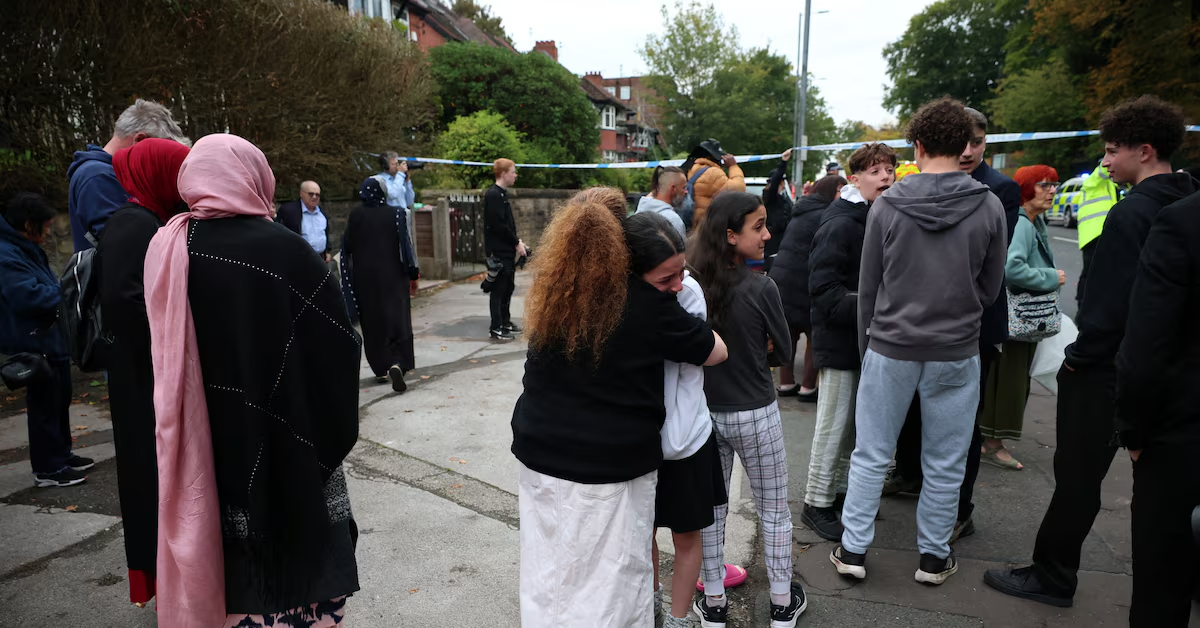
Manchester, UK — The attack on worshipers gathered for Yom Kippur prayers in Manchester has left the British Jewish community shaken, grieving, and demanding change. The incident, in which two people were killed and several others wounded after a man rammed a vehicle and used a knife outside the Heaton Park Hebrew Congregation, has been labeled a terrorist act. For many Jewish leaders, however, the violence was not unexpected — it was, as some put it, “only a matter of time.”
The Attack: A Day of Worship Turned to Horror
The assault began as families and worshipers arrived at the synagogue early Wednesday morning. Witnesses reported that the assailant deliberately targeted congregants, striking people with his car before emerging armed with a knife. Police, already on alert for potential threats during the High Holidays, responded quickly and fatally shot the attacker at the scene.
Authorities later confirmed that a device the assailant carried was not viable, but the violence was enough to reignite fears that Jewish communities in the UK face escalating risks. Three other individuals were arrested in connection with the incident, though their roles remain under investigation.
Jewish Leaders: “We Saw This Coming”
Community leaders across Britain have responded with anguish, frustration, and a chilling sense of inevitability.
- Jonathan Goldstein, a senior Jewish community organizer, said the attack was the culmination of years of rising antisemitism. “We warned again and again that hateful rhetoric leads to hateful action. This was not a question of if, but when.”
- Marie van der Zyl, president of the Board of Deputies of British Jews, described the violence as “the nightmare we feared.” She emphasized that repeated pleas for stronger security around synagogues had often gone unanswered or only partially addressed.
- Local rabbis echoed the sentiment, saying their congregations have lived under a “permanent shadow” of threats. “When children walk into synagogue surrounded by cameras, guards, and locked doors, it says something about how unsafe our community feels,” one Manchester rabbi remarked.
A Broader Context of Rising Antisemitism
The Manchester attack follows a sharp rise in antisemitic incidents across the UK. Reports of harassment, vandalism, and threats have surged in recent years, often tied to international events or political tensions.
Jewish schools have been targeted with graffiti, cemeteries vandalized, and individuals harassed on public transport. While most incidents have not escalated to deadly violence, community watchdogs have long warned that the environment was becoming increasingly dangerous.
Government Response
Prime Minister Rishi Sunak, cutting short an overseas trip, condemned the attack as “a vile act of terrorism.” He pledged to provide additional funding for synagogue security, increased police presence in Jewish neighborhoods, and a national review of antisemitic threats.
The Home Office has also announced that counterterrorism resources will be redirected to track extremist groups suspected of inciting violence against Jewish communities. However, many Jewish leaders remain skeptical, pointing out that similar promises were made after previous incidents without substantial change.
Fear and Grief in the Community
For ordinary British Jews, the Manchester attack has deepened a sense of vulnerability. Parents are questioning whether it is safe to send their children to Hebrew schools, while congregations are reevaluating whether large gatherings can continue without extensive security measures.
Some worshipers expressed determination not to be intimidated. “We will not stop practicing our faith, we will not disappear from public life,” said one survivor. Others admitted feeling “broken,” with fears that public expressions of Jewish identity will make them targets.
What Comes Next
The attack has triggered a debate over how the UK should address antisemitism, not only through security but also by confronting its social and political roots.
- Stronger Protection: Calls are mounting for permanent, government-funded security at synagogues and Jewish schools.
- Crackdown on Incitement: Leaders want tougher enforcement against hate speech, especially online where antisemitic conspiracy theories circulate widely.
- Community Resilience: Jewish organizations are launching mental health support programs, solidarity campaigns, and interfaith outreach to combat isolation and fear.
- Accountability: The government faces mounting pressure to prove that its pledges translate into tangible action — not just statements of solidarity.
Conclusion
The Manchester synagogue attack has become a painful turning point for British Jews. What leaders had warned for years — that unchecked hate would lead to bloodshed — has now been realized in the most tragic way. For many, grief is mingled with anger, as the community insists this moment must lead to lasting change.
The pressing question now is whether the UK government and broader society will act decisively to protect one of Britain’s oldest and most vulnerable communities — or whether this tragedy will be remembered as a harbinger of further violence.

















Leave a Reply