

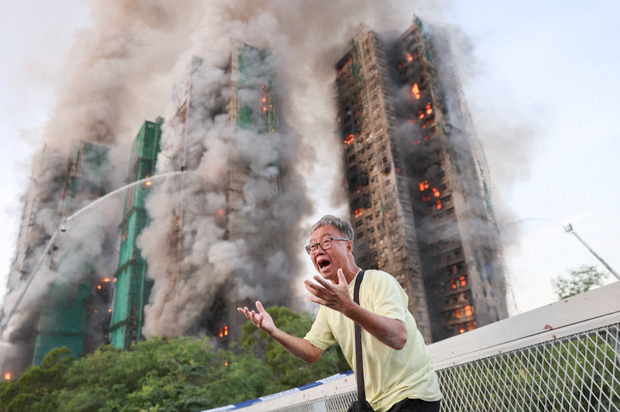
A devastating fire tore through a residential high-rise complex in Hong Kong’s Tai Po district, turning a quiet afternoon into one of the city’s deadliest urban tragedies in decades. The inferno, which erupted on the scaffolding surrounding a 31-storey tower undergoing renovation, rapidly engulfed the building’s exterior and spread to adjacent structures with alarming speed.
A Disaster Unfolds Within Minutes
Residents reported seeing thick black smoke swirling around the tower just moments before flames shot upward along the scaffolding. The highly flammable renovation materials — including foam sheets, netting, and plastic coverings — acted as fuel, allowing the fire to climb multiple floors in minutes.
Firefighters arrived quickly and escalated the event to the city’s highest emergency alert level. Despite deploying hundreds of personnel and dozens of trucks, the intensity of the flames and the collapse of scaffolding severely hampered rescue efforts.
Many residents were trapped inside their apartments as corridors filled with smoke and stairwells became impassable. Witnesses described scenes of panic, with people calling for help from balconies and windows as firefighters fought to reach them.
Rising Death Toll and Desperate Search Efforts
Authorities confirmed that more than 50 people lost their lives, with the number expected to rise as rescue teams continue to search upper floors and compromised areas of the building. At least one firefighter, a veteran of the service, died after sustaining severe burns during an attempted rescue mission.
Over 70 residents were hospitalized, many suffering from smoke inhalation and burns. Hundreds more were evacuated to emergency shelters, and a significant number of people remain unaccounted for, prompting an around-the-clock search.
Negligence Allegations and Immediate Arrests
Within hours of the tragedy, Hong Kong police arrested several individuals connected to the renovation project, including two construction company directors and an engineering consultant. Authorities allege that the renovation team ignored safety regulations, used non-compliant materials, and installed unsafe scaffolding structures that contributed to the rapid spread of the fire.
Investigators revealed that the use of highly flammable cladding and plastic coverings violated multiple fire-safety standards. Officials described the situation as “gross negligence” and stated that the disaster could have been far less severe had proper protective measures been followed.
A Community in Mourning and a City on Edge
Families of the missing gathered near the site, hoping for updates yet bracing for devastating news. Volunteers distributed food, water, and blankets as displaced residents came to terms with the loss of their homes and loved ones.
The tragedy has triggered renewed public scrutiny of building safety standards in Hong Kong, where external renovation work on older high-rise blocks is common and often involves dense bamboo scaffolding. Public housing estates across the city are now expected to face emergency inspections.
Calls for Reform
Urban-safety experts and lawmakers are urging the government to accelerate reforms to fire-safety regulations, especially regarding renovation materials and scaffolding systems. Many argue that the tragedy exposes systemic issues — including lax enforcement, outdated codes, and cost-cutting practices within the construction sector.
As the city mourns, questions grow louder: How could such a catastrophic failure occur in one of Asia’s most advanced urban centers? And what must change to ensure that Hong Kong never faces a disaster like this again?

















Leave a Reply