

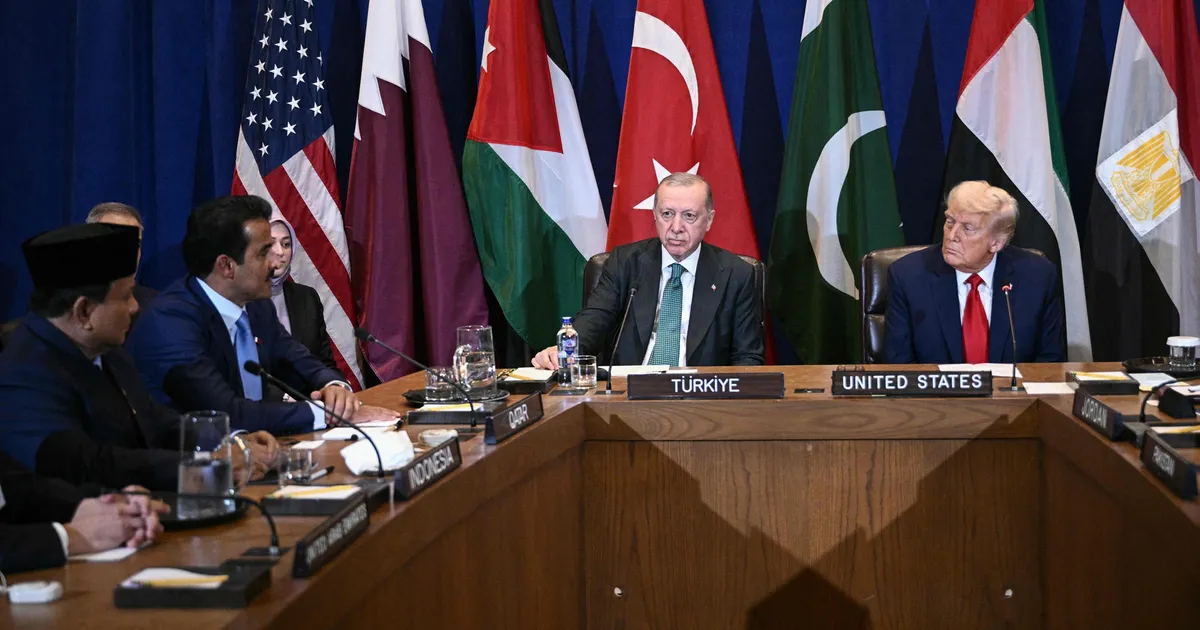
Gaza / Doha / Cairo / Ankara — Regional diplomacy is entering a critical phase as Qatar, Egypt, and Turkey intensify efforts to persuade Hamas to accept a U.S. ceasefire proposal backed by President Donald Trump. The plan, if agreed upon, could bring an end to the months-long war in Gaza, secure the release of Israeli hostages, and potentially reshape the political order in the Palestinian enclave. Yet, deep divisions inside Hamas and among Palestinians threaten to derail the initiative.
The Core of Trump’s Proposal
At the heart of the U.S. plan is a framework that demands difficult compromises from both sides. According to leaked details:
- Hostage Release: Hamas would be required to free all remaining hostages, including both civilians and soldiers, within 72 hours. The release would include not only living hostages but also the return of remains of those who died in captivity.
- Prisoner Exchange: In exchange, Israel would release approximately 250 Palestinian prisoners serving life sentences, along with 1,700 others arrested since the outbreak of the current war. The latter group would include women, children, and individuals held without charges under administrative detention.
- Israeli Withdrawal: The Israel Defense Forces (IDF) would withdraw in phases from much of the Gaza Strip. The plan envisions a gradual pullback to allow international monitors and transitional authorities to enter the territory.
- Disarmament of Hamas: Perhaps the most controversial element requires Hamas to hand over its weapons, dismantle its military infrastructure, and effectively relinquish control of Gaza.
- International Transitional Authority: Governance of Gaza would shift to a temporary international administration. Notably, the proposal excludes both Hamas and the Palestinian Authority, signaling Washington’s desire to sideline traditional Palestinian leadership.
- Humanitarian Guarantees: The plan pledges unrestricted humanitarian access, reconstruction aid, and safe passage for medical personnel and relief agencies.
Regional Powers Apply Pressure
Qatar, Egypt, and Turkey have emerged as the most active mediators, each leveraging unique channels of influence.
- Qatar has long acted as a financial and political sponsor for Hamas, hosting its leadership in Doha. Prime Minister Mohammed bin Abdulrahman al-Thani reportedly told Hamas officials that the Trump plan is “the best deal available” and warned that rejecting it could lead to greater devastation.
- Egypt, which controls Gaza’s southern Rafah border crossing, has conveyed a similar message. Cairo’s intelligence chief Hassan Rashad has pushed Hamas to consider that failure to compromise risks indefinite siege and humanitarian collapse.
- Turkey, led by President Recep Tayyip Erdoğan, continues to provide political cover for Hamas but has increasingly urged pragmatism. Ankara’s intelligence chief, Ibrahim Kalin, is believed to have stressed that disarmament may be painful but could be offset by guarantees of aid and reconstruction.
Together, these three states have reportedly told Hamas leaders that no “better offer” will come, and that international patience is running out.
Hamas’s Internal Debate
Despite external pressure, Hamas remains deeply divided on how to respond.
- Political Leadership Abroad: Figures based in Doha and Istanbul appear more open to at least negotiating on the proposal, viewing it as a way to secure relief for Gaza’s battered population.
- Military Wing in Gaza: Commanders of the Qassam Brigades reportedly reject the deal outright, regarding it as a surrender document that strips the group of its last leverage. They argue that immediate hostage release undermines their bargaining power and that disarmament would leave Palestinians defenseless against Israel.
- Concerns Over Timeline: Even officials sympathetic to the plan say the 72-hour deadline for releasing hostages may be impossible. Locating bodies, arranging logistics, and ensuring safe transfers could require more time. Hamas negotiators are said to be pushing for adjustments.
International Reactions
The Trump proposal has generated unusual alliances of support and opposition.
- Russia has backed the plan, describing it as a “reasonable framework” to end bloodshed. Moscow is eager to present itself as a responsible power broker while maintaining ties with both Hamas and Israel.
- The Vatican has also endorsed the proposal, with Pope Leo describing its elements as “worthy of serious consideration” and appealing for all parties to put human life above politics.
- Pro-Palestinian Groups, however, have condemned the plan as a capitulation. Activists in the United States and Europe argue that excluding the Palestinian Authority and Hamas from governance sidelines Palestinian self-determination. They also warn that Gaza risks becoming an internationally managed protectorate rather than a step toward statehood.
Risks and Opportunities
For Israel, the proposal offers the chance to bring home hostages, reduce global criticism over the humanitarian crisis, and weaken Hamas militarily and politically. For Hamas, acceptance could save lives and allow desperately needed aid to flow, but at the cost of disarmament and political marginalization.
The risks are stark:
- If Hamas rejects the deal, Israel is likely to intensify military operations, potentially with international cover for having made an offer that Hamas turned down.
- If Hamas accepts, it faces potential collapse of its authority in Gaza, with rival groups or international actors stepping in to govern.
- If negotiations drag on, the humanitarian situation in Gaza will worsen, and both sides may harden their positions further.
The Road Ahead
Diplomatic sources suggest that Hamas has only a narrow window—possibly days, not weeks—to respond. Washington has framed the proposal as a “final offer,” and regional mediators are warning that delay could doom the deal.
Whether Hamas chooses to accept, reject, or seek modifications will determine not only the immediate future of Gaza but also the broader trajectory of Israeli-Palestinian relations. Acceptance could pave the way for a fragile ceasefire and reconstruction effort. Rejection could trigger an escalation with unpredictable consequences for the entire region.
For now, the eyes of the Middle East remain on Gaza, where the decision of Hamas’s leadership may soon shape the fate of millions.













Leave a Reply