


In a potential breakthrough for physics and cosmology, scientists have announced that they may have detected dark matter for the first time. This discovery could revolutionize our understanding of the universe, shedding light on one of the most elusive and mysterious components of the cosmos.
What Is Dark Matter?
Dark matter is a form of matter that does not emit, absorb, or reflect light, making it invisible to current telescopes. Despite being undetectable through conventional observation, scientists believe it constitutes approximately 27% of the universe’s mass-energy content. Its presence is inferred from its gravitational effects on visible matter, such as stars and galaxies.
For decades, dark matter has remained theoretical, with numerous experiments attempting — and failing — to detect it directly.
The Experiment Behind the Discovery
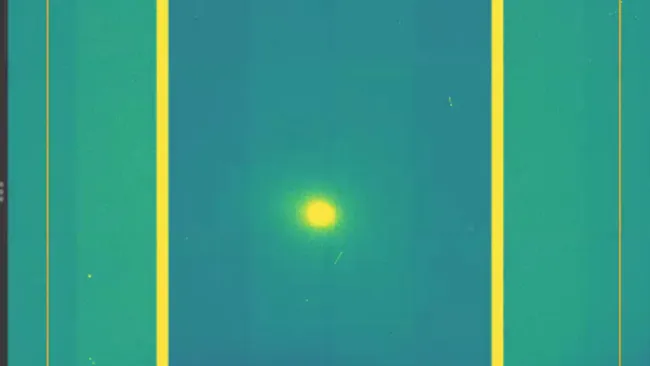
The latest claim comes from a highly sensitive detector designed to identify rare interactions between dark matter particles and ordinary matter. Using advanced sensors located deep underground to shield against interference, the team recorded signals consistent with predicted dark matter behavior.
Lead researchers described the findings as “compelling but preliminary”, emphasizing the need for further verification. Independent experiments around the world will now attempt to replicate the results to confirm whether dark matter has indeed been observed.
Implications for Physics and Cosmology
If confirmed, this detection would mark a paradigm shift in modern physics, providing direct evidence of a substance that has shaped the structure and evolution of the universe. Understanding dark matter could help answer fundamental questions about galaxy formation, cosmic expansion, and the ultimate fate of the universe.
The discovery also opens up possibilities for new technologies, as insights into dark matter’s properties could eventually inform physics beyond the Standard Model and inspire novel approaches in energy and materials science.
Cautious Optimism
The scientific community is approaching the claim with cautious optimism. While the data is promising, dark matter has a history of eluding direct detection, and extraordinary claims require extraordinary evidence. Peer-reviewed studies, additional experiments, and independent confirmation are essential before the discovery can be accepted as fact.
Looking Ahead
The potential detection of dark matter represents a thrilling frontier in astrophysics. Researchers worldwide are now preparing to expand experiments, refine detection methods, and explore the profound implications of confirming the universe’s most mysterious substance.
Whether this claim holds true or not, the effort underscores humanity’s relentless quest to understand the unseen forces shaping our cosmos.
















Leave a Reply