

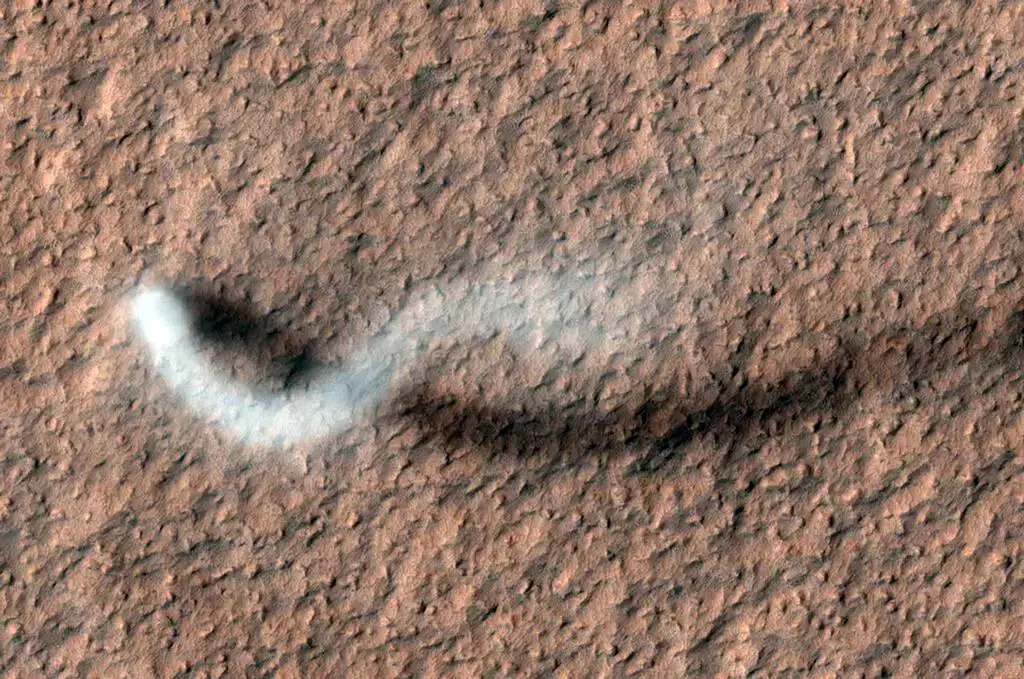
Researchers studying Mars have made a groundbreaking observation: triboelectric discharges occurring during dust storms on the Red Planet. This discovery provides new insights into the electrical properties of Martian dust and could have major implications for future exploration and human missions.
What Are Triboelectric Discharges?
Triboelectric discharges are electric sparks generated when particles collide and transfer charge. On Earth, these discharges are common in thunderstorms and volcanic ash clouds. On Mars, however, the phenomenon has remained largely theoretical — until now.
During intense dust events, fine particles suspended in the Martian atmosphere collide and rub against each other. These collisions create electrical charges that can lead to small-scale lightning-like discharges, even in the planet’s thin atmosphere.
How the Discovery Was Made
The detection comes from instruments aboard Martian landers and orbiters designed to monitor dust activity, atmospheric electricity, and surface conditions. Scientists noticed unusual electrical signals coinciding with large-scale dust storms, confirming the presence of triboelectric activity.
“This is the first time we’ve directly observed electrical discharges associated with Martian dust storms,” said one researcher involved in the study. “It changes our understanding of the planet’s atmospheric dynamics and its potential hazards for future missions.”
Implications for Mars Exploration
Understanding triboelectric discharges on Mars is critical for both robotic and human exploration. Electrical activity in dust storms could affect spacecraft electronics, solar panels, and communication systems. Engineers designing future rovers and habitats will need to consider these discharges to prevent damage or operational disruptions.
Additionally, the findings may help explain the behavior of Martian dust storms, which can cover thousands of kilometers and last for weeks. Electric charging could influence how dust particles move, stick together, and settle, affecting surface operations and even potential colonization strategies.
A Step Toward Safer Human Missions
As space agencies plan for crewed missions to Mars, including potential settlements, understanding the electrical properties of the environment becomes increasingly important. Triboelectric discharges highlight a previously overlooked hazard that astronauts may encounter, underscoring the need for protective measures against both dust and electrical phenomena.
Looking Forward
This discovery opens a new chapter in Martian research, revealing that the Red Planet is more dynamic than previously thought. Future studies will aim to quantify the intensity of these discharges, their frequency, and how they interact with Mars’ thin atmosphere.
The detection of triboelectric activity not only enriches our scientific understanding but also helps pave the way for safer, more informed exploration of Mars.










Leave a Reply