

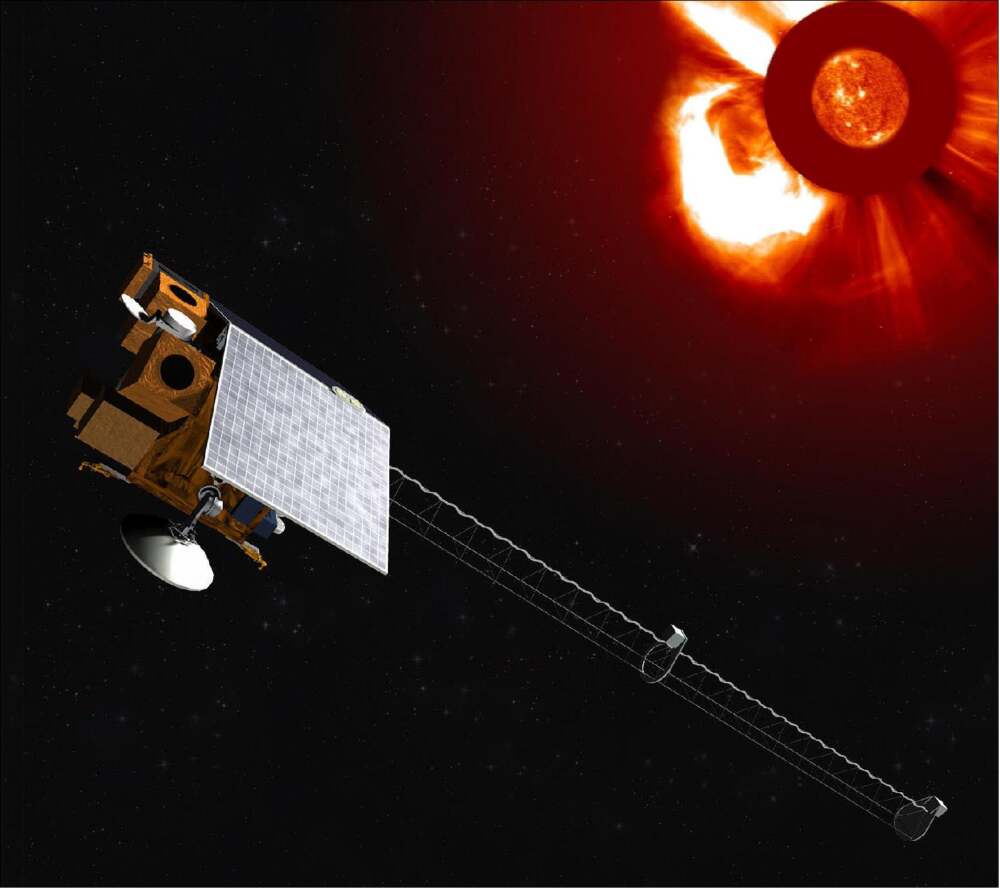
On September 23, 2025, NOAA is set to launch a new satellite, the Space Weather Follow-On – Lagrange 1 (SWFO-L1), aimed at replacing aging space-weather monitoring satellites. The mission has been described by agency officials as urgent—now is the moment to ensure Earth remains protected from solar disturbances that threaten technology, infrastructure—and life.
Why This Satellite Matters Now
- For years, our early warning system for solar storms has depended on satellites like ACE, SOHO, and DSCOVR. Many of these are operating far beyond their expected design life. Some are already suffering malfunctions, which compromises reliability.
- Solar storms—especially coronal mass ejections (CMEs)—can disrupt GPS, communication networks, satellite operations, power grids, and even pose hazards to astronauts. Having a reliable eye on the sun is not just scientific curiosity—it’s a matter of resilience.
- SWFO-L1 is built for operations. Its primary goal is continuous, real-time monitoring of solar wind, magnetic fields, high-energy particles, and coronal imagery. It’s about keeping critical systems safe when the sun becomes active.
What SWFO-L1 Will Do & Where It Will Sit
- The satellite will be positioned at Lagrange Point 1 (L1), roughly a million miles between Earth and the sun. This spot provides the critical vantage point for solar wind detection before disturbances reach Earth.
- Instruments onboard include a solar telescope (compact coronagraph), magnetometer, sensors for plasma and energetic particles, and others designed to track solar wind’s speed, density, and magnetic orientation.
- Once in place, SWFO-L1 will stream data nearly continuously to NOAA’s Space Weather Prediction Center. Forecasters there will use the data to issue alerts and predictions for industries, agencies, power grids, satellites, and aviation.
The Backbone: A “Fleet in Crisis”
- SWFO-L1 is not just new hardware—it’s backup. ACE, launched in 1997, was designed for about five years of use, yet remains in service. SOHO is even older. DSCOVR, newer but with reliability issues, recently went offline due to a software anomaly.
- Because of this aging fleet, the space‐weather monitoring network is now fragile. A failure anywhere in that chain could leave Earth blind to incoming threats, with no time to prepare.
Broader Impacts & Why the Public Should Care
- Critical Infrastructure: Power grids, undersea cables, communications, and navigation systems all depend on early warnings of solar storms. Without them, damage could be extensive and costly.
- Economic Stakes: Disruption of satellites or GPS affects everything from agriculture to logistics, aviation to offshore operations. A timely alert could save billions by enabling preventive action.
- Human Safety: For astronauts, people flying over polar routes, oil & gas platforms, even high-latitude flight crews—the risk from charged particles increases substantially when solar storms are severe.
- Scientific Insights: SWFO-L1 will also advance our understanding of solar physics, especially how CMEs form, how magnetic fields evolve, and how these connect with Earth’s space environment.
What to Watch Next
- After launch, how soon SWFO-L1 achieves full operational status at L1. There’s often a commissioning period where instruments are tested and calibration happens.
- How well the satellite fills gaps left by its older predecessors—whether it continues sending data even when others fail.
- How alerts using SWFO-L1’s data affect real-world systems: do power utilities, airlines, satellite operators change their procedures? Does early warning translate into action?
- Whether this mission spurs more investment in space weather monitoring, both by governments and private sector — expanding redundancy, improving instrument sensitivity, and accelerating launch cadences.














Leave a Reply