

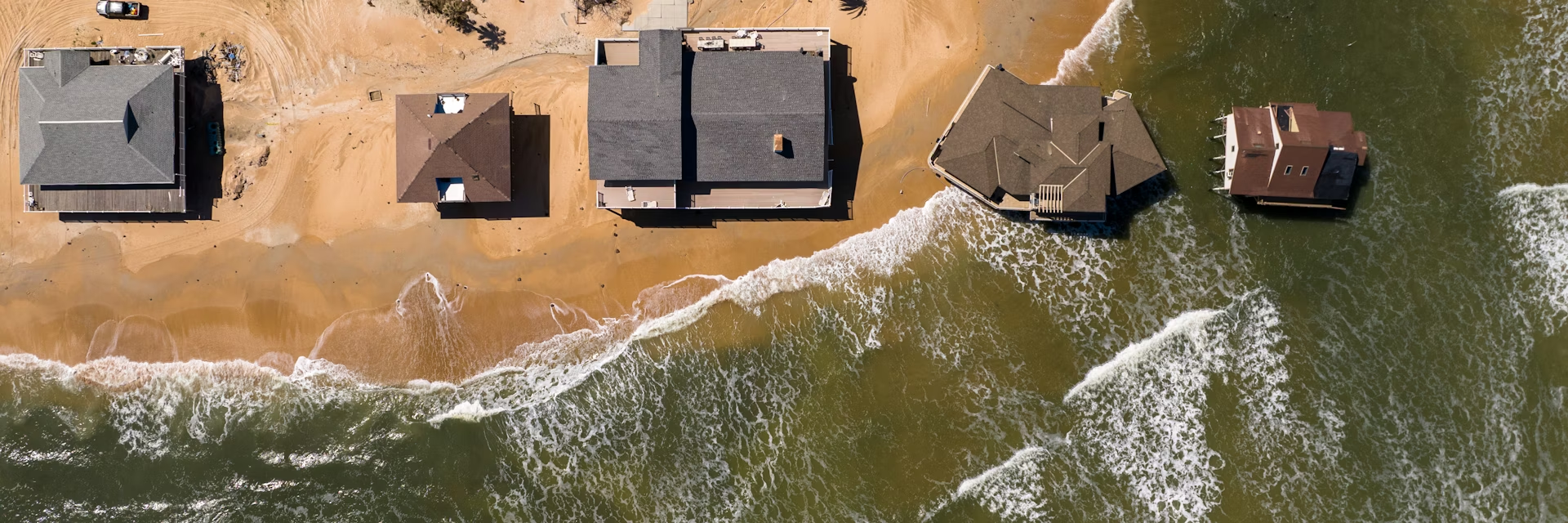
Rising sea levels are one of the most pressing challenges of climate change, yet predicting exactly when and where the impacts will be felt remains complex. Scientists warn that coastal communities, ecosystems, and global economies could face unprecedented disruption if proactive measures are not taken in the coming decades.
Understanding the Causes
Sea level rise is primarily driven by two factors:
- Thermal expansion: As global temperatures increase, ocean water warms and expands, contributing to higher sea levels.
- Melting ice sheets and glaciers: Accelerated melting in Greenland, Antarctica, and mountain glaciers adds significant volumes of water to the oceans.
Other contributors, such as land subsidence and groundwater extraction, can exacerbate localized effects, making some regions more vulnerable than others.
Projected Timelines
Current climate models indicate that global sea levels could rise by one to two feet by 2100 under moderate emissions scenarios. In worst-case scenarios, some projections estimate increases of three feet or more, which could inundate low-lying areas and displace millions of people.
However, these projections come with uncertainty. Ice sheet dynamics, ocean currents, and regional geological factors can accelerate or slow the rate of rise, meaning the timeline for significant impacts varies widely across the globe.
Regional Impacts
Coastal cities and island nations are particularly at risk. Rising seas threaten:
- Urban infrastructure: Roads, ports, and utilities could be submerged or damaged.
- Ecosystems: Wetlands, mangroves, and coral reefs face increased flooding and erosion.
- Human populations: Millions of residents may need to relocate, creating economic and social challenges.
Regions like Southeast Asia, the eastern United States, and parts of Europe are considered highly vulnerable due to a combination of dense populations, low-lying geography, and subsiding land.
Mitigation and Adaptation
Experts emphasize that while the oceans are rising, humans have the tools to mitigate and adapt:
- Reducing greenhouse gas emissions is critical to slow thermal expansion and ice melt.
- Coastal defenses like seawalls, levees, and natural barriers can protect vulnerable areas.
- Urban planning and managed retreat may be necessary in regions where flooding is inevitable.
Proactive action now can reduce the severity of long-term impacts and provide communities with the time and resources to adapt.
The Bottom Line
The question is no longer if the oceans will rise—it’s how fast and how high. While exact timelines remain uncertain, the scientific consensus is clear: without urgent action, rising seas will pose a significant threat to communities, economies, and ecosystems around the world. Planning, innovation, and resilience will be key to navigating this coming challenge.















Leave a Reply