

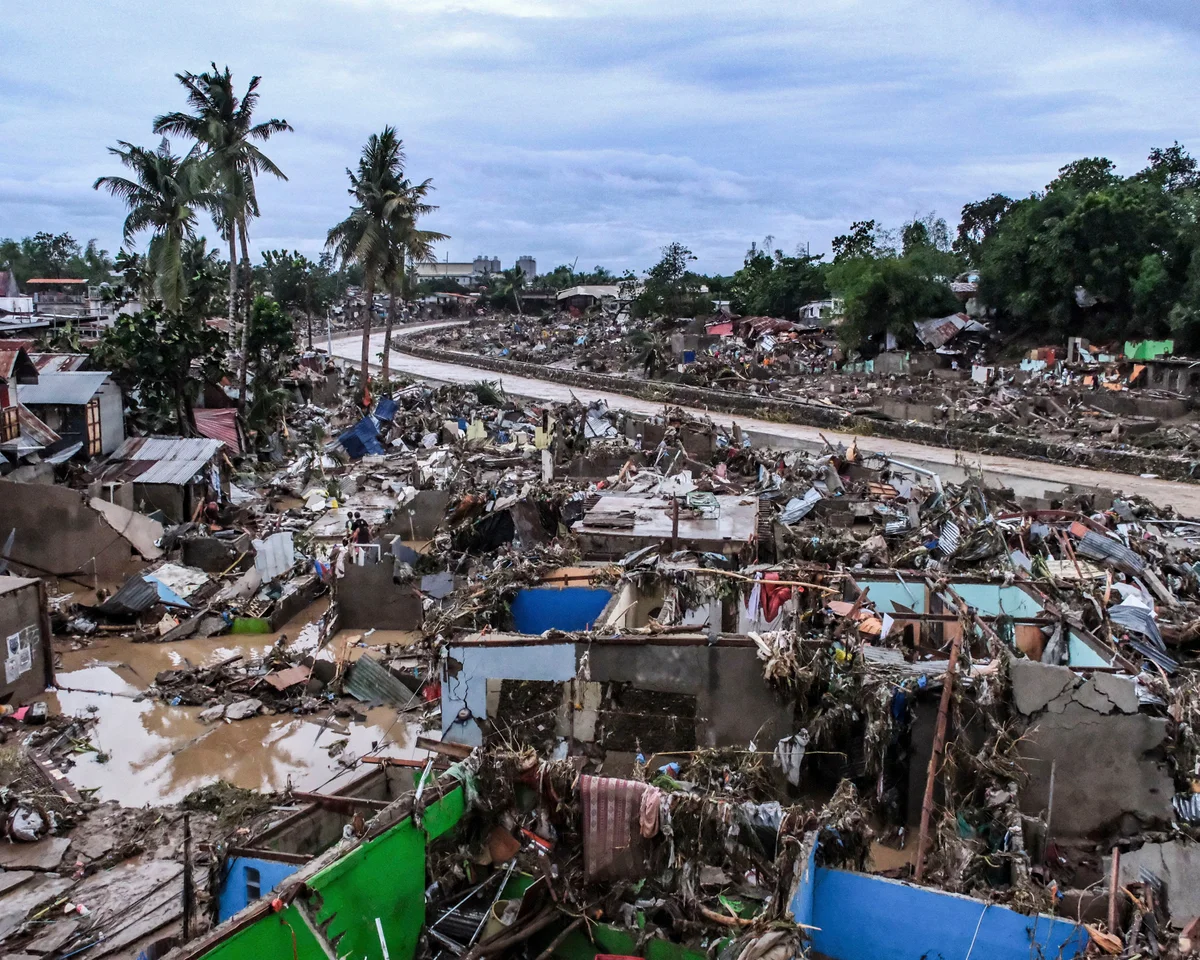
Central Philippines is facing one of its darkest moments in recent memory after Typhoon Kalmaegi tore through the region, leaving at least 52 people dead, hundreds injured, and tens of thousands displaced from their homes. The Category 4 storm, which made landfall earlier this week, unleashed torrential rains and powerful winds that triggered flash floods, landslides, and widespread devastation across multiple provinces.
Authorities fear that the death toll will rise further as rescue teams continue to reach isolated villages that remain cut off by collapsed bridges, blocked highways, and overflowing rivers. The Philippine National Disaster Risk Reduction and Management Council (NDRRMC) confirmed that many of the fatalities were caused by landslides in mountainous areas, while others drowned when rivers burst their banks overnight. Entire families have been reported missing, with emergency responders racing against time to locate survivors amid the wreckage.
A Trail of Widespread Destruction
Typhoon Kalmaegi struck with sustained winds exceeding 150 kilometers per hour, accompanied by gusts reaching nearly 200 kilometers per hour. The storm made landfall in Eastern Samar before sweeping westward through Leyte, Cebu, and Negros, leaving a broad swath of destruction in its path. Coastal towns bore the brunt of the storm surge, with waves several meters high swallowing houses, fishing boats, and public structures.
In the province of Leyte, scenes of devastation mirror those seen during previous super typhoons. Roads remain impassable, power lines are downed, and large areas are submerged under muddy waters. In some urban centers, flood levels reached rooftops, forcing residents to seek refuge in trees and on elevated bridges. Local authorities have described the situation as “catastrophic,” with hospitals overwhelmed and emergency shelters filled beyond capacity.
Emergency Response and Government Action
The Philippine government has declared a state of calamity in affected regions to expedite relief and recovery operations. Military helicopters and coast guard vessels are being deployed to deliver aid, rescue trapped individuals, and transport the injured to safer areas. President Ferdinand Marcos Jr. has ordered a coordinated national response, emphasizing the need for immediate relief, medical assistance, and long-term rehabilitation.
“Our hearts go out to all those who have lost loved ones and homes,” President Marcos said in a televised address. “We are mobilizing every available resource to assist communities in distress and rebuild what has been lost.”
The Department of Social Welfare and Development (DSWD) has dispatched thousands of food packs, blankets, and hygiene kits to evacuation centers. However, logistical challenges persist, particularly in remote areas where washed-out roads and damaged airports have slowed the distribution of aid.
Humanitarian Crisis Unfolds
Humanitarian organizations are calling for urgent support as displaced families struggle with dwindling food supplies, poor sanitation, and limited access to clean water. Many survivors have described harrowing experiences — clinging to trees for hours as floodwaters rose, or watching helplessly as homes were swept away by the current.
“We’ve lost everything,” said one resident from northern Cebu, her voice trembling as she recounted how the flood engulfed her village overnight. “The only thing left standing is the church.”
Relief agencies warn that the aftermath could trigger a secondary crisis if waterborne diseases spread through overcrowded shelters. Medical teams are already reporting cases of respiratory infections and skin diseases among evacuees.
The Climate Connection
Experts say Typhoon Kalmaegi is another grim reminder of the growing impact of climate change on the Philippines, one of the most disaster-prone countries in the world. Situated along the Pacific typhoon belt, the nation experiences an average of 20 tropical cyclones each year. However, recent storms have grown increasingly powerful and unpredictable, fueled by warmer ocean temperatures and shifting weather patterns.
“Kalmaegi’s intensity and the scale of flooding it caused are consistent with what climate models have warned us about,” said Dr. Maria Llorente, a climatologist at the University of the Philippines. “Rising sea temperatures are making storms wetter, stronger, and slower-moving — leading to greater destruction.”
Environmental advocates are urging the government to strengthen climate adaptation measures, including better flood control systems, improved disaster preparedness, and the relocation of vulnerable communities from high-risk zones.
Recovery and the Road Ahead
As the storm moves out of the Philippine area of responsibility, attention is now turning to recovery and rebuilding. The process, however, is expected to be long and arduous. Thousands of homes have been destroyed, and the economic damage is estimated to run into billions of pesos. Crops and livestock have been wiped out in rural areas, threatening food security and livelihoods.
In the city of Tacloban — still haunted by memories of 2013’s Super Typhoon Haiyan — residents are once again left to pick up the pieces. “We’ve been through this before,” said a local volunteer, “but each time, it feels harder to start over.”
Despite the heartbreak, stories of resilience and solidarity continue to emerge. Volunteers, faith-based organizations, and local communities are working hand-in-hand to provide meals, rebuild homes, and restore hope. The Philippine Red Cross and international relief groups have launched fundraising campaigns to support victims and rebuild critical infrastructure such as schools, hospitals, and water systems.
A Nation Tested, Yet Unbroken
The devastation caused by Typhoon Kalmaegi underscores both the vulnerability and the resilience of the Filipino people. While nature’s fury has once again tested the nation’s strength, the collective response — from rescuers risking their lives to citizens offering what little they have — reflects a spirit that refuses to be defeated.
For many, recovery will take months, perhaps years. Yet amid the ruins, there is a quiet determination to rise once again — to rebuild stronger, wiser, and more prepared for the next challenge nature brings.















Leave a Reply