


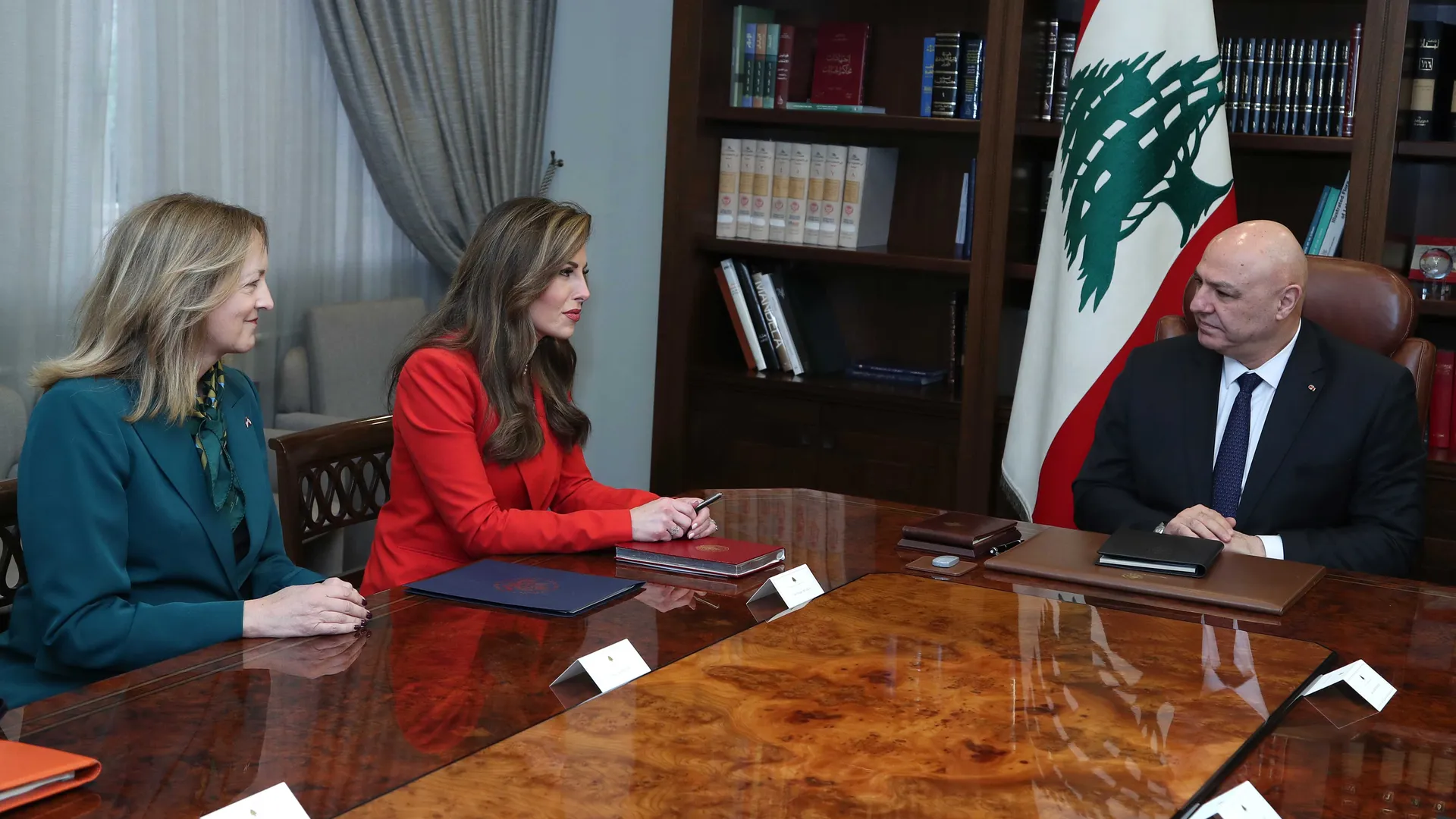
Beirut — The United States has proposed a new plan to strengthen the Lebanese Armed Forces (LAF) as part of an effort to disarm Hezbollah and restore full state authority in Lebanon. The initiative, discussed during high-level meetings in Beirut, aims to end years of political paralysis and prevent renewed conflict along the Lebanese-Israeli border.
According to senior Lebanese officials, Washington’s proposal includes expanded military aid, intelligence-sharing, and logistical support to the Lebanese army. The goal is to enable state forces to assume control over all armed activity within the country — a responsibility that, for decades, has been challenged by Hezbollah’s independent military structure.
A Strategic Shift in U.S. Policy
The move represents one of the most direct American efforts in years to curb Hezbollah’s influence in Lebanon. For Washington, empowering the Lebanese army is seen as essential to reducing the group’s control and limiting Iran’s reach in the eastern Mediterranean.
Diplomatic sources indicated that the U.S. is ready to commit additional funding and advanced equipment to the LAF if Beirut demonstrates clear progress toward integrating all armed groups under state command. This would include the gradual disarmament of Hezbollah’s militia, a goal that has long eluded previous Lebanese governments.
Lebanon’s Fragile Balancing Act
Lebanon’s political leadership faces a complex dilemma. Hezbollah, while a dominant political force in parliament, also maintains a vast network of armed fighters, rocket stockpiles, and intelligence assets across the country. Its leaders insist that their weapons are essential for defending Lebanon against Israeli aggression, and any disarmament effort would be seen as a direct challenge to their legitimacy.
President Joseph Aoun and Prime Minister Najib Mikati have both expressed cautious support for the U.S.-backed initiative, framing it as a step toward national unity and stability. However, they have also called for guarantees that the process will not leave Lebanon vulnerable to external threats.
Regional Implications
The proposal comes amid heightened tensions between Israel and Hezbollah following months of sporadic border clashes. Both sides have honored a fragile ceasefire brokered earlier this year, but the situation remains volatile.
Regional analysts say that the timing of Washington’s plan reflects both urgency and opportunity. The United States views Lebanon as a critical front in its broader strategy to stabilize the Middle East and counterbalance Iranian influence. For Israel, the disarmament of Hezbollah would mark a significant security victory after decades of conflict and uncertainty.
Potential Obstacles
Despite international optimism, implementing the plan poses immense challenges. Hezbollah’s military infrastructure is deeply entrenched, and any attempt to dismantle it could risk internal unrest. Many Lebanese civilians remain wary of external pressure and fear that disarmament could reignite sectarian tensions or provoke Israeli retaliation.
Furthermore, Lebanon’s economic crisis — marked by hyperinflation, collapsing public services, and mass emigration — complicates the government’s ability to sustain large-scale military operations or reforms without sustained international aid.
A Narrow Window for Change
U.S. officials have described the current period as a “narrow window” for progress. The ceasefire along the southern border, though fragile, provides temporary stability that could allow diplomatic and security institutions to act. The Biden administration has reportedly assured Beirut that Washington will help prevent any escalation during the transition.
For many Lebanese citizens, the idea of a strong national army capable of protecting the country without reliance on militias remains an aspiration — one that could finally restore faith in state institutions after years of division and decline.
Looking Ahead
Whether the U.S.-backed initiative succeeds will depend on careful diplomacy and the willingness of Lebanon’s leaders to confront one of the most sensitive issues in their modern history. If successful, it could mark the beginning of a new political era for Lebanon — one in which the state, not armed factions, determines the nation’s destiny.
But if it fails, Lebanon risks sliding back into political paralysis and instability, with Hezbollah’s power remaining unchecked and the country’s fragile sovereignty once again at risk.












Leave a Reply