

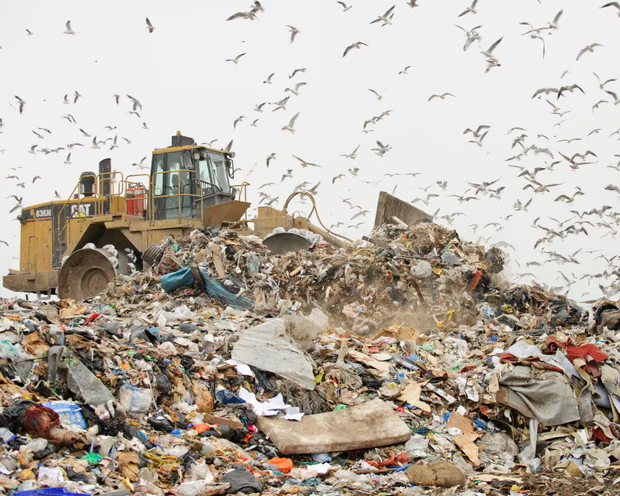
Environmental experts are raising alarms over hidden and poorly monitored landfills across the UK and Europe, warning that decades-old waste sites may soon threaten local water supplies with toxic contamination. Aging infrastructure, combined with insufficient oversight, has left many landfills vulnerable to leakage, posing risks to public health and ecosystems.
Recent surveys and investigations reveal that thousands of landfills, some dating back to the mid-20th century, were built without modern protective measures such as impermeable liners or proper leachate management systems. Over time, these sites can release harmful chemicals—including heavy metals, industrial solvents, and persistent organic pollutants—into the surrounding soil and groundwater.
Authorities warn that rainfall, flooding, and natural erosion can exacerbate the problem, allowing toxins to enter rivers, streams, and aquifers that supply drinking water. In some cases, nearby communities may already be experiencing elevated levels of contaminants, though monitoring is often limited due to the hidden or abandoned nature of these landfills.
Experts emphasize that the risks are not limited to rural areas. Many urban and suburban regions sit atop former landfill sites, increasing the potential for widespread contamination if waste containment systems fail. The presence of legacy industrial waste and household chemicals further complicates the situation.
Environmental organizations are calling for urgent action, including comprehensive mapping of old landfill sites, regular testing of nearby water sources, and implementation of modern containment or remediation measures. Some advocate for the use of advanced technology such as remote sensing, drones, and AI modeling to predict and detect leakage before it becomes a public health crisis.
“Landfills were often out of sight and out of mind, but their impact can persist for decades,” said an environmental scientist involved in the research. “Proactive monitoring and remediation are essential to protect both human health and the natural environment.”
As governments and local authorities confront these hidden hazards, the focus is increasingly on preventing long-term contamination and addressing potential risks before they escalate. Failure to act could result in costly cleanup operations, ecological damage, and increased exposure to harmful substances for millions of people across the region.















Leave a Reply