

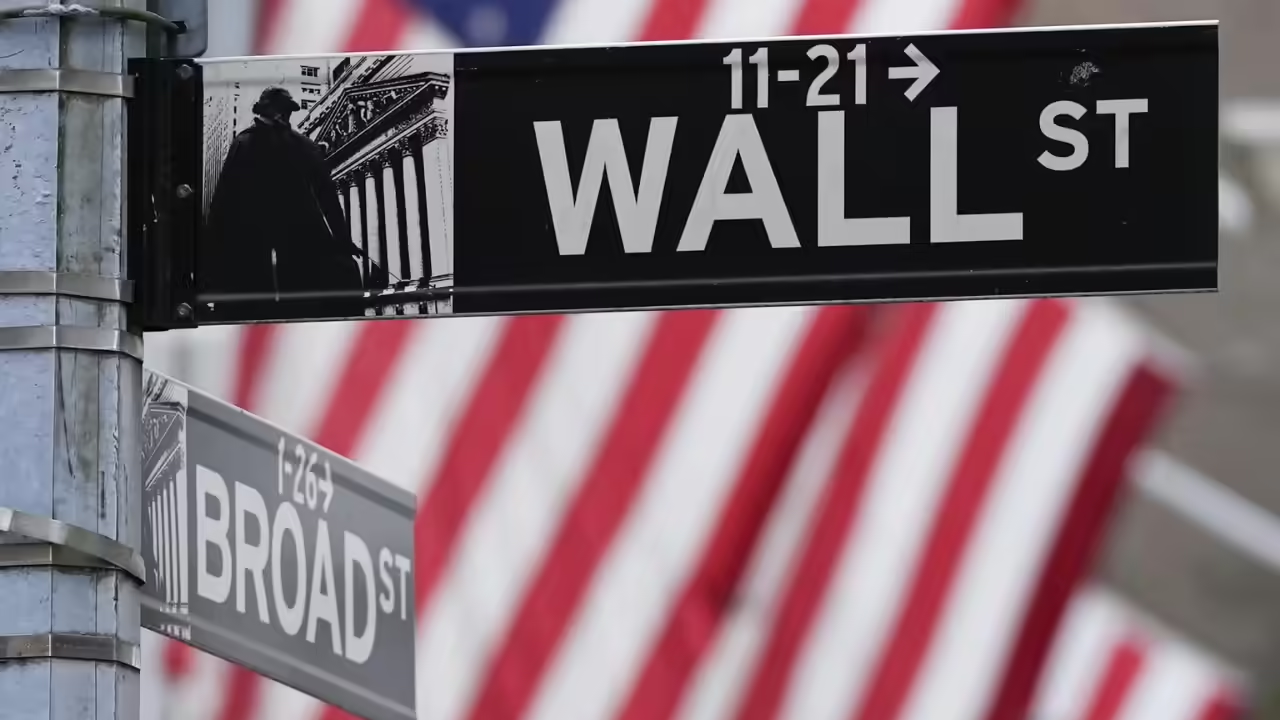
The U.S. stock market advanced modestly on Wednesday, lifted by stronger-than-expected job figures and a mixed rebound in the technology sector. Investors, however, remained wary as concerns about inflation, interest rates, and corporate valuations continued to shape market sentiment.
Despite the day’s mild optimism, analysts described the session as a “balancing act” — a tug of war between encouraging economic signals and persistent worries about the cost of credit and global growth.
A Day of Tentative Gains
The Dow Jones Industrial Average added a small but steady gain after fluctuating throughout the morning. The S&P 500 climbed about 0.3%, driven by industrials, consumer discretionary, and select energy names. The Nasdaq Composite led the advance with an increase of around 0.6%, as investors cautiously returned to tech shares after a rough few days of selling pressure.
Market strategists said the tone was reflective of investors testing the waters rather than diving in. “We’re seeing traders willing to take selective bets,” one equity analyst noted, “but there’s no sense of euphoria. It’s a slow, methodical rotation.”
The advance followed several sessions of choppy trading, where economic reports and earnings results pulled sentiment in opposite directions. Many traders now see the market in a “pause phase” — waiting for clearer signals from both the labor market and the Federal Reserve.
Jobs Report Brings a Glimmer of Relief
Fresh private-sector payroll data showed an increase of roughly 42,000 jobs in October, nearly double economists’ forecasts. While still below the levels seen earlier in the year, the number suggested the job market retains moderate momentum.
Economists described the data as “encouraging but not overheated” — strong enough to support spending but not so strong as to trigger renewed inflation fears. That delicate balance is exactly what Wall Street has been hoping for.
The employment news helped temper anxiety after several months of uneven data, where signs of cooling had raised fears of a sharper slowdown. A gradually moderating job market, coupled with steady wage growth, offers hope that the economy may achieve the elusive “soft landing” — slowing inflation without sliding into recession.
Still, the details revealed some areas of weakness. Hiring in manufacturing and construction lagged, and small businesses continued to struggle with labor shortages and rising costs. Analysts warned that job creation could slow further in the coming months if borrowing costs remain high.
Technology Stocks Lead the Rebound
After a volatile October, tech shares were back in focus. Advanced Micro Devices (AMD) posted strong earnings results that underscored resilience in the semiconductor industry, but its stock initially slipped before recovering as investors weighed future guidance.
Nvidia and other chip-related companies also rebounded slightly, though analysts warned that profit-taking could return quickly. “The market’s tolerance for high valuations has dropped dramatically,” one portfolio manager said. “Even good results now require exceptional forward guidance to maintain momentum.”
Beyond chips, major software and cloud-computing names saw modest gains, while smaller speculative tech firms continued to lag. The sector’s performance reflected a divide between established giants with solid balance sheets and newer entrants still chasing profitability.
Inflation Concerns Keep Investors Guarded
While markets welcomed the jobs data, inflation remained a looming concern. Treasury yields inched higher, signaling continued caution among bond investors. The benchmark 10-year yield rose toward recent highs, reminding equity traders that borrowing costs remain elevated.
Rising yields tend to pressure growth stocks — especially those in the technology sector — by making future earnings less attractive in present-value terms. Investors are now closely watching for fresh inflation data expected later this month, which could determine whether the Federal Reserve maintains its cautious stance or hints at potential rate adjustments.
Some market strategists believe the Fed will hold interest rates steady for longer than anticipated. “We may be at the peak of the cycle,” said an economist at a major investment firm, “but the path down will be slow. Inflation isn’t gone, and the Fed won’t risk easing too soon.”
Corporate Outlooks Mixed
Earnings season continues to deliver a blend of surprises and disappointments. Companies across sectors are reporting steady demand but weaker margins, as higher costs for labor, materials, and financing take their toll.
Retailers have issued warnings about slowing discretionary spending, while industrial and energy firms have highlighted uneven global demand. Yet, despite these pressures, many corporations remain profitable, buoyed by strong pricing power and disciplined cost control.
Investors are increasingly focused on forward guidance rather than backward-looking results. “This quarter’s numbers matter less than what companies are saying about 2026,” one analyst remarked. “The market’s already pricing in a slowdown — the question is how deep it gets.”
A Market Balancing Between Hope and Caution
For now, Wall Street appears to be holding its breath. The combination of improving employment data and stable corporate profits is preventing a sell-off, but lingering inflation risks and high borrowing costs are keeping rallies in check.
Market volatility has fallen slightly in recent weeks, suggesting traders are becoming less reactive to day-to-day news. Still, few expect smooth sailing ahead. The next major catalysts — inflation figures, retail-sales data, and fresh guidance from the Federal Reserve — will likely determine whether the market’s tentative recovery has staying power.
Looking Ahead
With the year’s final quarter underway, the focus will shift toward holiday spending trends and the central bank’s policy outlook. Investors will be watching whether consumer resilience can offset the drag from higher interest rates and global uncertainty.
Many analysts believe that while short-term pullbacks are likely, the overall U.S. economy remains fundamentally sound. The key challenge will be sustaining growth without reigniting inflation — a balancing act that could define market performance well into next year.
For now, optimism is present but restrained. Wall Street seems ready to inch forward, but with one hand firmly on the brake.
















Leave a Reply