

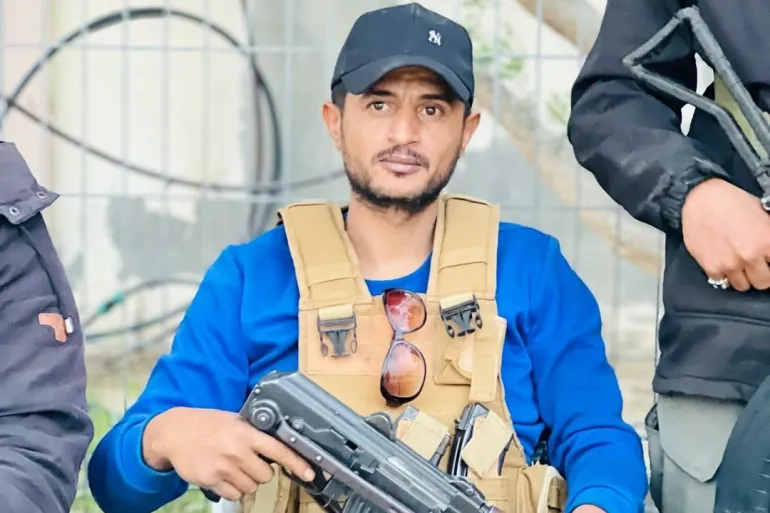
Yasser Abu Shabab, a controversial militia leader in Gaza with a long and complicated past, was killed in an armed clash in Rafah, marking a dramatic end to a figure whose rise embodied the chaos and fragmentation of wartime Gaza. His death not only eliminates one of the most prominent anti-Hamas actors in the Strip, but also raises fresh questions about the viability of Israel-backed local militias in a region defined by deep political and tribal divisions.
A Troubled Past Before the War
Abu Shabab came from the Tarabin tribe, one of the influential Bedouin families in southern Gaza. Before the current conflict, he was best known not as a political or military leader, but as a criminal. He had been imprisoned multiple times on charges ranging from drug trafficking to theft. When the war erupted and Gaza’s internal systems collapsed, Abu Shabab — like several others — escaped confinement and returned to the streets.
Rise of the Popular Forces Militia
Capitalizing on the breakdown of security and governance, Abu Shabab formed and led a militia known as the Popular Forces. The group presented itself as an anti-Hamas, pro-stability force, claiming to protect civilians and aid convoys in areas where Hamas had lost control.
But many Gaza residents rejected that narrative. The Popular Forces were widely viewed as opportunistic, accused of looting aid shipments, intimidating civilians, and exploiting wartime shortages. Despite these accusations, the militia grew in visibility due to external support — particularly from Israel, which sought to cultivate alternative local actors who could challenge Hamas’s grip on the territory.
Israel’s Backing and Local Distrust
Israel’s support provided Abu Shabab with weapons, equipment, and operational freedom, but it also damaged his legitimacy among Palestinians. To many in Gaza, he was seen as a collaborator, a man whose loyalty was tied to foreign interests rather than local needs. Hamas labelled him a traitor, and even neutral families viewed his rise with suspicion.
The Popular Forces, despite gaining attention, never developed into a broad-based movement. Estimates suggested the militia consisted of only a few hundred fighters, lacking both political structure and widespread popular support.
The Clash That Ended His Life
Abu Shabab was killed during a violent confrontation in Rafah, reportedly a dispute between armed clans rather than a direct military operation. The internal nature of the clash underscored how volatile Gaza’s social landscape has become — where tribal rivalries, personal grievances, and political tensions collide unpredictably.
His own militia confirmed the death, marking the end of a leader who had become both a symbol and a symptom of the power vacuum created by war.
What His Death Means for Gaza
Abu Shabab’s killing is widely seen as a setback for Israel’s attempts to empower local actors as alternatives to Hamas. The rapid rise and even faster fall of the Popular Forces highlights several key realities:
- Proxy militias without strong local legitimacy are fragile and short-lived.
- Tribal power struggles in Gaza can derail externally backed strategies.
- Most Palestinians remain deeply wary of figures seen as aligned with outside forces.
For Hamas, his death may be viewed as a reaffirmation of its dominance over Gaza’s internal dynamics. For other militia leaders or clan factions, it stands as a warning that external support offers limited protection in a landscape defined by shifting loyalties.
A Brief, Turbulent Legacy
Yasser Abu Shabab’s story is not one of political ideology or national leadership. Instead, it reflects the darker side of wartime breakdowns: how individuals with criminal pasts can rise quickly in the absence of governance, how external actors seek local proxies, and how grassroots rejection can bring such figures down just as quickly.
His death leaves behind a fractured militia, a damaged experiment in proxy governance, and a stark reminder of the complexities that lie ahead for Gaza’s future.

















Leave a Reply