

Tokyo — October 6, 2025:
Japan’s financial markets were jolted on Monday after the ruling Liberal Democratic Party (LDP) elected Sanae Takaichi as its new leader, paving the way for her to become Japan’s next prime minister. The yen plummeted to multi-month lows against the U.S. dollar, while stock markets surged amid expectations that Takaichi will pursue expansive fiscal stimulus policies, mirroring the bold economic strategies of former Prime Minister Shinzo Abe.
Takaichi’s decisive win signaled a potential shift in Japan’s policy mix — one that could lean heavily on government spending to energize growth while maintaining accommodative monetary conditions. Her reputation as a fiscal dove immediately reshaped investor sentiment, sending shockwaves through currency and bond markets.
Yen’s Sharp Fall Underscores Market Anxiety
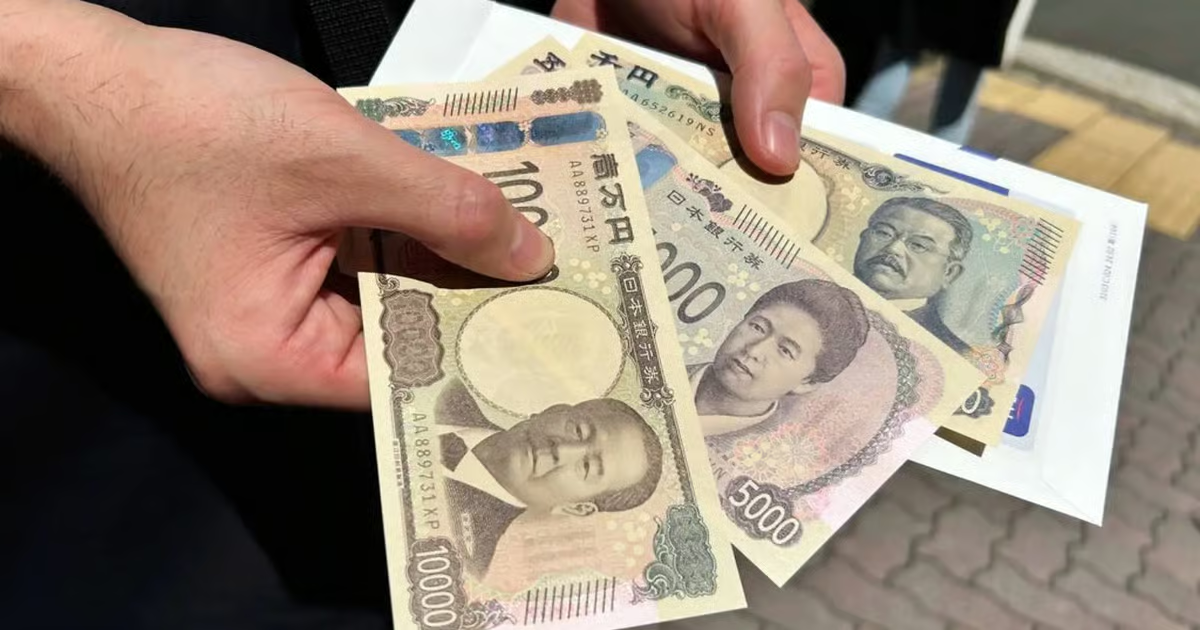
The yen weakened sharply, dropping nearly two percent against the dollar to trade above 150 per dollar, a level not seen since early summer. The swift depreciation reflected growing expectations that Japan’s next government will prioritize economic stimulus and public investment over fiscal restraint.
Currency traders reacted swiftly, betting that Takaichi’s administration will rely on increased government borrowing to finance social programs, defense spending, and industrial competitiveness initiatives. The shift revived fears of rising inflation and expanding debt levels, both of which could limit the Bank of Japan’s flexibility in tightening monetary policy.
“The market is recalibrating to a new political reality,” said one Tokyo-based economist. “Under Takaichi, Japan could re-embrace large-scale fiscal expansion at a time when the central bank is still cautious about raising rates. That combination points to a weaker yen and stronger equity markets in the near term.”
Stocks Soar as Stimulus Bets Take Hold
In contrast to the yen’s decline, Japanese equities experienced a powerful rally. The Nikkei 225 index jumped more than 5 percent, closing at an all-time high, as investors poured into construction, defense, and technology stocks — sectors expected to benefit from a wave of new government contracts.
The rally was underpinned by Takaichi’s economic platform, which emphasizes investment in digital infrastructure, advanced manufacturing, and energy resilience. Her proposed policies echo “Abenomics,” the pro-growth agenda that combined fiscal expansion, monetary easing, and structural reform. Analysts predict that a similar blend could return under her leadership, though with even more aggressive spending commitments.
Foreign investors, who have been cautious amid uncertainty about Japan’s policy direction, appear to be repositioning in anticipation of a stimulus-driven boom. Financial firms also noted renewed interest from global hedge funds seeking to capitalize on the yen’s weakness and Japan’s stock market momentum.
Implications for the Bank of Japan
Takaichi’s arrival at the top of the government introduces new complexities for the Bank of Japan (BOJ), which has been signaling a gradual exit from years of ultra-loose monetary policy. The market had previously expected a rate hike before the end of the year, but those expectations have now cooled.
With fiscal stimulus on the horizon, the BOJ faces a delicate balancing act: support the economy without letting inflation spiral or bond yields surge. If government borrowing rises sharply, it could test the limits of Japan’s massive debt market — already the largest in the developed world.
“Fiscal dominance is the real concern here,” noted a former BOJ official. “If the government floods the system with spending, the central bank’s independence could come under pressure. That might make it harder to control inflation expectations or defend the yen.”
A New Political Era for Japan
Sanae Takaichi’s victory marks a historic moment for Japanese politics. Known for her strong nationalist leanings and conservative social views, she becomes Japan’s first female leader in nearly a decade and one of the few women to rise to the country’s highest office.
Her ascent followed a tightly contested leadership race that exposed divisions within the LDP over the pace of economic reform, fiscal prudence, and Japan’s defense posture amid regional security tensions. Takaichi campaigned on promises to increase defense spending, invest in domestic innovation, and strengthen Japan’s role on the global stage — all while protecting household incomes through targeted subsidies and wage support.
The domestic response has been mixed. Business leaders have largely welcomed her economic plans, calling them ambitious and necessary to revitalize growth. Critics, however, warn that a massive fiscal expansion could worsen Japan’s already precarious public finances and leave future generations burdened with mounting debt.
The Global Ripple Effect
The yen’s sharp slide has drawn attention from international policymakers and traders, who fear renewed currency volatility across Asia. A weaker yen makes Japanese exports more competitive but increases the cost of imports, particularly energy and raw materials — a dynamic that could spill over into global supply chains.
Other Asian currencies, including the Korean won and Chinese yuan, also moved lower amid expectations of shifting trade flows and competitive devaluations. U.S. and European investors are closely monitoring Japan’s next steps, wary that sustained yen weakness could complicate global inflation dynamics and trigger diplomatic friction over currency management.
Looking Ahead
Market attention now turns to Takaichi’s cabinet appointments and her government’s first economic package, which could be announced within weeks. Analysts expect a spending plan focused on public works, green technology, and military modernization, financed through new debt issuance and tax incentives for key industries.
For the Bank of Japan, the question is whether it will continue to normalize policy or pause in the face of political pressure and rising fiscal activity. The coming months could define not only the trajectory of Japan’s economy but also the credibility of its central bank in balancing growth with stability.
As one analyst put it: “Japan may be entering a new era of stimulus — one that could reignite growth but also test the limits of its fiscal and monetary discipline.”


















Leave a Reply