

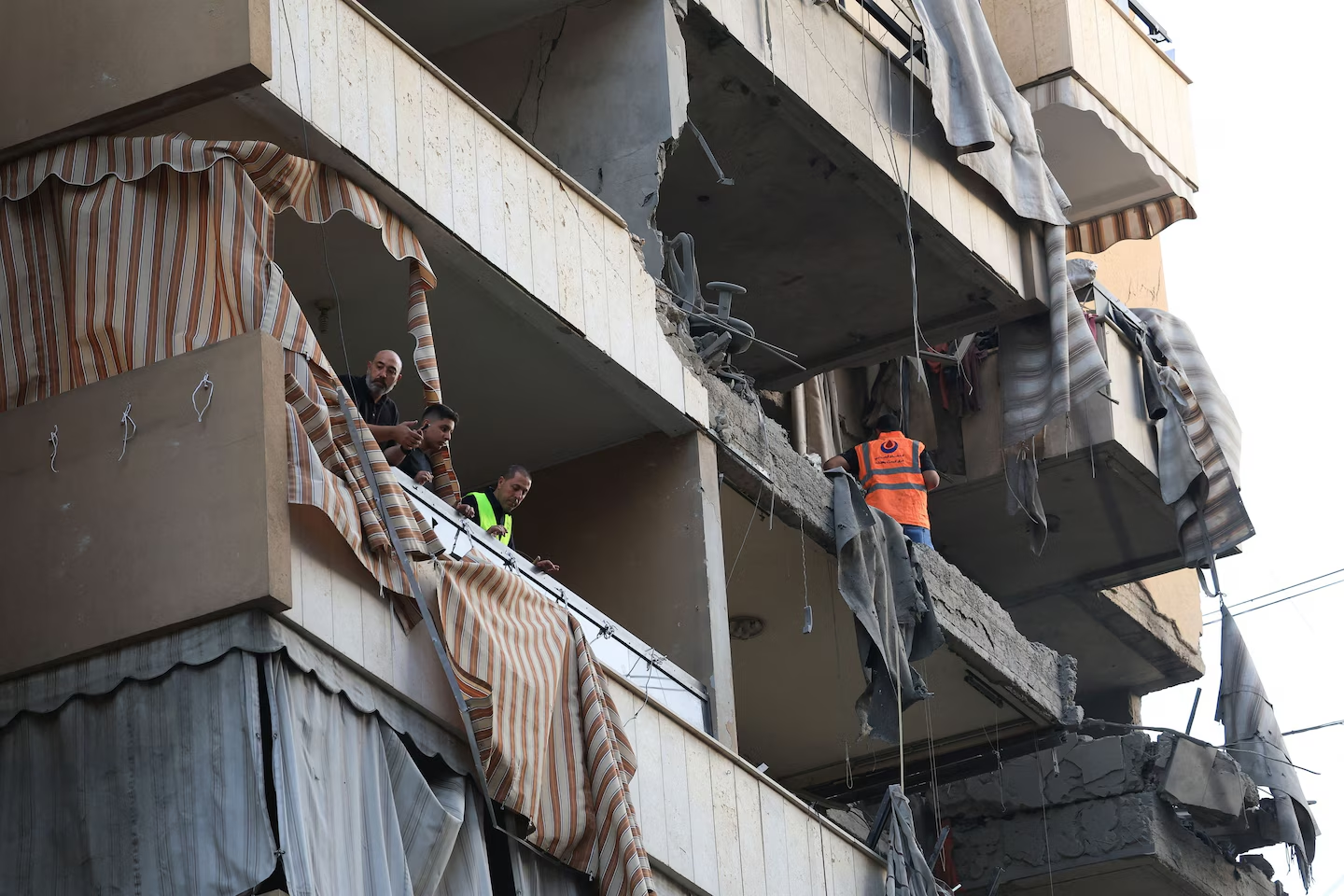
Tensions across the Middle East surged on Monday as Hezbollah announced it is “considering” how to respond to ongoing Israeli attacks on Gaza, a statement that immediately raised fears of a broader regional escalation.
The group’s leadership said it has been closely monitoring what it described as a dramatic increase in Israeli military operations, including a series of intensified strikes on Gaza’s densely populated neighborhoods. According to Hezbollah’s statement, the continued bombardment is pushing the situation “toward a dangerous threshold” and could force the group to reassess its current level of engagement.
Growing Pressure in Lebanon
Inside Lebanon, residents in the country’s south remain on edge as cross-border tension persists. Although the ceasefire agreement between Israel and Hezbollah earlier in the year brought temporary calm, recent Israeli air activity has reignited concerns that the fragile truce could unravel at any moment.
Local officials in southern Lebanon report heightened anxiety among communities living near the border, with many fearing that even a limited retaliation from Hezbollah could invite an overwhelming Israeli response. The Lebanese Armed Forces have quietly increased their presence in several border towns as a precaution.
Hezbollah’s Dilemma
Hezbollah faces a complex strategic dilemma. On one hand, the group is under pressure — both from supporters and from regional allies — to demonstrate that Israeli strikes on Gaza will not go unanswered. On the other hand, the organization is still recovering from losses and infrastructure damage sustained in previous confrontations. A large-scale retaliation could expose Hezbollah to another round of heavy Israeli bombardment at a time when Lebanon remains politically and economically fragile.
Analysts say the group is likely weighing limited forms of retaliation, such as targeted strikes or drone activity, rather than widescale confrontation. Such moves would allow Hezbollah to signal strength without risking a full-scale conflict that neither side appears eager to ignite.
Israel Signals Firm Stance
For its part, Israel has maintained that its operations in Gaza will continue until it achieves what it calls “strategic security objectives.” Officials in Tel Aviv have repeatedly warned that any attack from Lebanon — whether independent or coordinated — will be met with force. Military units along Israel’s northern frontier remain on high alert, with reinforcements stationed in key locations in case of escalation.
Israeli leaders have also emphasized that they hold the Lebanese government responsible for curbing Hezbollah’s activities, a stance that further complicates diplomatic efforts within Lebanon.
Regional Stakes Rising
The possibility of Hezbollah entering the conflict more directly has sparked alarm across the region. Observers warn that even a symbolic escalation could widen the conflict dramatically, pulling multiple actors into a confrontation with unpredictable consequences. As Gaza endures relentless strikes and diplomatic efforts struggle to gain traction, the risk of miscalculation continues to grow.
For now, Hezbollah’s next move remains unclear, but its rhetoric signals a shift toward a more assertive posture. If Israeli attacks on Gaza continue at their current intensity, the pressure on the group to act may reach a breaking point — and the region could find itself on the verge of another dangerous chapter.










Leave a Reply