

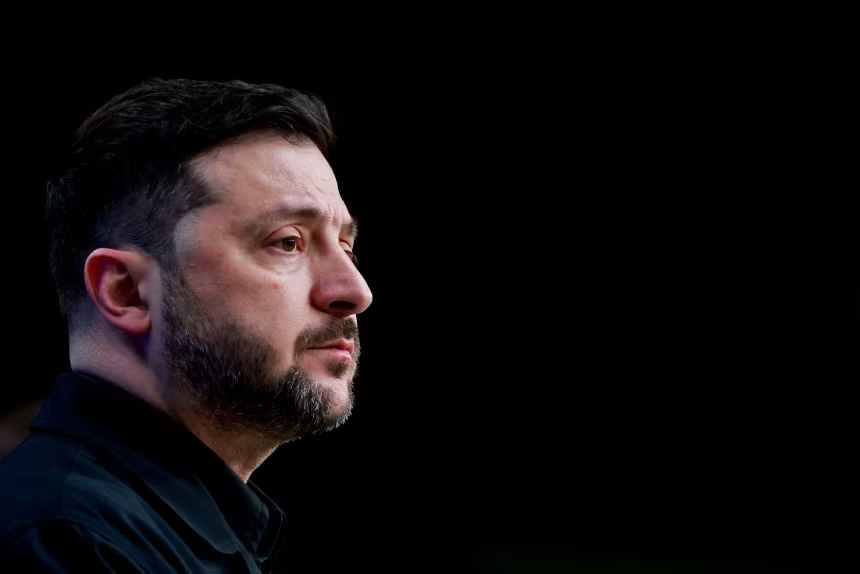
Ukrainian President Volodymyr Zelensky has confirmed plans to meet former U.S. President Donald Trump on Sunday, signaling a potentially pivotal moment in international efforts to bring an end to Russia’s ongoing war against Ukraine. The meeting, expected to draw intense global attention, comes as fighting continues along multiple фронts and diplomatic pressure mounts for a negotiated settlement.
According to Ukrainian officials, the talks will focus on possible pathways toward ending the conflict, including security guarantees for Ukraine, the future of U.S. military and financial support, and the broader geopolitical consequences of the war. Zelensky has consistently emphasized that any peace plan must preserve Ukraine’s sovereignty and territorial integrity, a position that remains central to Kyiv’s diplomacy.
Trump, who is seeking to return to the White House, has repeatedly claimed he could bring the war to a swift conclusion through direct negotiations. While he has not publicly detailed how such a deal would be achieved, his statements have fueled both optimism and concern among allies. Supporters argue his unconventional approach could break diplomatic deadlock, while critics fear concessions that could embolden Moscow or undermine Ukraine’s position.
The planned meeting reflects Ukraine’s effort to engage across the U.S. political spectrum at a time when American support has become a contentious domestic issue. With debates in Washington over continued aid, Zelensky appears intent on ensuring that Ukraine’s perspective is clearly communicated to influential political figures, regardless of party affiliation.
Analysts say the encounter could also shape international perceptions of how a future U.S. administration might handle the war. Trump’s past comments questioning the scale of U.S. assistance to Ukraine have raised alarms in European capitals, where leaders worry about the sustainability of Western unity. Zelensky, for his part, is expected to underscore the argument that Ukraine’s defense is inseparable from broader European and global security.
The timing of the talks is notable. Russia has shown no clear signs of abandoning its military objectives, while Ukraine faces ongoing challenges on the battlefield, including manpower strains and infrastructure damage from continued strikes. Diplomatic initiatives have struggled to gain traction, making any high-level engagement potentially significant, even if immediate breakthroughs are unlikely.
Ukrainian officials caution that the meeting should not be seen as an endorsement of any specific proposal. Instead, they frame it as part of a broader diplomatic strategy to keep Ukraine’s priorities at the center of international discussions. Zelensky is expected to reiterate that peace cannot come at the cost of Ukrainian independence or reward aggression.
Whether the Sunday talks will produce tangible results remains uncertain. Still, the very fact that the meeting is taking place highlights the evolving political dynamics surrounding the war. As global attention shifts toward possible negotiations, the Zelensky–Trump discussion may offer clues about how the conflict could be approached in the months ahead—and whether new diplomatic avenues might finally emerge after years of devastating warfare.











Leave a Reply