

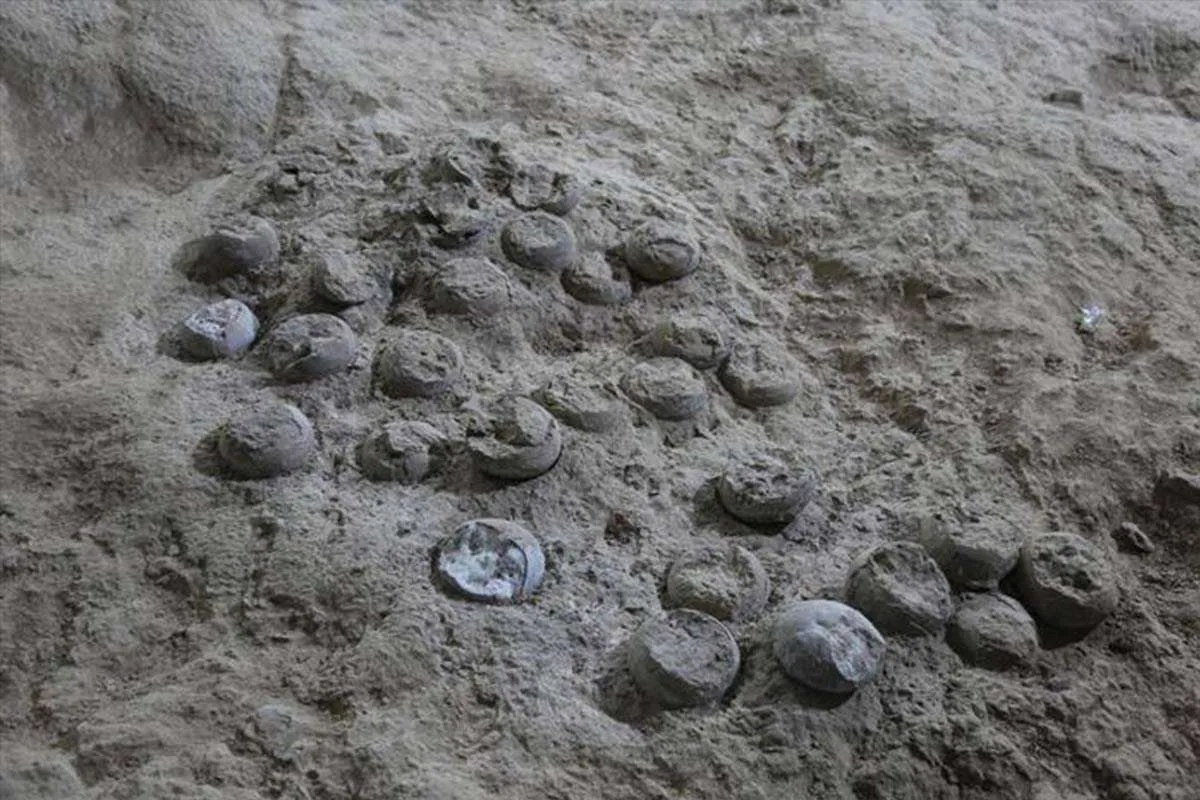
Paleontologists in central China have made an extraordinary find: a clutch of 28 perfectly preserved dinosaur eggs dating back about 86 million years, during the Late Cretaceous period. The site, known as the Qinglongshan fossil reserve, is offering new clues about nesting behavior and dinosaur reproduction during this ancient era.
What Was Found
- Twenty-eight eggs were discovered together in a single clutch, indicating communal nesting or repeated use of the site by dinosaurs.
- The state of preservation is notable: many eggs retain fine details of their shape and shell structure, which scientists hope will enable comparisons with both known species and previously undocumented dinosaur egg taxa.
- The geology and sediment layers date the find to roughly 86 million years ago, a time when the region was lush, likely with water sources, vegetation, and a climate conducive to dinosaur life.
Why It’s Significant
- Reproductive behavior: The large clutch suggests that dinosaur species in this area may have laid many eggs together, possibly returning to the same nesting grounds — behaviors previously hypothesized but rarely so clearly illustrated.
- Egg shell insights: With intact eggs, researchers can study shell microstructure, pores, and thickness, which help reveal how the embryos exchanged gases, how porous their shells were, and how vulnerable they might have been to environmental conditions.
- Species diversity: While the specific species that laid these eggs haven’t been definitively identified, similar egg finds in the region hint at both herbivorous and carnivorous dinosaurs using the plains. This could provide insight into which groups were thriving 86 million years ago in this part of China.
Context: Qinglongshan & the Late Cretaceous
The Qinglongshan reserve is part of a larger fossil-rich region in central China. Over many years, it has yielded dinosaur bones, footprints, and eggs — painting a picture of a vibrant ecosystem in the Late Cretaceous. The land at that time was home to many dinosaur groups, and finds like this clutch help fill gaps in understanding how these creatures lived, reproduced, and interacted with their environment.
What’s Next for Research
- Scientists will perform detailed shell analysis to identify microscopic features and possibly match them with known dinosaur species or propose new ones.
- Isotopic analysis of surrounding sediments may reveal climate conditions at the time, including temperature, humidity, and seasonal patterns.
- Study of nest positioning, egg arrangement, and layering may show whether the dinosaurs buried the eggs, exposed them, or used vegetation, rocks, or other materials to manage temperature and moisture.
Bottom Line
The discovery of these 28 eggs is more than a fascinating fossil find — it’s a window into dinosaur life tens of millions of years ago. Each egg holds a story of incubation, survival, and the struggle against environment and predation. As researchers dig into the details, we’ll likely learn much about how these ancient animals raised their young and how ecosystems then compare to our world today.










Leave a Reply